(Artwork care of Karen Ramsay (www.karenramsay.com), profile photo care of brianlackeyphotography.com)
Showing posts with label review. Show all posts

Wednesday, August 12, 2015

Recording review - The Fierce and the Dead, Magnet

The total package of physical and mental gymnastics

4.0/5.0

One of the things I love about Matt Steven's music is that he doesn't just alternate between visceral guitar expression and intellectually satisfying geometric balance. Instead, he blends them together into a spicy melange that milks excitement and intensity from that dichotomy. Even in a short 1:41 piece like "Magnet in Your Face", he can find the space to surprise. That tune jump starts The Fierce and the Dead’s Magnet EP with a furious assault of thick, head-banging guitar. The simple thrashy vamp sinks straight into your reptile brain like some kind of insistent, metal-flaked drug. While the rhythm obsessively circles this compelling focal point, the lead comes in and prods the song forward with an angular pentatonic line. The song is a third of the way into its brief run and if it were any other band, that Neanderthal DNA would make the song as predictable as a simple mathematical series. Sure enough, the one-two of the opening leads to the obvious three of a slightly introspective bridge, but then that bridge melts away, leaving a clean, disarming interlude that suggests fractal reflections with a playful bounce. While the tune does settle back into the adrenal punch of the main riff, that post-rock side trip colors the rest of the song. It makes you wonder how far afield the band would take it if they gave themselves the luxury of five or six minutes to develop it further.

The following track, ''Palm Trees", takes the opposite tack, starting with a crystalline guitar that feels like a Cubist sketch: a static scene visualized from different angles. But Kevin Feazy's throbbing bass joins in and triggers more rambunctious play. Relatively soon, though, the two approaches reach a detente of coexistence , each complementing the other. The song still has some tricks though, with a final Gothic crescendo that collapses into the chaotic echoes of a hornets nest.

Magnet gets off to a strong start with these two new pieces, but the band also mixes in a retrospective set of tunes. Two of these are rehearsal recordings of songs from their last release, Spooky Action (review): "Let's Start a Cult" and the title track. It's not immediately clear whether these were demos or if the band was working out how to perform them live. I'd guess the latter because the arrangements seem fairly clearly planned out. Neither of these enjoy the sweet production of the album versions, but the Stuart Marshall's drumming is expressive and vibrant, and each gives a sense of how TFatD's songs are built from sections to form a coherent whole.

They round out the reissued tunes with a version of "Flint", originally from 2011's If It Carries on Like This We Are Moving to Morecambe (review). This take is more focused, dropping the original's extended space echo intro. Without that trippy start or the edgier production choices, Magnet's version shifts the perspective from a tentative search for solid ground that grows in confidence to one that starts with a clearer sense of self-possession and hidden resources. That feels right because it reflects how much TFatD have evolved.

EPs are usually stopgap moves to tide fans over between meatier releases, seldom turning out to be essential listening, but between the solid new material and the revisited songs, Magnet is a good snapshot of TFatD's development as well as their enduring talent. They cram a lot into 20 minutes and it's a treat to bask in that yin yang of delicate crunch, of distorted introspection, of The Fierce and the Dead.

Magnet is available from the group's Bandcamp page.

Monday, July 13, 2015

Recording review - Atomga, Black Belt (2015)

Razor sharp arrangements that find balance between the booty and the brain

4.0/5.0

The sad truth is that studio tricks have leveled the playing field between barely capable musical clods and their more talented competition. A good engineer can make almost any band sound tight, with every pitch perfect note placed precisely on beat. That kind of work, though, leaves its fingerprints on the music. But listening to the interwoven horn parts and the hand-in-glove coordination between the bass and drums on Atomga’s full-length release, Black Belt, it’s clear that the recording engineers didn’t have sweeten these tracks; they just needed to capture the tightest of takes and focus on the mix. Their top-notch production brought the clarity to showcase everyone’s talent. Atomga has such a strong team ear for the groove that, even as they push themselves technically, the album never turns into a parade of egos. Instead, the album is packed with quiet epiphanies where you notice just how spot-on a particular part is.

Black Belt starts out appropriately enough with a brief musical kata that lets Atomga show off their Afrobeat form. Compared to any of Fela Kuti’s tracks, the instrumental “Salt and Pepper” is quite abbreviated, but it demonstrates the tight horn arrangements that the band is known for. The song starts out with a call and response between the horns and Casey Hrdlicka’s guitar exclamation points, but the verse changes gears and pits Alice Hansen’s trumpet against Frank Roddy’s and Leah Concialdi’s saxes. Then the tune takes it even higher with Concialdi locking into a hypnotic baritone sax riff that Hansen surfs cleanly over.

That introduction sets up a strong start to the album, where each track raises the bar. The second song, “Sly Devil”, is quite a bit moodier than the opener, with reggae and Latin influences creeping in. A simple guitar loop begins the tune, but it’s really all about the drums and percussion; they’re locked into the beat, but they never settle for simple repetition. The bass fits right in: relatively busy, but steady on. The horns contrast with the rhythmic complexity by holding longer tones -- the raspy caress of baritone sax is just about perfect. Kendra Kreie’s vocal is soulful and warm, even as her knowing tone makes it clear that she’s not buying the sly devil’s line. Peter Mouser’s organ solo is another treat as it slips into a beautifully retro Ray Manzarek style jam, reminiscent of the middle section of “Riders on the Storm”.

If “Sly Devil” is laid back with a bit of weary cynicism, my favorite track, “Cressidation”, is altogether heavier with powerful soul-gospel roots. Right from the start it’s more insistent, taking an anxious edge from the crisp, funky guitar chords, but the horns soften some of that tension. Concialdi swaggers through her solo with braggadocio, as if reassuring the nervous guitar. At first, Kreie's relaxed vocal seems a bit disengaged, but by the chorus, she picks up a righteous tone that closes the energy gap. Hrdlicka's jazzy solo is exquisitely phrased and I love how he plays just outside the lines. That sets up a dreamy interlude, where Samual Lafalce takes a richly melodic turn on bass before dropping some speedy funk runs. Hrlicka responds with a more aggressive second shot that ushers in the soulful chorus to take it home.

The rest of Black Belt carries on following the basic Afrobeat aesthetic that balances between the booty and brain. The feel-good music is danceable and blurs the lines between funk and jazz, but it’s also the medium for the songs’ socially conscious messages. Tracks like “Alaskan Pipeline” take advantage of that to provide cultural commentary, but the grooves defuse any risk of a hectoring tone.

If Black Belt has a flaw at all, it's that the clean production and razor sharp arrangements are almost too perfect. Not because of studio sleight of hand -- the songs are quite lively -- but more because the flow of smooth takes encourages the listener to take it all for granted. Without the risk of failure, the album misses some of the magical chaos that the band often finds onstage. Still, it’s a rare studio that can capture that kind of lightning. All in all, it's a fair trade.

Tuesday, July 7, 2015

Recording review, Ozric Tentacles, Technicians of the Sacred (2015)

Contemplate the infinite through electronica and progressive guitar shred

4.5/5.0

It’s a short attention span musical world,where the emphasis is usually on tight pop expressions. But while mere gestures are enough to satisfy most consumers, there are still some genres that need the maneuvering room of a full album to develop their ideas. In the four years since Paper Monkeys came out, space rock stalwarts Ozric Tentacles apparently had so many inviting trails to explore that even that was too confining . Their latest release, Technicians of the Sacred, sprawls out over two full CDs. Despite the obvious excess, there's not much in the way of fluff: while the songs take their time to find their target trancelike moods, they never fall into monotony. Longtime fans will find plenty of familiar ground, but the emphasis is on electronica punctuated by Ed Wynn’s shred-tastic guitar.

Disc 1 leads off with “The High Pass”, which takes an eight and a half minute nomadic trek through many of the sonic environments that the Ozrics enjoy the most: underwater dives, expansive vistas, evocative action zones, and spelunking trips deep down into the heart of the machine. The dynamic flow accommodates both incremental transitions and freefall plunges that reset the context. The tune wanders from chill electronic grooves to mind-warpingly intense prog-rock guitar, but the anxious rhythm and pensive funk bass line remain more or less constant. The restless electro energy may form the foundation, but there are plenty of distractions that provide ear-catching details that vie for the listener's attention, from blooming synth melodies that shift and grow to a robotic interlude that would be perfect for popping.

The music that follows could be soundtrack excerpts from a randomized set of dreamscapes. The Krautrock infused “Far Memory” seems fit for an underwater world, full of echo and frequency shifted shimmers, while the electro-pop “Changa Masala” has an infectious syncopated rhythm that suggests sleepwalking through a Bollywood set as it melts away into space. The imagination can run wild in these intriguing snow-globe worlds. The band dives into each with enthusiasm and little worry for how the songs might evolve. So a cheery electronic piece like “Zingbong” might start with an uptempo New Age feel, propelled by a busy gamelan synth run and terse bass line, but the Ozrics are content to let a Zappa-esque guitar periodically warp the piece into an off-kilter jumble, knowing that they can always nonchalantly slip back into the clarity of the main riff.

The second half of the album gives freer rein to the band’s progressive rock side, with plenty of energetic guitar mutation and distortion. This disc begins with my favorite track on the album, “Epiphlioy”. The Beats Antique style world-tronica groove is built on a galloping Middle Eastern dervish rhythm that’s intricately tied to a synthesized sonic palette. Like the evocative pieces on the first CD, the song suggests a series of images: a tense chase with an undercurrent of excitement, a visit to a nomadic camp in the desert, a spaced-out psychedelic trip in the middle of an oasis. It’s easy to get lost in the drawn out narrative of the piece, but the exotic tone, along with the touchstone rhythm guitar part, provide grounding enough for the extensive 12 minute sojourn.

By the time we reach the final cut, “Zenlike Creature”, it’s been a long disorienting trip. We’re ready for the centering focus of looped interlocking patterns, but even here, the meditative flow gives way to a more progressive groove. The track see-saws from thoughtful to assertive, eventually picking up an Alan Parsons style momentum. Despite the dynamic give and take, though, there is still a kind of imperturbability at the root of the song. It's as though the band is saying, "Ignore the illusion (māyā) and just settle into the moment." The macrocosm of Technicians of the Sacred reflects this message as well. It never delivers a clear mythology or answers. Instead, it just offers a hypnotic zone to contemplate the infinite. Or not, as you see fit.

Thursday, June 25, 2015

What's cool? Mastodon, "Asleep in the Deep"

What a long, strange trip

Mastodon guitarist Brent Hinds may have slipped his leash recently when he ranted about his hatred of heavy metal in an interview with Guitar Player. He's evidently been trying to overthrow the band from the inside for years, to make them into something "not such a heavy metal band." A quick listen to their latest single, "Asleep in the Deep" from last year's Once More 'Round the Sun shows that he's still got his work cut out for him.

The song has a fair amount of progressive rock influence, with rhythmic shifts, an interesting harmonic flow, and a trippy bridge interlude, but the band's metal credibility remains intact with offset guitar grind, restless bass throb, and a thickly shadowed vocal atmosphere.The lyrics paint a paranoid picture of threat, but ultimately seem to find victory against the dark miasma of fear. Maybe so, but the feeling is anything but joyful or confident.

As enjoyable as it is to settle into the Gothic embrace of "Asleep in the Deep", this showed up on my radar because of Mastodon's new surreal video for the tune, directed by the artist, Skinner. Think of it as the psychedelic response to the GoPro cat channel on YouTube. With his owner passed out on the couch, our feline hero splits in search of adventure. Almost immediately, he finds himself in a strange black-light zone, surrounded by a pack of bizarro cat-monkey puppets. And that's before the cat is dosed with some psychoactive milk. Then it gets a little strange...

This is definitely a treat, so sit back and enjoy:

Tuesday, June 23, 2015

Recording review - Bohannons, Black Cross, Black Shield (2015)

Missed connections and missing links

2.25/5.0


Did you ever have one of those first dates that started out so promising, but then left you checking your watch, waiting for it to be over? It's like the person could hold it together for the first five or six minutes, but no matter how intriguing and cool they seemed then, the rest of the evening had them unraveling until you wondered if that first impression was just a fluke. Maybe you even began to question your earlier enthusiasm. That's exactly where I find myself with Bohannons' Black Cross, Black Shield.

The title track starts out awesome, opening with a heavily compressed guitar riff joined shortly afterwards by a harmonized guitar in the foreground. The tone has the visceral slam of AC/DC, but with a mellower retro blues rock pace. The reverberating vocals line up quite nicely with that, giving me a good idea of what it might sound like if Mick Fleetwood fronted a Black Sabbath tribute band. The droning guitars and thick pentatonic riffs conjure up a raw intensity. The bridge turns to old school psychedelia, reminding me of Status Quo's "Pictures of Matchstick Men", and I'm caught up in the hypnotic swirl of distorted guitars. The best part is that it keeps showing kaleidoscope flashes of almost recognizable riffs: a touch of "Iron Man" here, a smear of "Sister Ray" there.

So, six minutes in, I'm thinking this could be the start of something great and I settle in for more. The Bohannon brothers' twin guitar assault continues on "White Widow". The classic rock vamp at the start isn't as catchy as the first track, but the band still plows into the full sound with enthusiasm. The music is pretty decent and the lead near the end throws in some speedier runs, but the initial attraction is starting to fade, in large part because the lyrics can't hold the song together. They sing the lines with gusto, but it's hard to pull a linear theme from lines like, "Who's to say you're out of touch/ Just because you feel so much/ I just got born/ And then I died."

From here, the die is cast: the solid guitar work can never quite overcome the vague or repetitive lyrics. Bohannons slog through a string of hard hitting garage rock, but they never find the momentum that seemed so natural on the title track. Songs like "Dias de Los Muertos" or "Lightning and Thunder" plod along and never really deliver any satisfaction. The best of the lot, "Death and Texas", has a righteous Neil Young shred (in fact it's fairly derivative), but the platitudes about illness and loss offer little insight: "To watch you fade / Day by day / Has got me a little down on God / And his mysterious ways."

I toughed it out to the end, hoping I could salvage some of the magic of that initial taste. The final tune, "Red, White, Black and Pale",  is a doom-filled, apocalyptic vision but it doesn't measure up to anything Mike Doughty wrote for his recent ambitious musical, Revelation: A Rock Opera. So, no magic miracles to save the day. It's rare to turn so sharply from hot to cold on an album like this, and I began to doubt my memory. Was I suckered in somehow at the start or did Bohannons lead with an uncharacteristically strong tune? Unlike a disastrous date, there was an easy way to check the facts. I steeled myself, hit replay, and dove back into "Black Cross, Black Shield".

On the second listen, I still enjoyed the song's classic metal grind and dynamic pacing, but I also noticed some cracks in the facade. In particular, the similarity between the chorus and Harry Chapin's "Cat's in the Cradle", became impossible to ignore, even though the band cloaks it in wailing guitar tone. That revisit makes it easier for me to send Black Cross, Black Shield on its way with no regrets. It's not fundamentally flawed, but we're just not compatible after all.

Tuesday, June 16, 2015

Concert review - Pete Pidgeon and Arcoda, with The Way Down Wanderers and Mama Magnolia

13 June 2015 (Fox Theatre, Boulder CO)

3.5/5.0

Sometimes, I think the hardest thing about playing music professionally isn't the hours of rehearsal time, nor is it loading equipment in and out. It's certainly not standing up in front of an audience and baring your soul. No, the hardest thing is to get those people there in the first place. Each of the three acts playing this bill at the Fox managed to entice a small cadre of fans to turn out, but most only stayed for their one band, leaving a lot of space in the hall. The performers all took it in stride, making the best of it, but there's no denying that a bigger crowd would have fed the energy for the evening.


034 Mama Magnolia
Preparing for the show, I was already familiar with Arcoda's sound and I knew that the Way Down Wanderers were a bluegrass band, so that set some expectations for the line up. Since, I hadn't come across Mama Magnolia before, I assumed that they'd fit in with that: sort of folky, maybe a bit country or bluegrass. Seeing the horns on stage pretty much put that idea to rest, and when they jumped into a jazzy soul groove, I felt the pull.

001 Mama Magnolia
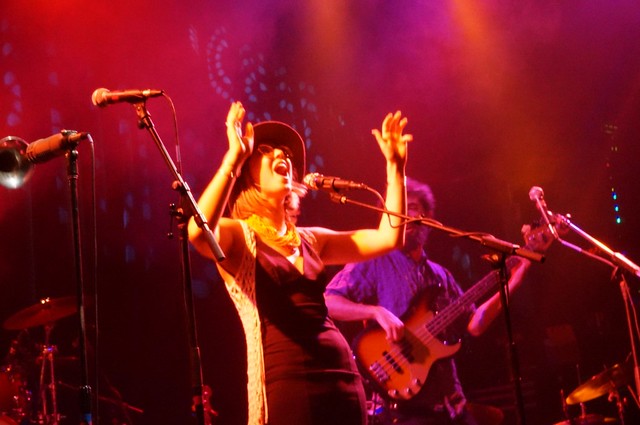
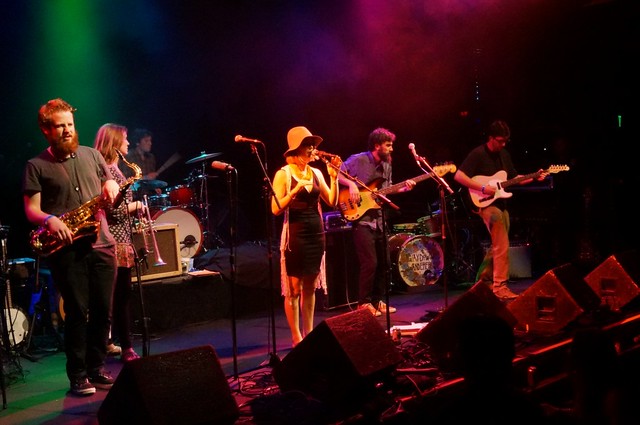
Despite the lazy sway on that first tune, it quickly became clear that the band was a crack squad of musicians. The horn punches fell perfectly into place and the solid rhythm section left plenty of room for ornamentation. Lead singer Megan Letts was great. Between songs, her stage presence was very unassuming but quietly confident. Before that first song began, she seemed a little mousy and shy, but it took no time to dispel that impression. Her vocal range was very dynamic as she dropped from full powered diva mode down into a softer emotional space, only to build the songs back up again. All the while, her gestures subtly supported the mood. During the instrumental breaks, she gave over to the music and danced along.

033 Mama Magnolia
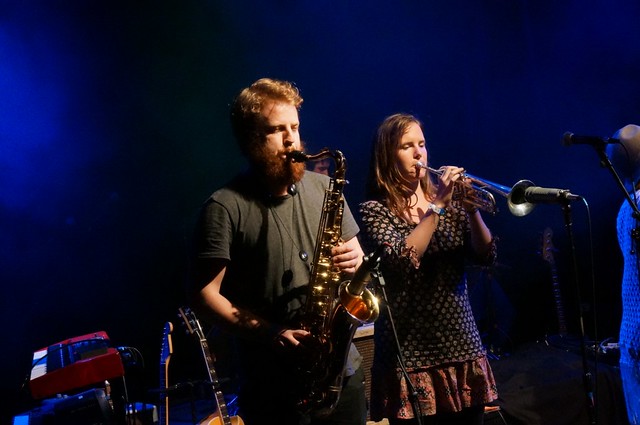
Letts was a strong front woman, but she didn't eclipse the rest of the band. The horns got plenty of chances to step forward as the set developed. Carrie McCune's trumpet riffs were particularly sharp, but Sean Culliton did a fine job on sax, as well. Later in the set, the songs brought in more funk rhythms and Zachary Jackson pumped up the party with his sharp bass lines. The last song they played wrapped up with a cool vocal ending that segued into a dreamy floating interlude, building and subsiding as they looped through the changes. This is definitely a band to catch live; their versatility introduced a good range of sounds from danceable funk to pop R&B.


084 Way Down Wanderers
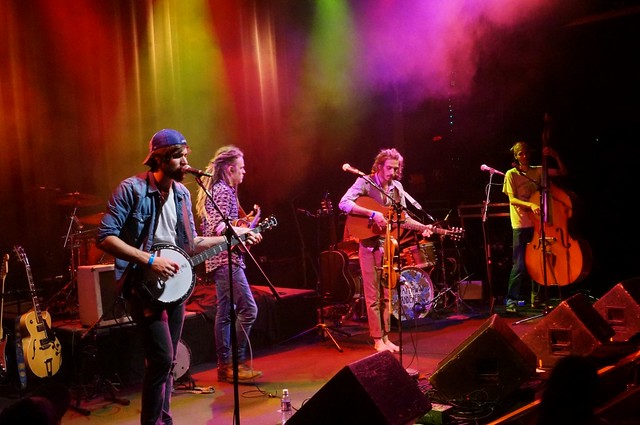
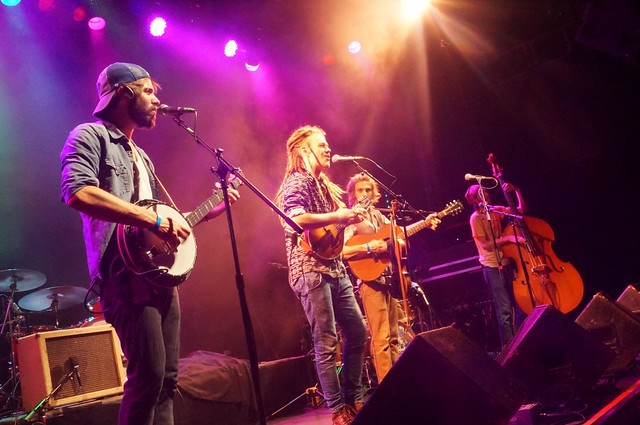
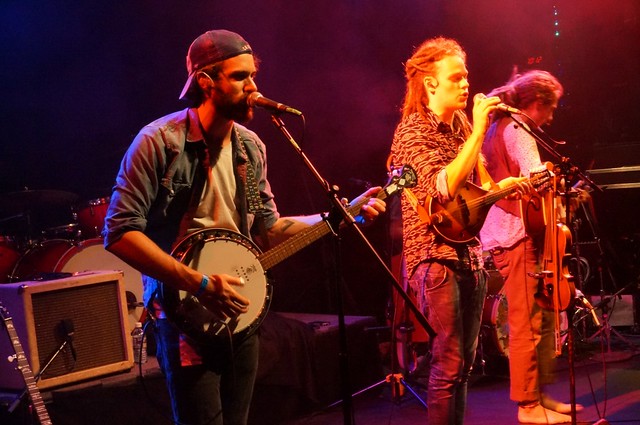
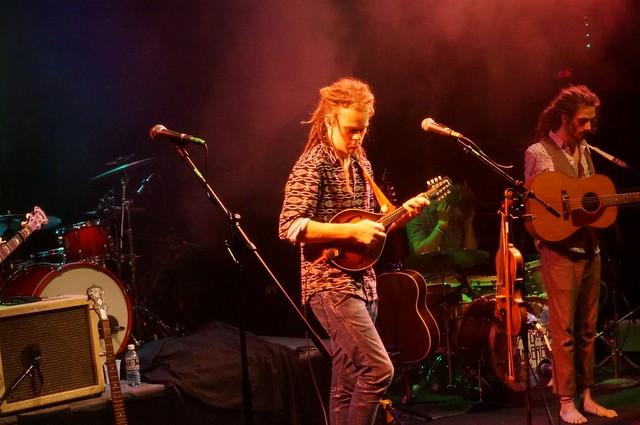
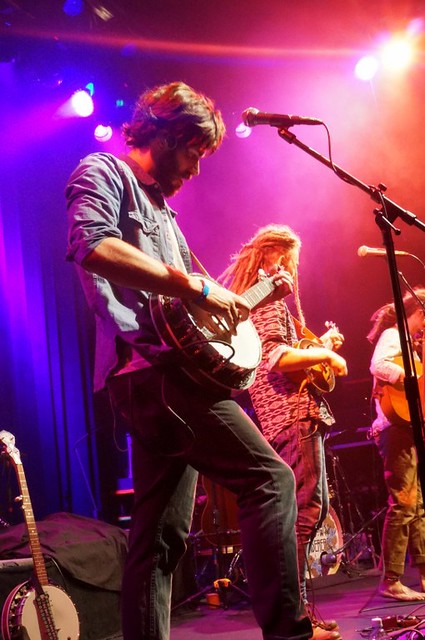
I never thought of Chicago as a haven for bluegrass pickers, but banjo player Ben Montalbano assured me that the city has a healthy, supportive scene, and it's diverse enough there that I'm willing to believe him. On their website, The Way Down Wanderers bill themselves as folk-Americana, but their set at the Fox was steeped in bluegrass, with a fair mix of modern folk and the occasional country twang. Instrumentation goes a long way towards setting that mood, with banjo, upright bass, and a tag-team fiddle and mandolin combo.

059 Way Down Wanderers
But more than that, the vocal stylings and tight harmonies were right on target. Guitarist Austin Thompson had a Dylanesque sound, reedy and nasal, but blending with the others, he could push the songs into that high-lonesome zone. It turns out that most of the band's front line could sing, and the vocal trade-offs meant that each of them got to share lead singing duties.

072 Way Down Wanderers
The Way Down Wanderers had a relaxed, friendly stage presence and a genuineness that resonated with the audience. Even though the venue was far from packed, the band had been out earlier at the farmers' market and had generated some local interest, including a group of Chicago transplants that were happy to reconnect with their home town. The music stayed fairly upbeat and the crowd caught the rhythm and moved along.

085 Way Down Wanderers
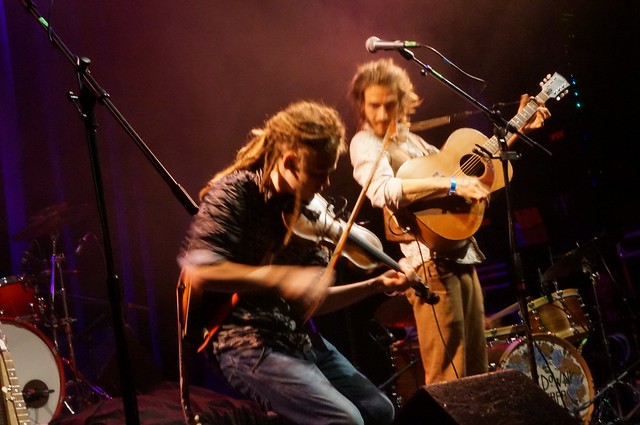
The playing was topnotch, but Collin Krause was the most impressive as he alternated between mandolin and fiddle. At one point, the band dropped out to give him some room and he tore it up on the mando, tossing off lightning fast runs as he developed his motif. When he hit his final note, there was just the briefest pause and then the song began with a vengeance as the whole band launched into the changes that Krause had just laid out. Krause may have stood out the most, but the rest of the band were no slackers.

061 Way Down Wanderers
The Way Down Wanderers hit most of the songs on their new EP, Wellspring, Of these, my favorite was "Burn This City". Although the banjo and mando tied it to their core sound, they pushed the folky sound of the recorded version into a darker rock direction, driving to a speedy thrash ending that had the audience jumping along. "Circles" was a close second, drawing on a host of comfortable, familiar sounds like the Nitty Gritty Dirt Band and Ryan Adams' folkier material.

082 Way Down Wanderers
Within the relaxed bounds of folk-grass playing, the band still managed a number of nice unexpected treats, including a couple of surprising covers. The first was a treatment of "Someday" by the Strokes. A couple of tunes later, they introduced "a very sentimental tune," which turned out to be their ripping version of "I Want You Back" by the Jackson 5. The audience played their part and sang along. The band wrapped up their set with a strong take on the old standard, "I'm Sitting On Top of the World". The Way Down Wanderers' version was fairly peppy, taking it home with a big bluesy ending that tipped it's hat to Cream's reworking of the tune.


131 Arcoda
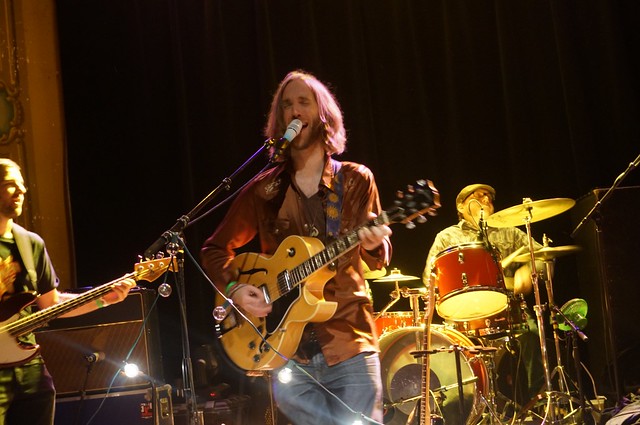
After seeing Pete Pidgeon and his band open last week's show for Atomga, I was excited to catch them as headliners. Where they were an outlier on the bill at that show, this time Arcoda straddled the two opening acts. Their retro 70's vibe and Pidgeon's soulful vocals fit with Mama Magnolia's work, and the main folky/Americana thrust was in line with the Way Down Wanderers' approach. As a bonus, the mix was a lot clearer, making it easier to hear everybody's parts. Both Pidgeon and keyboard player Adam Bodine had great lead chops and this time I could pick out both instruments.

108 Arcoda
It was probably coincidental, but as Arcoda were completing their setup, the house music came around to a jazzy arrangement of Jimi Hendrix's "Little Wing". This provided a perfect segue for a very relaxed start. Pidgeon improvised along with the house music as they were getting their levels set, and then the band sidled into their first real song, playing some spacy, amorphous changes that fit well with Pidgeon's earlier noodling. The meandering keyboards and gentle swells contributed to a trippy groove before it coalesced into a soulful singer-songwriter arrangement, but still with a loose jam band vibe. That made the impact of the tight punches and breaks more powerful when they came.

100 Arcoda
My first impression last week was that Pidgeon seemed fit to channel one of those early '70s folk-rock bands, but this show expanded on that with a wider range of material. Arcoda brought in some jazzier rhythms and retro tones that, along with Bodine's keyboard work and the band's polished arrangements, were very reminiscent of Boz Scaggs and also of Rickie Lee Jones. Pidgeon's voice was flexible enough to support all that and more. His ballads were especially nice. On "Growing Pains", his singing anchored the sweet, wistful music with a grownup wisdom and depth.

154 Arcoda
While the band did a fine job on their own, the evening included a couple of guest appearances that really deserved a bigger audience. Soul singer Dechen Hawk joined the band for a tune, and his voice was a perfect match for Bodine's Leon Russell style playing. Hawk and Pidgeon turned out to be birds of a feather, reinforcing one another and finding the emotional heart of the song. Later, local guitarist Peter Stelling sat in and added some great leads on his classic Gibson SG. In both these cases, Arcoda created a good match between their song selection and the guest artist, showing everyone off to their best effect.

204 Arcoda
I'm not all that familiar with the band's originals yet, but there were two songs that really jumped out the most for me, maybe because they pushed the band to test their technical ability and generate some excitement at the same time. The first of these was "The Wind and the Lover", a funky number that could have been an outtake from Frank Zappa's Over-Nite Sensation. Bass player Nate Marsh locked in with Pidgeon on the tag riff and then settled into a foot-stomping, gut-bucket bassline. Jared Forqueran contributed to the fun with some wicked drum fills that made the chorus snap. The other high point was near the end of the set; it must have been the next to last song. I didn't get a title for it, but it was a jam band instrumental that started out jazzy, but developed into a monster tune that reminded me of Jeff Beck. While everyone stretched out here, Pidgeon's guitar work was the star attraction. Despite the late night and the poor attendance, this was an ecstatic celebration of shred.

134 Arcoda
I'm sure the band would have appreciated a better turnout, but no one in the hall could complain about Arcoda's performance. Like professionals, they played like it was a sold-out show and they challenged us to be an audience worthy of that experience.

109 Arcoda

More photos on my Flickr.

Thursday, June 11, 2015

Recording review - Steven Wilson, Hand. Cannot. Erase. (2015)

Music vs. narrative: take your pick

3.5/5.0


Context is often the key to appreciation. I prefer to approach new music with as little baggage as possible, so I came to Steven Wilson's Hand. Cannot. Erase. as a blank slate, ready to see where it led me. His music usually has an ambiance that is best experienced without any preconceived notions. This time, though, I had a hard time getting a grasp on the album; I couldn't find the context. The bigger, more progressive moments were beautiful and moving, but the first two tracks seemed emblematic of the project as a whole. There was a discontinuity between the slow fade-in amorphousness of the first piece and the dynamic expansion of the song that followed.
Normally, Wilson helps his listeners keep that tabula rasa mindset by offering little commentary about his music. Even though he isn't too fond of putting his work under a microscope, this time he’s had several interviews where he’s discussed the story of Joyce Carol Vincent that inspired Hand. Cannot. Erase. She was a young woman who dropped away from her friends and family sometime around 2000. What made this newsworthy is that she died in her London apartment in 2003, but her body wasn't discovered until 2006. Wilson came across the documentary/drama, Dreams of a Life and found both the movie and the real story compelling.

It's a good starting point for a concept album: aside from the poignant ending, there's a fundamental mystery that gives an artist room to speculate and expand upon. Fittingly, the songs on Hand. Cannot. Erase. are fairly indirect, offering their own oblique signals as they outline the woman's gradual abdication from her community, punctuated by kernels of loss and pain. Wilson doesn’t tie himself to the details, but steps into his own parallel narrative. For example, his ending expands on a minor factual detail to suggest a final hope for reconnection that comes too late. With a freer hand, he positions his character at the center of a self-imposed conflict. The songs are full of ambivalence, sometimes repurposing or reframing the same words to offer cross meanings. The music is similarly hard to pin down. Sparse simplicity lurches into stormy surges of emotion, and electronic elements are juxtaposed against warm analog instruments.

Knowing the inspiration clarifies things a bit, but ultimately, it’s not quite enough.The larger musical gestures like “Ancestral” fall outside the project's conceptual arc because their scale dwarfs the delicacy of the story. It’s a tough trap for Wilson to avoid. The indirect approach lets him leave room for interpretation, but that subtlety can't compete with the scope of his musical expressiveness. If that’s the downside, the upside is that he is continuing his creative growth and expanding his palette by integrating more sampling and electronic sounds as well as bringing in a female singer, Ninet Tayeb, to represent his lead character.

The album starts slow and thoughtful, but the second, longer track, “Three Years Older”, picks up the pace with the energy of The Who spliced with flashes of Rush. The instrumental section spins out for a solid three minutes before the first words come in. The song is effectively an overture prologue that sets the stage for the album’s story. Wilson sings with a gentle sympathy, sketching out a chain of disengagement that, by the end, suggests a suicidal solution. Once the vocals are out of the way, the remaining three minutes launch into a series of diverse themes that range from pensive introspection to a frantic King Crimson style break. These sections try to bridge the polar ends of his character’s solitude and her seething social anxiety.

The music is a good reflection of Wilson’s usual style, and the.loneliness is clear, but the roiling emotion feels out of proportion. Later, “Home Invasion” and “Ancestral” will evoke a similar reaction: the music is among his strongest writing, but they seem tied to his own perspective rather than relating to the tale he’s trying to tell. Despite the tenuous connection to the album’s narrative arc, “Ancestral” turned out to be my favorite track on Hand. Cannot. Erase. The rich textures swing through extremes, from the sparse beat and brooding guitar at the start, accented by a jazzy flute, to the fluid, expressive post-rock shred on the solo. A mix of old and contemporary influences adds to the melange, creating a blend of Radiohead with Gentle Giant.

Even if the album has trouble balancing its song arrangements with the narrative, Wilson has done a good job of echoing the unknowns of Vincent’s life with lyrics that hinge on ambiguity. On the title track, “Hand cannot erase this love,” is an assertion of connectedness, but there’s also an undertone of co-dependence and a hint of domestic violence. On “Transience”, the line, “It’s only the start” initially seems optimistic, but then it turns around to represent the dark fate that’s coming. If there’s a moral here at all, it’s tied to how we should understand Vincent’s life choices. There’s a fundamental paradox: it seems she chose this path as a coping mechanism in reaction to social pressure and disappointment, but ultimately it led to her destruction as she faded from life and memory.

Wilson succeeds at using the bare bones of Vincent’s story to explore the nuances of this conflict. At the same time, his music writing and performance are as strong as ever. I just wish I didn’t have to pick between the two when I listen to Hand. Cannot. Erase.

Monday, June 8, 2015

Concert review - Atomga CD release party with openers

6 June 2015 (Bluebird Theater, Denver CO)

4.25/5.0

Concert lineups often make for strange bedfellows, but honestly, how many African-influenced, horn-intensive dance bands are knocking around Denver for Atomga to partner with? Okay, there are probably a few, but this bill opted for a potpourri of acts to build up the energy. For the most part, this worked out well. Atomga drew a big, supportive crowd, happy to move to the music. They've just released their new album, Black Belt, this week and this was a first chance for many of us to hear these songs live.

The Bluebird was an intimate setting for the show. The stage was a little cramped with band equipment and personnel, but the band transitions went fairly smoothly and quickly. Throughout the course of the evening, though, the mixes were far from ideal. The instrumental balance for the first two acts left some of the players seeming superfluous because their parts were so hard to pick out. Also the vocals were a bit muddy and indistinct for everybody. The audience had no trouble hearing the beat, though, and moving along.


013 Arcoda
Arcoda might have seemed like the odd band out: their retro-tuned Americana didn't have any horns and they only had a paltry four members. All true, but Pete Pidgeon and his group proved to be the perfect aperitif for the night. Pidgeon looks like he should be heading up one of those early '70s California rock bands, like the Eagles. Their set didn't settle for a peaceful, easy feeling, though. While the first song was relatively laid back, his cover of Bob Dylan's "Tonight I'll Be Staying Here With You" got things going with a tempo that was more upbeat than the live Rolling Thunder Revue version. Adam Revell's keyboard work recalled Billy Preston's soulful accompaniment, giving the tune a funky drive. Pidgeon's tight pedal tone guitar lines were buried in the mix, especially by the fat punch of the drums, but when they shone through, they sounded great.

016 Arcoda
The band largely deferred to Pidgeon, letting his expressive presence take center stage, and he had the confident spark to own it. Aside from that Dylan cover, most of the material seemed to be original, and Pidgeon inhabited the songs. As he and Arcoda deftly handled the dynamic musical shifts, his body language choreographed the intensity of the songs. Even though this was a very different groove than we'd hear for the rest of the night, the band's tunes did find enough funky rhythms to fit in, even when they shifted into a more modern indie rock style. I look forward to catching these guys at another show. I know they're playing at the Fox in Boulder next weekend.


021 Human Agency
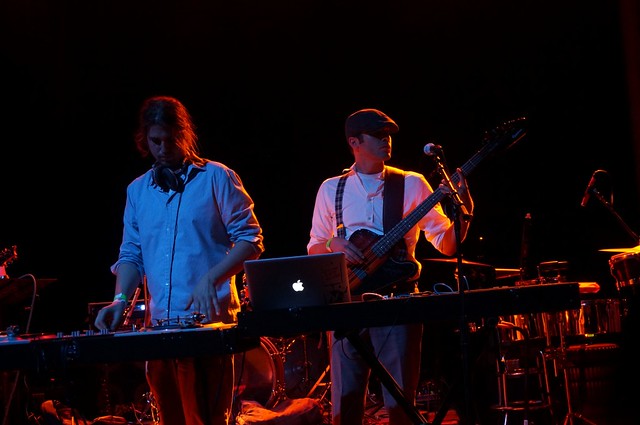
On the surface, Human Agency should have been a smoother fit on the bill. Unlike Arcoda, they had a horn section and their heavy drum beats tapped into a dance friendly space. Unfortunately, their set never really gelled and they lacked the stage presence to engage the audience. To be fair, it turns out that this isn't really the group's usual milieu; normally, they're an electronic dance trio with a pair of DJ/sound engineers and a live drummer. In that world, the shoegaze focus on the equipment would be perfectly fine. Incorporating the brass and a guest guitarist for this show provided some protective coloration, but the amorphous repetition couldn't hide that they were out of their element.

027 Human Agency
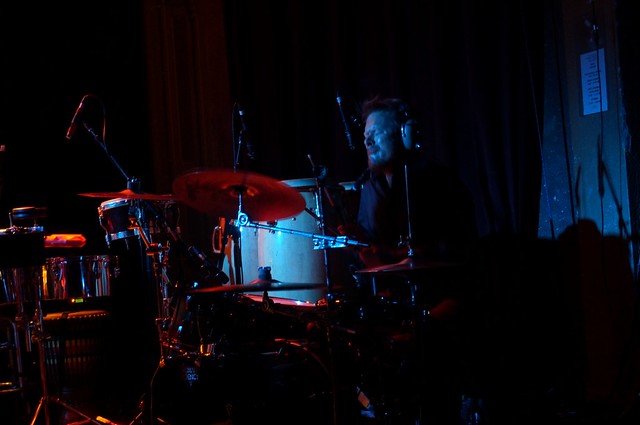
The side players integrated in fairly well, responding to signals so breaks and endings were tightly synched, but there wasn't enough structure to suggest more than just some horns jamming along to a pre-recorded backing track. The muddy mix did them no favors; the turntablist may have had more technique than a transformer scratch and a bit of chopping, but it was impossible to tell. Even the horns alternated between blaring and anemic. The drums were the only instrument that consistently stood out. The good news is that Jonas Otto was a phenomenal player. Locked into his own world with eyes shut and headphones tight, he nonetheless nailed every tag and dismount.

032 Human Agency
Listening to Human Agency's Soundcloud page, they do have some decent tracks. I recognized some of "Half Plug" from the show, but the recording had nuances that we couldn't begin to hear at the Bluebird. They did provide a buffer between Pete Pidgeon's set and the horn heavy sound later, but it proved to be more filler than filling.


061 DBRS
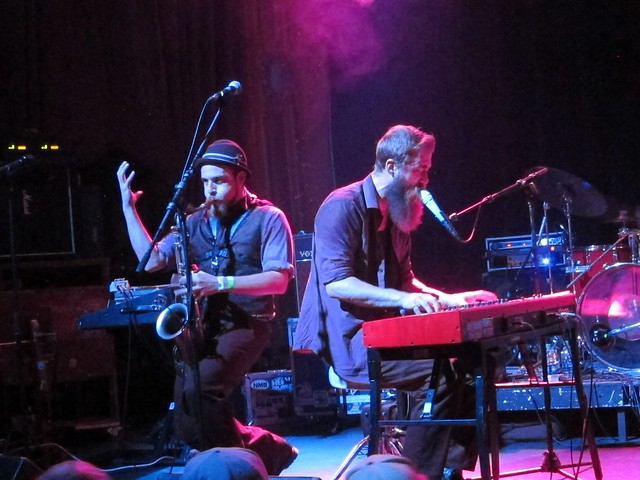
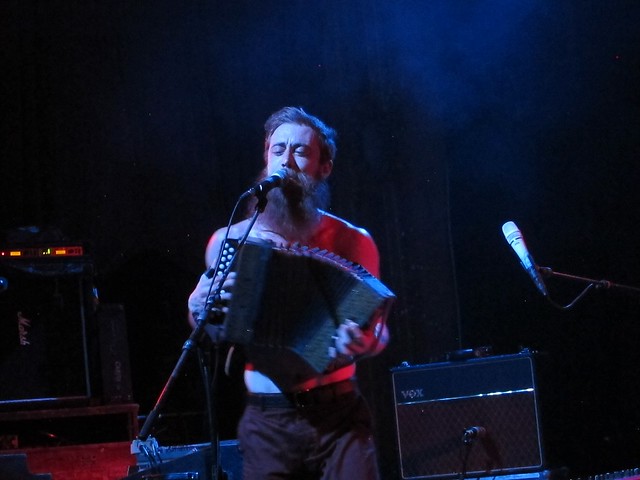
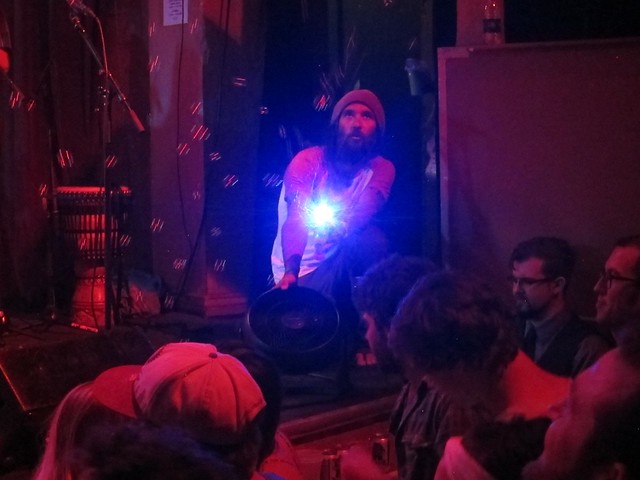
About five minutes into Dirty Bourbon River Show's set, I realized I was face to face with my newest performance nightmare: the thought of having to walk on stage after this band and their madcap circus dance music. Aside from being great players, all of these guys are very visual, with the king of the crew being frontman Noah Adams. Adams had a thick, scary beard that three mountain men could easily timeshare, but he was also one of the most electric performers I've seen in quite a while. His sense of showmanship and magnetic personality were almost unnerving. While he mostly played keyboards, he had a couple of surprises up his sleeve. including a pocket trumpet and a miniature soprano trombone, so we were never sure what else he might do. He and the band knew how to work the crowd up and manage their energy.

058 DBRS
DBRS opened with the Eastern European gypsy jazz of their song, "Wolfman" and Adams embodied the character, taunting and challenging the crowd. This was a strong start, but he showed that he could bring that same intensity to a more serious tune on the drag blues of "Esmerelda" from their recent album, Important Things Humans Should Know. As the band wound their way from these sounds through Dixieland turns to funky grooves, the overall sense was a mix of Dark Carnival and danceable funk. Several times during their set, a couple of the players referenced "Entry of Gladiators" in their solos to cement that sense -- if you imagine a circus song, that's almost certainly the one you're thinking of -- but, despite the sardonic humor, DBRS was no novelty act.

073 DBRS
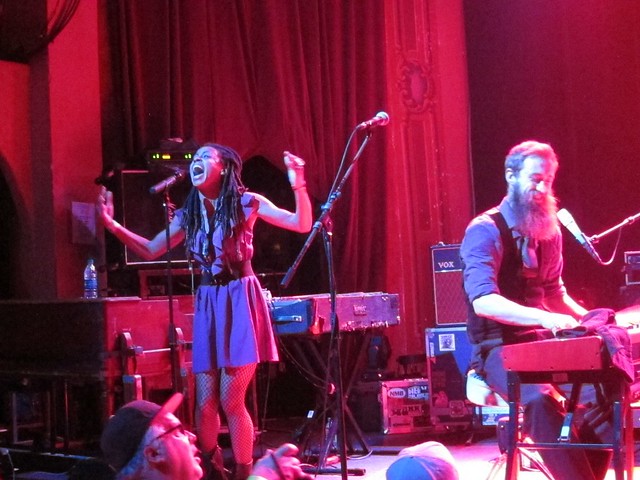
Instead, they're like a high quality party band pumped up to Major League level, but leavened with just the right amount of quirky weirdness to keep the audience off balanced and intrigued. Adam's rough growl was more than balanced by backing vocalist Sandra Love, who drifted on and off stage to add her seductively soulful voice as needed. Regardless of who was singing, though, DBRS was always swinging. The crowd's dancing and cheers were all the encouragement the band needed.

043 DBRS
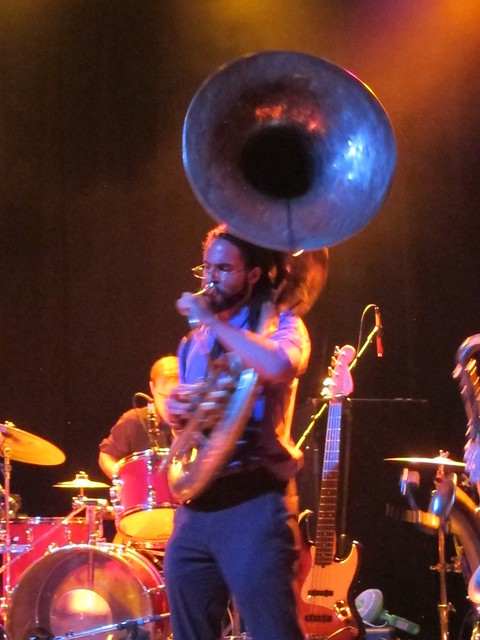
As much as I enjoyed Adams' musical romps from keys to accordion to trumpet, I was most impressed with their boss of the bottom end, Jimmy Williams. Williams divided his time between the electric bass and the sousaphone (and a one-off flute line). At one point, he muscled his way through a tight walking run of 16th notes on the sousaphone, maintaining the rolling rumble of bass notes without missing a beat or looking out of breath. Given that the band is from New Orleans and this was in the Mile High City, that was an impressive feat!

053 DBRS
At the end of their set, after the flashy drum solo on a full kit and extension ladder, DBRS finally took it home with their last song, but even then, they sprung a twist. They dragged out the ending with a final loose meandering riff that suddenly transformed into a quick reprise of their opening tune. Adams is indeed the Wolfman, and we cannot stop him.


089 Atomga
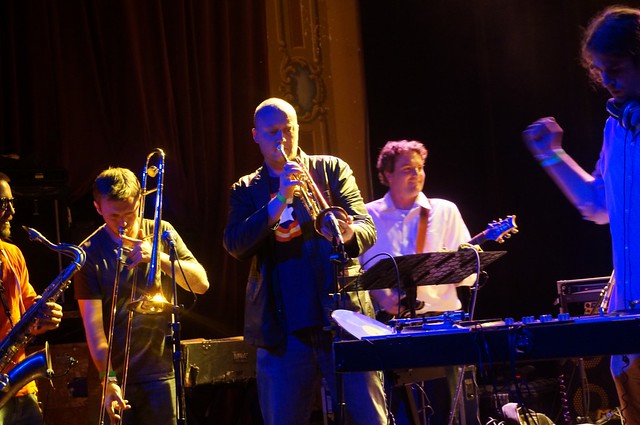
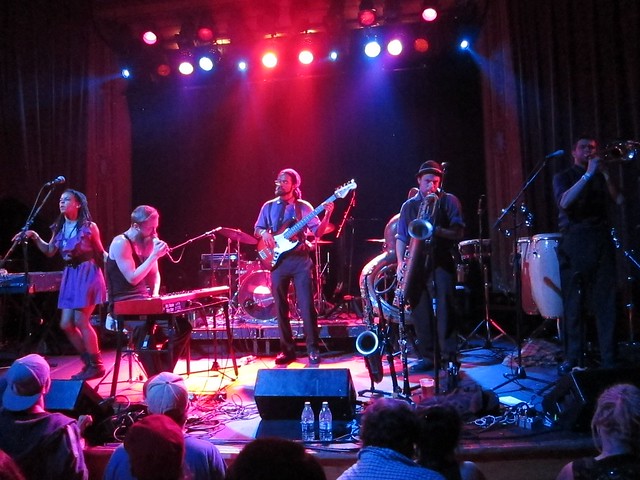
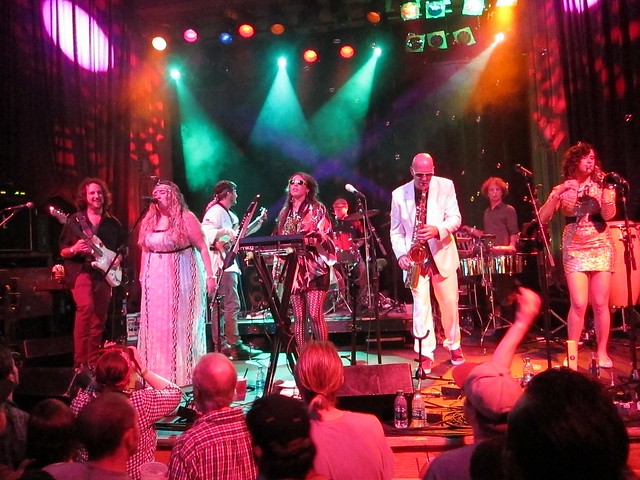
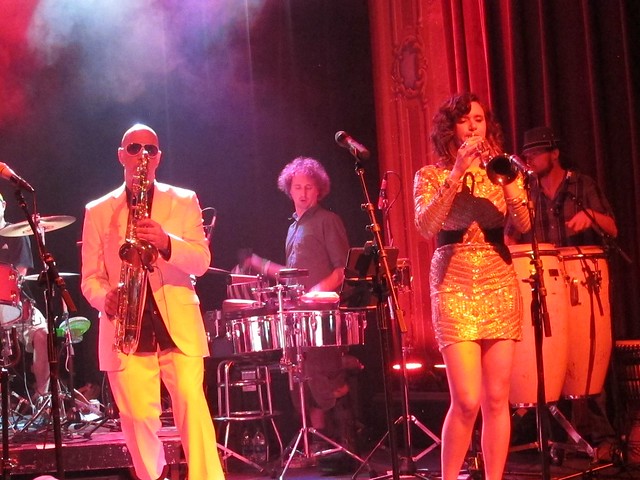
A lesser band might have worried about being upstaged by Dirty Bourbon River Show's manic set, but Atomga was unflappable as they set up for their turn. They were clearly excited to deliver the goods to the nearly sold out house. Everyone found their position on the darkened stage and, after a brief amount of preparation, a simple horn line coalesced into a steady vamp with everyone falling into place. In standard Afrobeat fashion, they took the time to assemble and set that groove until it became a foundation for wider exploration. This was actually a good model for the show as a whole, because the first several songs stayed on familiar ground before the group started digging into their new material.

106 Atomga
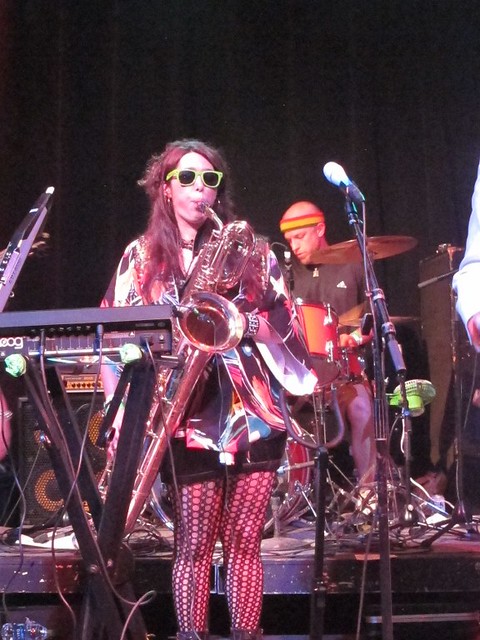
By the second tune -- "Empire", from their eponymous EP -- Atomga were playing wholly in the moment, finding that shared space were everything just flowed: Frank Roddy's hand offs to Leah Concialdi's baritone sax were effortless and natural, singer Kendra Kreie's voice was soulful with an iron core, and the drums and percussionists toyed with syncopation, inciting the crowd to movement. It's hard to identify the exact moment that it happens in a given show, but there's always a tipping point where it's not just music, but an invitation to hypnotic, ecstatic dance.

097 Atomga
Atomga's dedication to the groove and to the joy of their music eliminated any sense of competition with DBRS or any of the other acts. As always, it's a treat to witness the band's interdependent yin-yang aesthetic: their arrangements are tightly coordinated, but it's just as important to them to have fun up there and leave room for improvisation. Roddy and Concialdi were focal points, as usual, but everyone in the band brought their own zest to the show, whether it was Alice Hansen's energetic trumpet riffs, Casey Hrdlicka ripping through a wah-wah driven minor key solo, or Peter Mouser's classic psychedelic organ work.

094 Atomga
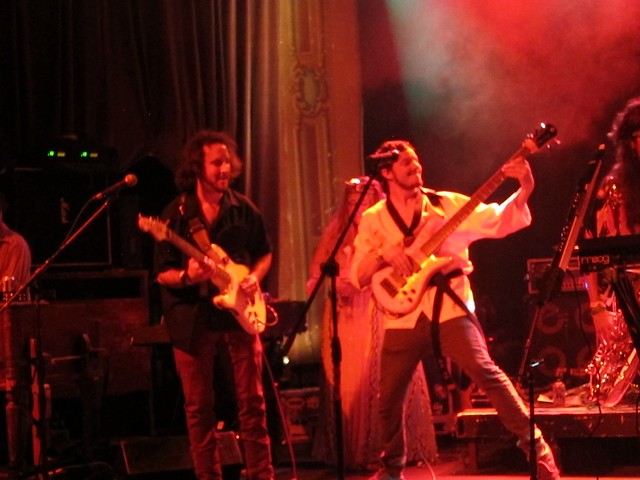
Everybody pulled their weight, but if there was an MVP for the night, it was Samual Lafalce on bass, who was amazing. Apparently in honor of the title of the new album, he wore a karate gi and black belt. Although he stuck to the back line, he put on his own show, mugging for the crowd with a melodramatic scowl (and twinkling eyes) and hamming it up with rock star poses. His campy pantomime was eye-catching, but it was even better to surrender to his expertly fashioned bass lines that locked into fine-tolerance perfection. His playing was central to setting up the backdrop for the rest of the band to work against, especially on the new tunes.

082 Atomga
Speaking of the new album, the setlist included some real gems that I'm looking forward to hearing again. I think my favorite was "Sly Devil", which set up a kind of reggae groove with Hrdlicka's guitar swaying through the chords rather than hitting a straight chank. Lafalce's bass provided a subtle bounce as Roddy's lazy, meandering sax work wound over the beat, but really everybody had the chance to contribute key elements to the intricately assembled whole. Kreie's vocal line reflected the relaxed mood of the sax groove, but the challenging vocal mix made it hard to catch the lyrics in detail. What I could discern sounded political in a similar vein to "Empire".

080 Atomga
Aside from all the musical fun, Atomga also celebrated Black Belt's release with their own party clowns for this show. Their "bubble brigade" filled the hall and they also tossed inflatable beach ball creatures out into the crowd. The only thing missing from this baby shower was a diaper cake. Check back here soon for a full length review of Black Belt, but in the meantime, if you get the chance to catch Atomga, jump on it: they continue to be one of the best live acts in Denver.

105 Atomga
More photos on my Flickr. Also Black Belt is available on Atomga's bandcamp page.