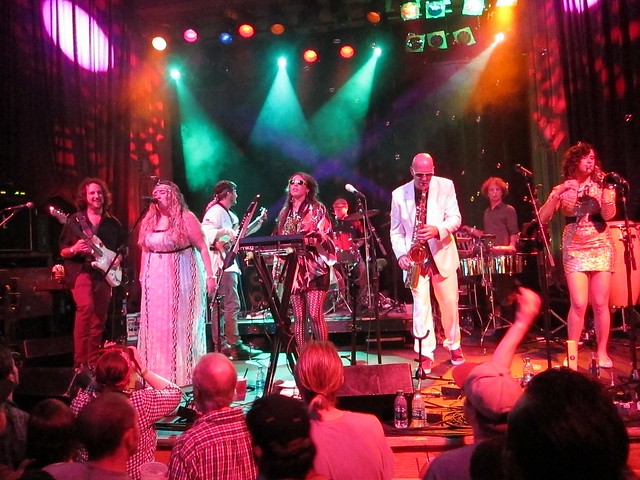
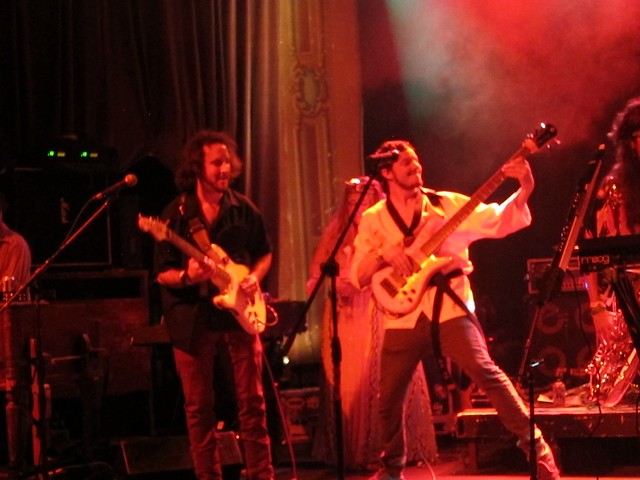
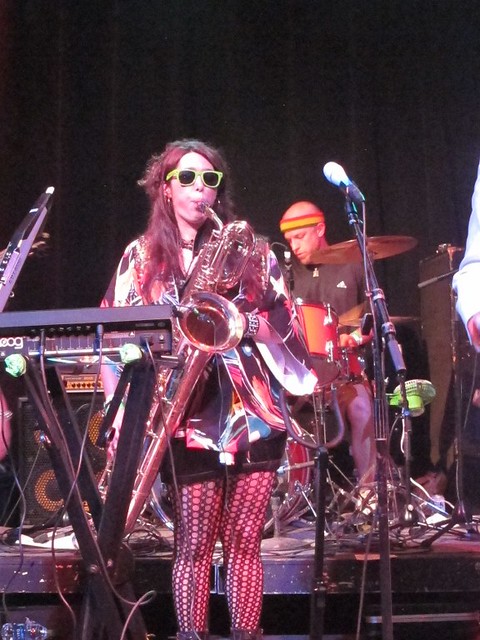
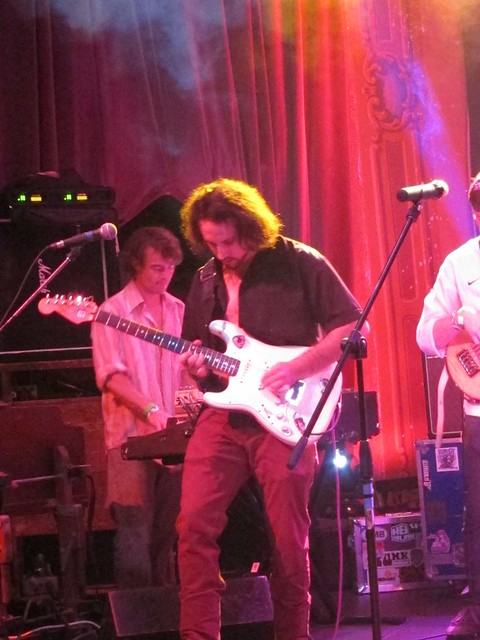
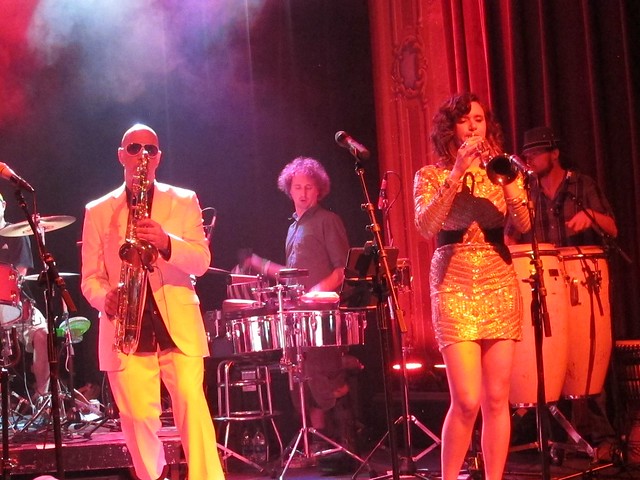
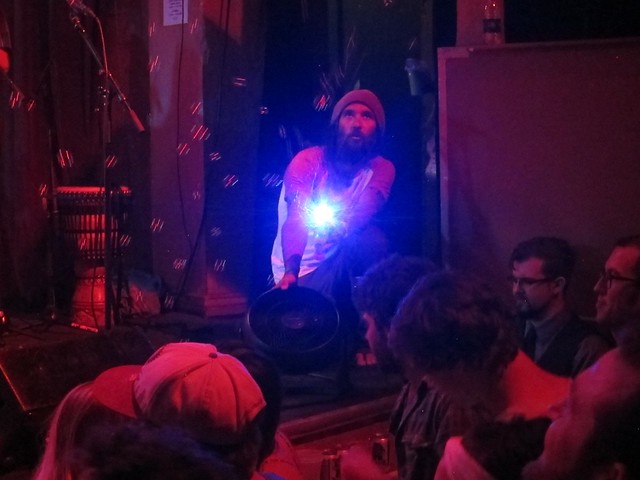
(Artwork care of Karen Ramsay (www.karenramsay.com), profile photo care of brianlackeyphotography.com)
Showing posts with label americana. Show all posts

Thursday, July 2, 2015

Interview: Pete Pidgeon of Arcoda, part two

In part one of my interview with singer/songwriter Pete Pidgeon of Arcoda, we talked about his musical approach, his insights into the Front Range music scene, and how his career has developed, both here and on the East Coast. Part two finds us discussing his influences, some of the recognition he's received and exactly what to do (and what not to do) if you find yourself face to face with Paris Hilton or Trey Anastasio.

Enjoy part two of our conversation, which has been condensed and lightly edited.
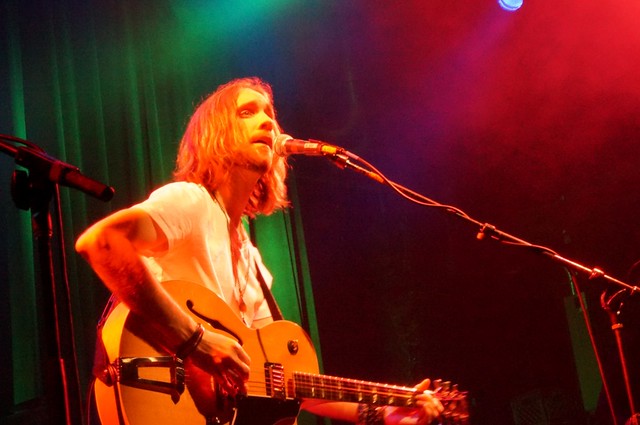
100 Arcoda
Earlier, you mentioned that the legendary Levon Helm of The Band contributed to your upcoming album. How was it playing with him?

Pete Pidgeon: It’s still number one. It’ll probably always be number one. One of my earliest memories, my parents were big music fans. They had a huge vinyl collection, which really influenced where I came from. Randy Newman, Bonnie Raitt, Paul Simon, Billy Joel...all these great singer-songwriters. They had Big Pink and they put on “Chest Fever” and I remember this distinctly. I would crawl up on the couch and jump on the couch when they’d play music. So I remember doing that and then “Chest Fever” coming on and being completely terrified, because it was the scariest sounding organ. It was this huge, monstrous Garth Hudson organ sound. It was overwhelming how powerful this tune was. From my earliest memories of music, I’ve been exposed to The Band and Levon’s playing.

The biggest thing about Levon is that, of anybody in the last 50 years or so who cared more about music, I think he’s probably the number one dude. I don’t think anybody cared more about playing as hard as he could every single night and really giving everything he had to the music. There was this story that Larry Campbell said, if I’m not wrong. [ed: Theresa Williams mentions it in this interview on For the Country Record] In his last days, when he was playing a show, he was sitting in the corner of the room and he wasn’t even talking to anybody. He was talking to himself and talking to God, and saying, “All I ask for is just these 90 minutes on stage. That’s all I ask for. The other hours of the day? Whatever. You want to make me sick, that’s fine, but I need these 90 minutes right here to go out.” You can’t get bigger than that. So, the honor of being able to make music with him, to have him play my music? Come on. That’s just the biggest honor of all time.

Your bio includes things like the Jeff Buckley tribute, which I think exposed you to a lot of bigger named people and gave you some public visibility. I’ve also seen that you were in the running for some Grammys in 2012.

PP: Yeah, ‘11-’12. The ceremony was in 2012, but it was for the 2011 Grammys.

What categories were you considered for?

PP: It was for the EP called Growing Pains. There was a single on there called “Will” and we did a music video for it.

Oh yeah, I saw that on YouTube. Didn’t you write the storyline?

PP: I directed it. I co-wrote the story with Wes Mock, but I wrote the screenplay for it. And I did all the fieldwork for it and financed it.

That was a pretty heavy video.

PP: Thanks. It was dealing with some serious issues. I was volunteering at the time at Road Recovery, which helps children dealing with addictions. A lot of those kids were going through suicide problems and really major stuff. It was actually written about this girl, I’m sure she was suicidal, but I can’t tell you that for sure. But going through a major breakup: outside the lines of regular people breakup. Major stuff. She just had a huge impact on me and I wrote a few tunes about her and that was one of them. “I am more than the sum of my mistakes;” that’s the lyric that everyone responds to. She made these mistakes, but they weren’t really her fault, necessarily. It just had a big impact.

So, that video got nominated for Best Short Form Video, the single, “Will” was nominated for Song of the Year and Record of the Year. And then I was also up for Best Rock Performance and Best Rock Song.

But I’m very clear to mention that these were Grammy-recognized. That’s because a technical Grammy nomination only refers to the top five people that go to the awards ceremony. We made the second round of three, with the third round being the Top Five nominations.

I also noticed that you’re teaching guitar here, which is a good way to make ends meet as a musician. What’s your teaching philosophy?

PP: My curriculum is based on the individual student. Some kids want to learn theory, some kids don’t want to learn theory. Some kids want to learn how to play heavy metal, some kids want to play folk songs or pop tunes. When I came up, I didn’t have a teacher. My brother and my father taught me how to play guitar, but they weren’t sitting there saying, “This is how you’re supposed to do it. You need to learn these songs and do this.” It was more like coaching. So, with my students, I try to incorporate that into the lesson.

I’m glad you brought up your roots. I was wondering what your family background was with music. You mentioned your parents’ vinyl collection and now that your dad and brother both play.

PP: Yeah, my dad and my brother both play guitar. My dad was a campfire folk singer: Everly Brothers, Beach Boys, that kind of thing. Even way back in the day, when he was in high school and college, he had a couple of bands and was doing that style of music. My mom played piano and sang. My dad sang and played guitar. And my grandmother, my mother’s mother, she loved playing piano, too., She played at Christmas and I think she played at church at one point. Her husband, my mom’s father, was in the church. He played hymns and stuff on the piano. He died before I was born, but my grandma played a lot of those tunes. So there was a lot of music in the house. We had a music room in the house...My family called it the living room, but I called it the music room because it had baby grand piano, a bunch of guitars, xylophones, percussion instrument, trombone, violins, trumpet, recorders, flute. There was just all sorts of instruments, plus the record player, the reel-to-reel player. I couldn’t ask for more, you know.

Do you just have the one brother? Does he play as a hobbyist?

PP: Yes. The first live gig I ever played in public, I played bass in his progressive rock cover band. It was Yes, Rush, Triumph and maybe a couple of other groups, but that was the core of it. I was either 13 or 14. They were playing “Yours is No Disgrace” [by Yes] and the bass player couldn’t hang with the bass part. It wasn’t necessarily technically difficult, but there’s a lot of notes to memorize, and there’s a bass solo and stuff. A walking bass thing. So I just picked it up and played it. So, my brother brought me on because I could play the whole thing. They called me the Iceman, because I just stood in one place, staring at the bass, not moving, not looking at anybody.

Total shoegazer...

PP: Exactly. A shoegazer before shoegazing. So he was a shredder into progressive rock and shred: Satriani, Malmsteen, and Vai, Paul Gilbert, that kind of thing. He was a major influence. Probably the biggest influence. He had a bunch of bands. He doesn’t gig out as much now, but he definitely gave it a good go for a long time.

What other influences would you cite for your music?

PP: Oh, Man. it’s been a long road. The first exposure was the singer-songwriters that I mentioned. The first band I liked on my own was Huey Lewis and the News. There was this one live performance of "The Power of Love", where he’s playing onstage and he gets on his knees and he’s just yelling. I was like, “That’s amazing. That the coolest.” I must’ve been around 7 or 8.

I saw Robert Palmer when “Addicted to Love” came out and he had that video with all the girls dressed in black and doing their thing. I didn’t know what love was at the time or what any of the lyrics were about, which my parents found amusing, but I saw that video and I connected with it right away. I thought, “This is the greatest music I’ve ever heard.”

And there was a black and white Kiss show that I remember from when I was super young. Just the fact that I remember these things means that my brain was hardwired for music. I’m barely an infant and I recognize what’s going on.

So that was the earliest stuff. Then my brother got me into progressive rock and shred and then that graduated into jazz in high school and college. Then that graduated into jam bands: Allman Brothers, Phish, Dead, Santana, that kind of stuff, which taught me how to improvise. Coming out of progressive rock and shred, there’s no improvisation. Although there was some in Yes, I’ll give them some credit because they were an organic progressive band.

So I did the jam band thing. After that, I started getting back into my roots of songwriting, around ‘03. I’ve sort of been in that scene for the last ten years: song craft, how to write better tunes. Definitely more stripped down, trying to make it more compact. That’s one thing New York definitely taught me: you got to have a three minute tune. maybe a four minute tune if you can, but no more of this 7 or 8 minute progressive, long form stuff, That was sort of the purpose of the Growing Pains EP. How can I be concise and write a hit tune or a radio tune? And it’s still too progressive for most people, but it’s the best I could do without sacrificing my creative interests.

You brought up the jam band thing, which is a good segue, because I wanted to talk briefly with you about your book, Hampton '98: The Dephinitive Experience about the Hampton shows and Phish. I read the interview you had with Glide and I found it really intriguing. I wanted to ask you was about a teaser quote from that Glide interview. You talked about getting experience meeting the guys in Phish and that you finally learned how to meet and talk to famous people. So what’s your advice for people? What is the proper way?

PP: (laughs) It’s exactly how you and I are talking right now. That’s exactly how you do it. You’re just another dude. “Hey what’s going on? What do you have happening? How’s the road been? What’s up?” and not get overtaken. It’s easier said than done, but not get overtaken by -- there’s almost a palpable energy that comes off of people that are famous. I don’t know why. I’m theorizing that it has something to do with their influence and also how they’ve been influenced. The amount of energy that they can play in front of 100,000 people and affect 100,000 people simultaneously by playing one note on their instrument or them being influenced by those 100,000 people giving all their energy back to them. They’re very electric people.

If you can talk to your brain and say, “Just be cool, man, it’s just a normal person,” have a regular convo, keep it on the level. I think that breathing and pausing is a big part of it. Because your brain’s on fire, “Oh my God, I’m talking to this person, this is so amazing! Keep talking, keep talking!” But if you can have that natural flow of conversation, you have to consciously put that pause in between your sentences, so you’re not just blasting this poor person the whole time. That’s what makes them anxious and not want to really hang out and talk. You’re just throwing so much at them, so fast.

One of the hardest parts is that there’s so many things that you want to tell this person and you don’t have more than probably 15 seconds to get it out and you’re probably going to screw it up and you’re probably also going to forget all those things and just say something, The first time I met Trey [Anastasio] was like that. I met him outside of his lodge at Sugarbush in 1995. I was just, “blah, blah, blah”, you know. I couldn’t really form sentences and said stupid things. I gave him a hug and he was all freaked out. Good for him, because I freaked him out. Over the years, I’ve tried to tone it down.

But battling the energy field is still difficult. Like being at the Grammys on the red carpet with Paris Hilton and Sting where you are right now. Just being cool, “Hey what’s up Paris, How are you doing?” “Oh, I’m a little cold.” “Have you got a sweater?” “No, I didn’t bring one…” Just bullshitting, but that goes a long way. Just be a normal person, you know.

Thanks for being a normal person for this interview

PP: (laughs) Hopefully, I can be one for the rest of my life.

Tuesday, June 30, 2015

Interview: Pete Pidgeon of Arcoda, part one

A relative newcomer to the Front Range, singer/songwriter Pete Pidgeon moved here from the busy New York music scene. In the few months he’s been here, he’s fallen into the local music community and also made strong connections on the business side. Part of what makes him fit in so well here is his earnest, engaging nature and his open stylistic approach that includes pop, Americana, jazz, and even some funk.

I had the chance to talk with Pidgeon at DazzleJazz club in Denver, before we both enjoyed listening to his Arcoda bandmate, pianist Adam Bodine, lead his jazz combo through a solid set.

This is part one of our conversation, which has been condensed and lightly edited.

100 Arcoda

How would you define your music, if you had to do it?

Pete Pidgeon: I usually say songwriting because that’s really the core of it. If you listen to Bob Marley or Paul Simon, or if you listen to Whitesnake, all of those bands are songwriting. It’s based on form and a verse-chorus and lyrics and all that kind of thing as opposed to jazz or jam band, which are mostly instrumental.

If you took Billy Joel, for example, he’s got a genre of songwriting, but his style changes from tune to tune. So, he can do a doo-wop '50s song and then he can play a straight out pop tune, and he can do piano ballads. He has these different styles within his own genre. So when you think Billy Joel, you think Billy Joel. You don’t think he’s a reggae guy and then he’s a world music guy

I think we - we meaning the band and myself; I write the tunes -- we sort of fall into that category. There’s a genre for the band, which is the umbrella of songs. I may write a song in a reggae style or an R&B style, but the genre is based on this verse-chorus type of organization.

I do hear a lot of different influences in your music. I can hear some some Phish on a few things. I can even hear a little bit of Moxy Fruvous. Certainly I get what you’re saying about songwriting because you have that kind of singer/songwriter stage presence. Listening to your songs, you tap into that to either tell a story or create a mood.

PP: No matter what the style is that you’re conveying, you can still get a similar message across. If you listen to Tesla’s albums, like their Five Man Acoustical Jam record and you break that down, it’s straight ahead songs. You think of them as a hair metal band or whatever, but really, if you strip all that stuff away, it’s just song forms. And part of the genre aspect of that was hair metal '80’s, but stylistically, they’re pretty much a songwriting band. Whether it’s disco or pop. It makes it more fun and more flexible as a musician to be able to do different stuff and keep it interesting and not be limited.

With the kind of eclectic sound that you have, do you think that’s it harder or easier for you?

PP: I think it’s 50-50, but in the long run, it’s easier. Because, for example, we could open for Leon Russel or Bonnie Raitt and do a stripped down show. We could do a straight ahead rock show because of songs like “Will” and “Whirlwind” and “She’s Right”. We could play a folk situation, like Newport Folk Festival or something like that. I could play solo acoustic. I just did that “Wharf Rat” performance for JamBase, for the GD (Grateful Dead) 50 “Songs of Their Own” series.

I saw that on YouTube.

PP: So, it gives me all these opportunities to do different things with different people and different areas of the field rather than being limited. If we were only a folk band, we can only play in that little niche. I also have so many songs at this point. I probably have 120, or 130 tunes that are completely finished, recorded, polished and everything. Within that set of a hundred or so tunes, say we do thirty on a gig, that gives me almost four or five complete sets of music that we can play in these different venues. If we did a show at Dazzle, I’ve got a jazz instrumental set. If we did a show at Cervantes or at OneUp, we have enough jam band style material that we can make that show a success and get people off.

You said that it was 50-50, though. What’s the downside?

PP: The downside is probably just when you book shows or when you’re asked to define yourself in very limited circumstances, you have to come up with a thing. Like with ReverbNation: they ask you to come up with your genre. I think currently our genre is Americana. That’s what the new record is for the most part. So, if we’re focusing on what’s one thing we are right now, I have to come up with a response and coming up with that response is sometimes difficult if I don’t have a defined situation. I think Americana is what we’re doing in 2015 and where we’re headed with the new record and everything, so it’s a little bit of an easier answer, but if you had asked me three years ago…we’re rock. I guess, because there’s no songwriting genre. Coming up with that definitive answer can be difficult at times.

Talking about the different kinds of gigs you say you can do, though, doesn't it make it harder to have an identity that you fans can connect to? Your fans have to work a little bit to figure out what is it that makes you their thing.

PP: I think that’s what is so great about Denver that’s not really present in a lot of other areas of the country is that the fans here will go to an EDM show one night, the next night they’ll go to a country show, then they’ll go to a folk show, they’ll go to a rock show, They’re almost tuned into accepting the eclecticism of these bands. So, here we’ve been very successful. We can do different styles of music and people aren’t going to say, “Oh, this isn’t what I thought you were.” And they’re not only accepting of it, but they like seeing that diversity. It makes it an interesting show. We’re not going to come out and play the same show every time. It’s always a different setlist, depending on who’s on the bill or what room we’re playing in. I think that’s probably our biggest asset. Because if you’re a hard rock band and you end up playing a rockabilly club, you’re kind of in trouble. But if we play Little Bear in Evergreen, for example, we’ll play rockabilly for two sets and people will love it.

So, what brought you to Colorado? You’re pretty much an East Coast guy -- New York and Connecticut.

PP: Yeah, I was born in Connecticut and then I spent a few years in New Jersey at Mason Gross School of the Arts at Rutgers. Then I moved to New Paltz, NY, about an hour and a half north of Manhattan. It’s out in the woods. It was the hippie town of hippie towns in America when I was there, anyway, between ‘95 and 2000. I lived in a house called the cloud house, which was yellow when I lived there, but it used to have clouds and sky painted all over it like a Peter Max painting. It was like the San Francisco of the East Coast, but in very small, subtle town.

That’s where Arcoda started. I sort of made this band thing and tried to sort of congeal all of these ideas to one name and one direction. The lineup continually changed, but just having that idea of a band that’s a repository for all these songs that I’m writing. No matter who’s in the group, we’re going to do these songs and play out.

I graduated SUNY New Paltz with a Jazz Studies degree and then moved to Boston until the end of ‘07. That was a great time. From 2000 to ‘02, '03, there were a lot of great bands on the scene: The Slip, and Percy Hill, and Madison Project, and Uncle Sammy. There was this great vibe but then the dynamic of the town and the clubs changed and a lot of the bands broke up and the clubs started shutting down or being bought out by corporate companies and stuff. Then I moved to New York City, I lived in Brooklyn for three and a half years and that was great because it was the kick in the ass I wanted about just learning the hardcore business aspect of everything and getting to meet some of the big names and work with bigger people.

Unfortunately, the skyrocketing rent and ability to live in that town became impossible. So, I moved back home for a little while and back to Connecticut to sort of figure out what I was doing. I bounced between Millerton, NY and Canton, CT, and Boston for a couple of years, just trying to make some money and save up, figure out where I wanted to go. I did a lot of research. I had come to Denver in 1996 for the Phish concerts at Red Rocks. I thought it was amazing. It was just the coolest town and a great buzz. I knew I always wanted to get back here. Then I was the lighting director for The Slip in 2000 and we played the Gothic and the Fox on that run. Just incredible people, great vibe, great music scene. So, I knew some people out here. Eric Imbrosciano, who was one of the drummers in Arcoda back in the day, he ran the funk jam at the Armoury on Wednesdays. So, he brought me down there and introduced me to a bunch of people during the Phish concerts at Dick’s in 2014, Labor Day. So, I hung out here for a week and I loved it and I came out and it‘s been...It was the right move, it’s been amazing.

You mentioned the changing lineup for Arcoda. Did you come here alone and then build the current version?

PP: Right. The band I was playing with in North Hampton, Mass, they were some of the most talented young players in central Mass. Really, really good players and good people. The trouble was that there aren’t any paying gigs in central Mass. That whole scene is very difficult to get paid as a musician. We did a few gigs, but they weren’t paying much money, if any money, and they were getting a little frustrated that the bread wasn’t there, and I was getting frustrated because I was paying out of pocket and losing a whole bunch of money. So, I knew I had to get out of there and make a change and move. I just came out here and with Eric’s help, he introduced me a lot to the scene and I got my feet on the ground. Slowly but surely, I met all the musicians and found out the ones that would work.

I’ve seen you open for Atomga’s CD release party for Black Belt at the Bluebird [review] and then I saw your recent show headlining at the Fox [review]. I think you’re getting out and about well in the area. Does this feel like where you want to settle in for the duration?

PP: It blows my mind. A lot it has to do with the talent buyers here being human beings. Like Chris Peck and Jake Nixon for example, who do Z2 [Entertainment]. They had faith in the band and in myself. I’m not used to people either taking a chance or having faith in us. I have a great bio, of course, but in New York City, everyone has a great bio. So, I was used to this sort of brick wall mentality. Where I’m just beating this wall until my hands are bleeding. I’d say, “Look I’m good, I’m really good. I’ve played with these famous people and I’ve been at the Grammy Awards and I’ve done these great things.” They’re like, “So is everyone else who’s trying to apply here. So why are you any different?” Being out here, where people are actually receptive, that’s been the biggest difference. It makes me work harder as a performer to live up to their expectations. If they’re going to believe in me, then I’m going to work hard for them and try to make sure that they’re going to get their money’s worth out of it. It’s a great symbiotic relationship. I’ll definitely stick around for that.

It’s interesting to me to hear about a musician coming to our market with intention. Coming from a hothouse scene like New York, and then seeing your performance of “Just Like a Woman” at the Jeff Buckley tribute show - your cover of his version is just fantastic…

PP: Thanks.

Your phrasing and the emotion you brought to it was really sharp. It was his version, but you made it your own. I respect that.

But you were in that sort of crowded environment, where people can get discovered, so moving to Denver is surprising. There are a few bands out of Colorado that have moved up, but I’m not used to people coming here to do that.

PP: In general, if you have money in New York, you’ve got a great shot. If you can get a publicist that can hype every one of your shows and get you into big time media, then you’re probably going to do well, if you’re a good artist. But the hustle on the ground to get the gigs, to get paid for playing your gig, and then retain that audience for your next performance in a city where you have people playing at Madison Square Garden… You’re going up against Billy Joel, you’re going up against Phil Lesh and Friends, you’re going up against these major artists that are playing for tens of thousands of people. And it’s not just one venue, you have Barclays Center, all these huge spots. So, no matter what you’re doing, your competition is so enormous, it’s so hard to draw in New York.

By coming out here, you don’t have that overarching pressure where you have to be in the New York Times tomorrow in order to get anywhere. or if you’re not spending $4000 on a publicist, you can’t play and get gigs. There’s enough of a grassroots scene here. If you do hustle and work hard, you can get the fanbase energized and get people out to your show and get people out to the next show, which is the biggest hurdle. No matter how many people came out to that first show, if they can bring a friend to the next show, and you keep growing on it, that’s the whole point. I think that’s possible out here.

Also the venue sizes are manageable. There’s a ladder here that didn’t exist in Boston. In Boston, there are very few mid-range venues.  You skip right up to 4000 at House of Blues and even, the Paradise, which I think is 600 people, is a generously sized room, but it’s considered a lower tier room in that town. Getting from ground one to the Paradise, you might have Church, which I think is a couple of hundred people, a couple of venues. Two or three venues, literally, and then you skip right up to 600, then after that, you skip to 4000. The ladder’s all messed up. Out here, you can play the Walnut Room for a hundred and something people or the Armoury for one hundred, two hundred people. All these clubs, there’s so many options where you can get on at a certain level to get up to the next rung of two or three hundred people, and then you’re at the Bluebird for 500 people. and then 800 at the Boulder Theater, 1000 people at the Gothic.

It makes the business much easier. And it’s not as expensive a town, so I can pay my band, which I couldn’t really do out East, unless I was really taking a hit. Also, literally the fans. What blew me away on day one, was that the fanbase in Denver is so energized. They go out to shows on a Monday at midnight. You can go to a show and there’ll be 100 people there. Meadowlark jam on Tuesday night or the funk jam that I do at the Armoury every Wednesday, we get people out at midnight in the middle of the week and that does not happen in Boston. Because the fans here love going out, they love supporting music, seeing music, being part of the scene. That’s the number one reason I moved here. It’s got an energy to it.

How do you see this playing out? In your dreams, how do you want things to go from here?

PP: Considering that the Arcoda launch party was at the Walnut Room in February -- in a little more than four months, I’ve already done more than I expected to do in four or five years. I’ve played the Fillmore, I’ve played the Boulder Theater, Bluebird, headlined the Fox., I’ve worked with a bunch of great musicians in town. So, my expectations have not only been met, but exceeded through this period of four months.

I mentioned those recent shows, but I know you have also some busy weekends lined up. By the time this interview has posted, you’ll have played the Colorado Brewer’s Festival in Ft. Collins and Crested Butte later that same day.

PP: Yeah, the Brewer’s Festival, there will be 20,000 people. We’re playing the mainstage. We got offered to headline that festival, but because we’re playing Crested Butte, we have to play an earlier slot, but still, it’s a great opportunity.

And you’ve already got things lined up in July, too, right?

PP: We have the Bluebird District Music Festival. Going back to what I was saying about the talent buyers, Tony Mason and Drew Gottlieb have been really supportive of our band and believed in what we’re doing. they put us on the inaugural Bluebird District Music Festival, which a huge honor and we can’t appreciate that enough. We’ll work really hard for that. And we just got the direct support spot for Anders Osborne at the Breckenridge Brewery Hootenanny after-party at Cervantes. And we’re co-headlining the Rialto Theatre July 17 with Miles Lee Band. He’s a really good friend.

As far as goals go, though,  the next big goal that I want to do is play at Red Rocks. I’m trying to get into the Film on the Rocks clique and hopefully we can get a call on that someday. We have an album coming out, called All the Little Things, probably in October, which has Levon Helm from the Band on it and Chris Pandolfi from the [Infamous] Stringdusters, and Ryan Zoidis from Lettuce, who just sold out Red Rocks

We finish our conversation in part two of my interview with Pete Pidgeon of Arcoda

Tuesday, June 16, 2015

Concert review - Pete Pidgeon and Arcoda, with The Way Down Wanderers and Mama Magnolia

13 June 2015 (Fox Theatre, Boulder CO)

3.5/5.0

Sometimes, I think the hardest thing about playing music professionally isn't the hours of rehearsal time, nor is it loading equipment in and out. It's certainly not standing up in front of an audience and baring your soul. No, the hardest thing is to get those people there in the first place. Each of the three acts playing this bill at the Fox managed to entice a small cadre of fans to turn out, but most only stayed for their one band, leaving a lot of space in the hall. The performers all took it in stride, making the best of it, but there's no denying that a bigger crowd would have fed the energy for the evening.


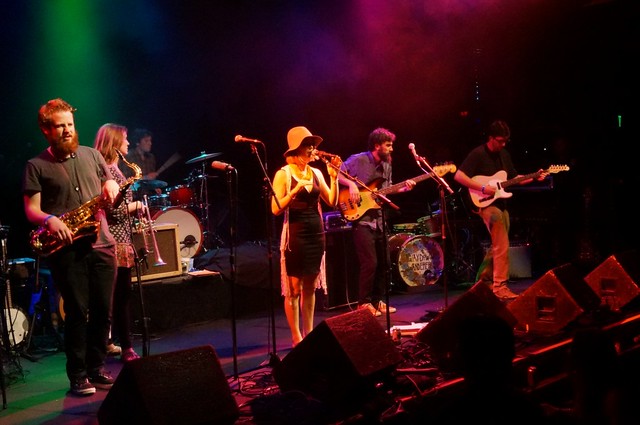
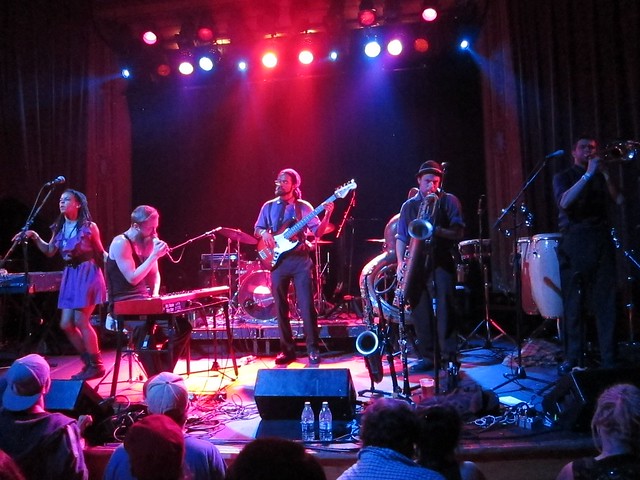
034 Mama Magnolia
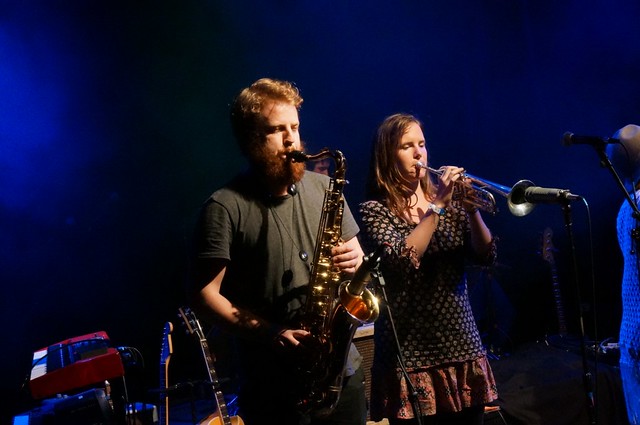
Preparing for the show, I was already familiar with Arcoda's sound and I knew that the Way Down Wanderers were a bluegrass band, so that set some expectations for the line up. Since, I hadn't come across Mama Magnolia before, I assumed that they'd fit in with that: sort of folky, maybe a bit country or bluegrass. Seeing the horns on stage pretty much put that idea to rest, and when they jumped into a jazzy soul groove, I felt the pull.

001 Mama Magnolia
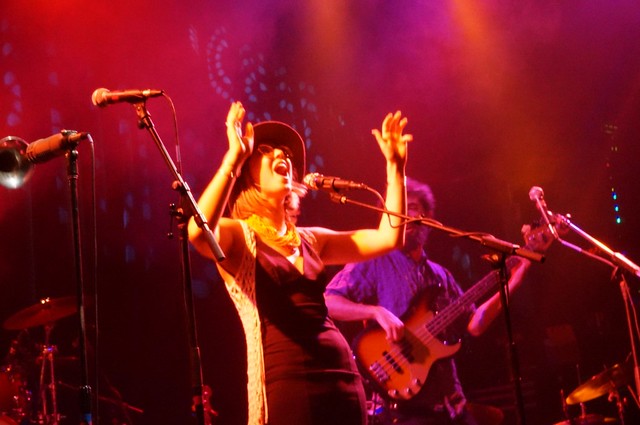
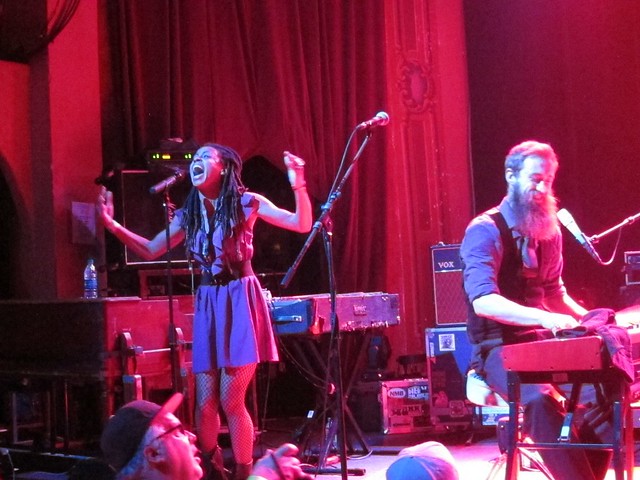
Despite the lazy sway on that first tune, it quickly became clear that the band was a crack squad of musicians. The horn punches fell perfectly into place and the solid rhythm section left plenty of room for ornamentation. Lead singer Megan Letts was great. Between songs, her stage presence was very unassuming but quietly confident. Before that first song began, she seemed a little mousy and shy, but it took no time to dispel that impression. Her vocal range was very dynamic as she dropped from full powered diva mode down into a softer emotional space, only to build the songs back up again. All the while, her gestures subtly supported the mood. During the instrumental breaks, she gave over to the music and danced along.

033 Mama Magnolia
Letts was a strong front woman, but she didn't eclipse the rest of the band. The horns got plenty of chances to step forward as the set developed. Carrie McCune's trumpet riffs were particularly sharp, but Sean Culliton did a fine job on sax, as well. Later in the set, the songs brought in more funk rhythms and Zachary Jackson pumped up the party with his sharp bass lines. The last song they played wrapped up with a cool vocal ending that segued into a dreamy floating interlude, building and subsiding as they looped through the changes. This is definitely a band to catch live; their versatility introduced a good range of sounds from danceable funk to pop R&B.


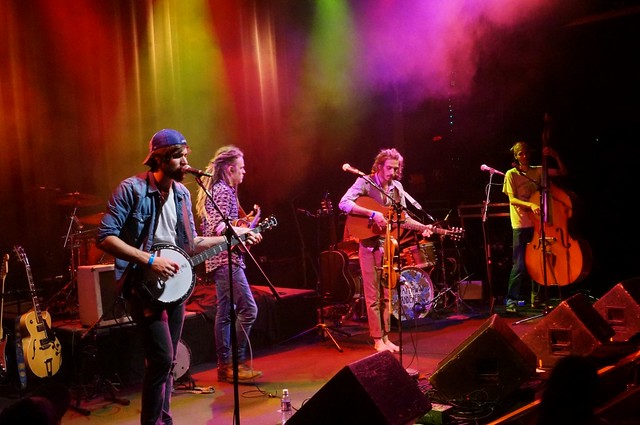
084 Way Down Wanderers
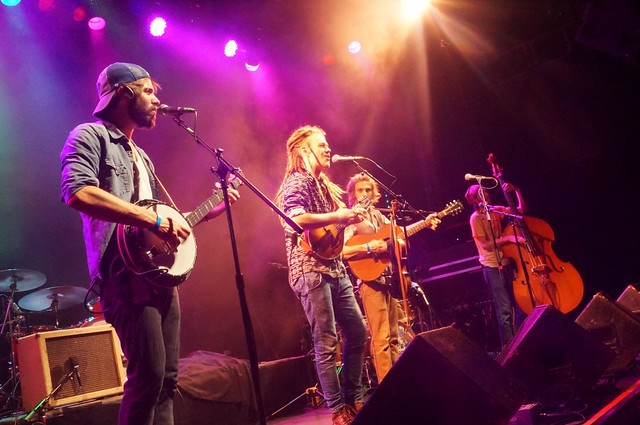
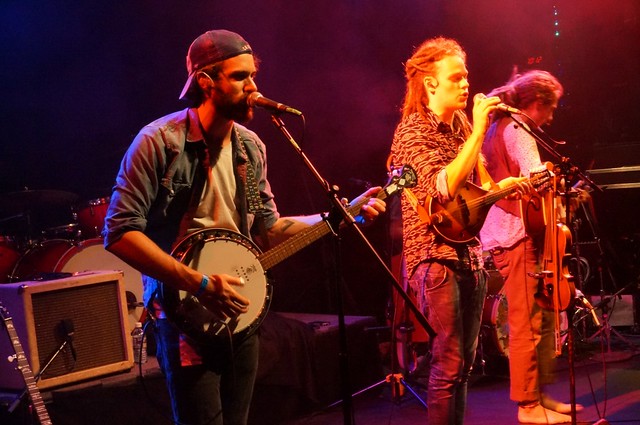
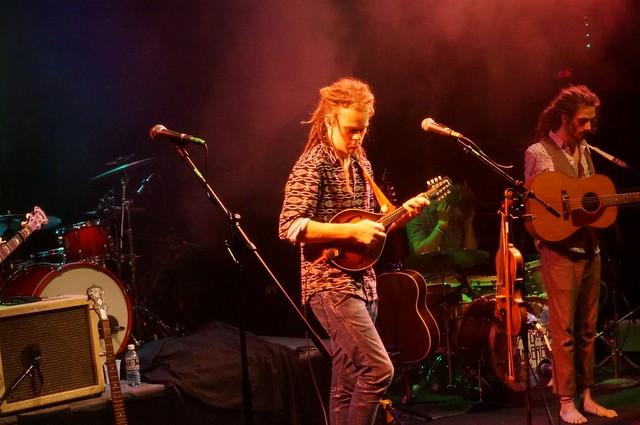
I never thought of Chicago as a haven for bluegrass pickers, but banjo player Ben Montalbano assured me that the city has a healthy, supportive scene, and it's diverse enough there that I'm willing to believe him. On their website, The Way Down Wanderers bill themselves as folk-Americana, but their set at the Fox was steeped in bluegrass, with a fair mix of modern folk and the occasional country twang. Instrumentation goes a long way towards setting that mood, with banjo, upright bass, and a tag-team fiddle and mandolin combo.

059 Way Down Wanderers
But more than that, the vocal stylings and tight harmonies were right on target. Guitarist Austin Thompson had a Dylanesque sound, reedy and nasal, but blending with the others, he could push the songs into that high-lonesome zone. It turns out that most of the band's front line could sing, and the vocal trade-offs meant that each of them got to share lead singing duties.

072 Way Down Wanderers
The Way Down Wanderers had a relaxed, friendly stage presence and a genuineness that resonated with the audience. Even though the venue was far from packed, the band had been out earlier at the farmers' market and had generated some local interest, including a group of Chicago transplants that were happy to reconnect with their home town. The music stayed fairly upbeat and the crowd caught the rhythm and moved along.

085 Way Down Wanderers
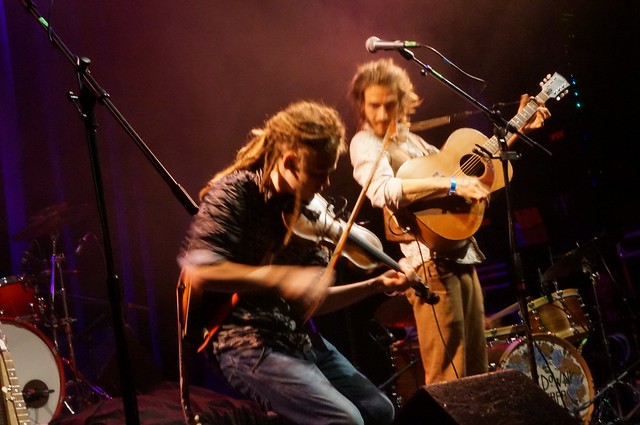
The playing was topnotch, but Collin Krause was the most impressive as he alternated between mandolin and fiddle. At one point, the band dropped out to give him some room and he tore it up on the mando, tossing off lightning fast runs as he developed his motif. When he hit his final note, there was just the briefest pause and then the song began with a vengeance as the whole band launched into the changes that Krause had just laid out. Krause may have stood out the most, but the rest of the band were no slackers.

061 Way Down Wanderers
The Way Down Wanderers hit most of the songs on their new EP, Wellspring, Of these, my favorite was "Burn This City". Although the banjo and mando tied it to their core sound, they pushed the folky sound of the recorded version into a darker rock direction, driving to a speedy thrash ending that had the audience jumping along. "Circles" was a close second, drawing on a host of comfortable, familiar sounds like the Nitty Gritty Dirt Band and Ryan Adams' folkier material.

082 Way Down Wanderers
Within the relaxed bounds of folk-grass playing, the band still managed a number of nice unexpected treats, including a couple of surprising covers. The first was a treatment of "Someday" by the Strokes. A couple of tunes later, they introduced "a very sentimental tune," which turned out to be their ripping version of "I Want You Back" by the Jackson 5. The audience played their part and sang along. The band wrapped up their set with a strong take on the old standard, "I'm Sitting On Top of the World". The Way Down Wanderers' version was fairly peppy, taking it home with a big bluesy ending that tipped it's hat to Cream's reworking of the tune.


131 Arcoda
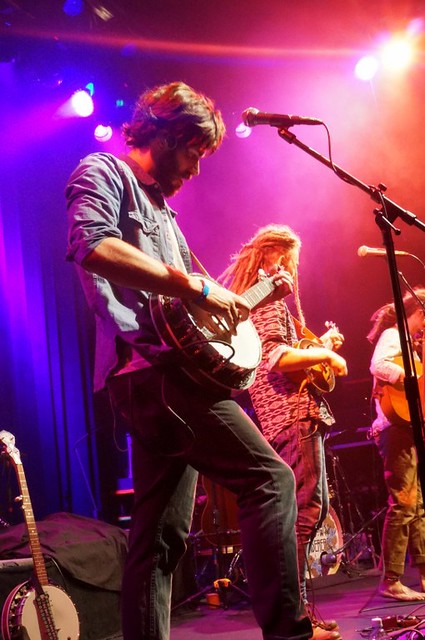
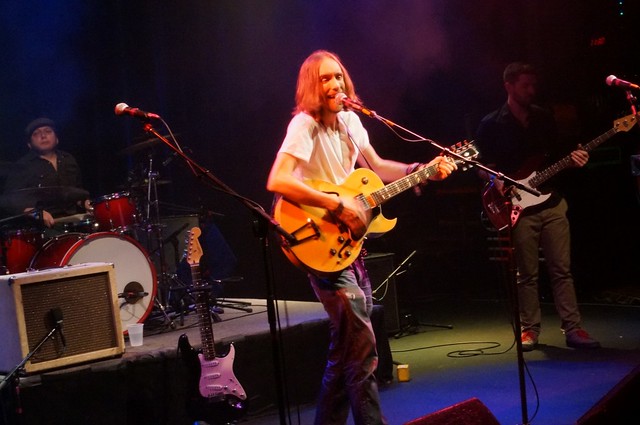
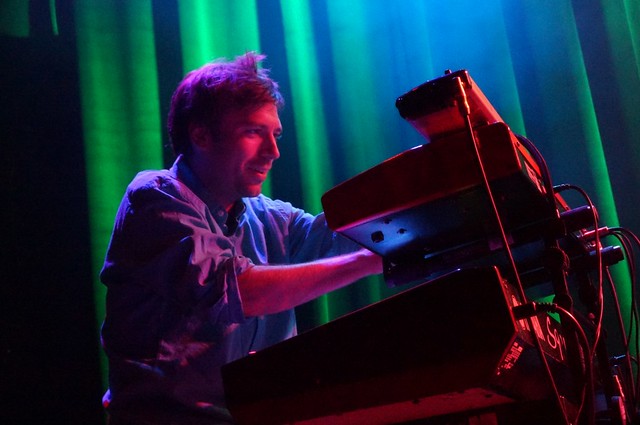
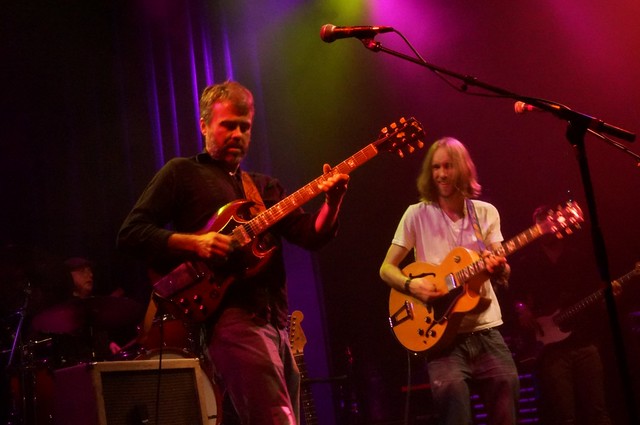
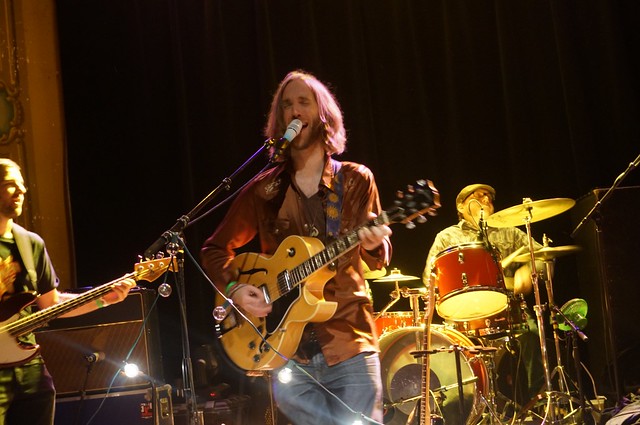
After seeing Pete Pidgeon and his band open last week's show for Atomga, I was excited to catch them as headliners. Where they were an outlier on the bill at that show, this time Arcoda straddled the two opening acts. Their retro 70's vibe and Pidgeon's soulful vocals fit with Mama Magnolia's work, and the main folky/Americana thrust was in line with the Way Down Wanderers' approach. As a bonus, the mix was a lot clearer, making it easier to hear everybody's parts. Both Pidgeon and keyboard player Adam Bodine had great lead chops and this time I could pick out both instruments.

108 Arcoda
It was probably coincidental, but as Arcoda were completing their setup, the house music came around to a jazzy arrangement of Jimi Hendrix's "Little Wing". This provided a perfect segue for a very relaxed start. Pidgeon improvised along with the house music as they were getting their levels set, and then the band sidled into their first real song, playing some spacy, amorphous changes that fit well with Pidgeon's earlier noodling. The meandering keyboards and gentle swells contributed to a trippy groove before it coalesced into a soulful singer-songwriter arrangement, but still with a loose jam band vibe. That made the impact of the tight punches and breaks more powerful when they came.

100 Arcoda
My first impression last week was that Pidgeon seemed fit to channel one of those early '70s folk-rock bands, but this show expanded on that with a wider range of material. Arcoda brought in some jazzier rhythms and retro tones that, along with Bodine's keyboard work and the band's polished arrangements, were very reminiscent of Boz Scaggs and also of Rickie Lee Jones. Pidgeon's voice was flexible enough to support all that and more. His ballads were especially nice. On "Growing Pains", his singing anchored the sweet, wistful music with a grownup wisdom and depth.

154 Arcoda
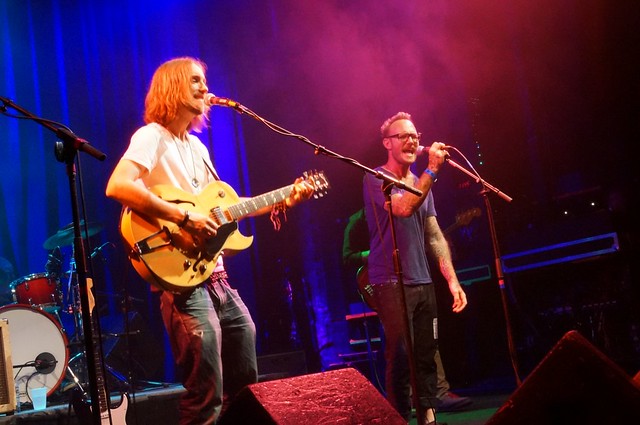
While the band did a fine job on their own, the evening included a couple of guest appearances that really deserved a bigger audience. Soul singer Dechen Hawk joined the band for a tune, and his voice was a perfect match for Bodine's Leon Russell style playing. Hawk and Pidgeon turned out to be birds of a feather, reinforcing one another and finding the emotional heart of the song. Later, local guitarist Peter Stelling sat in and added some great leads on his classic Gibson SG. In both these cases, Arcoda created a good match between their song selection and the guest artist, showing everyone off to their best effect.

204 Arcoda
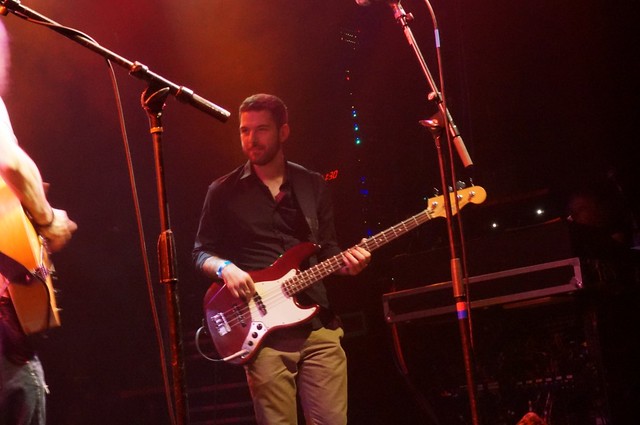
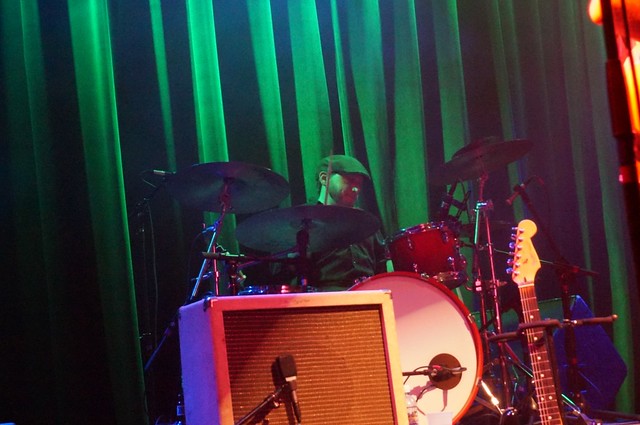
I'm not all that familiar with the band's originals yet, but there were two songs that really jumped out the most for me, maybe because they pushed the band to test their technical ability and generate some excitement at the same time. The first of these was "The Wind and the Lover", a funky number that could have been an outtake from Frank Zappa's Over-Nite Sensation. Bass player Nate Marsh locked in with Pidgeon on the tag riff and then settled into a foot-stomping, gut-bucket bassline. Jared Forqueran contributed to the fun with some wicked drum fills that made the chorus snap. The other high point was near the end of the set; it must have been the next to last song. I didn't get a title for it, but it was a jam band instrumental that started out jazzy, but developed into a monster tune that reminded me of Jeff Beck. While everyone stretched out here, Pidgeon's guitar work was the star attraction. Despite the late night and the poor attendance, this was an ecstatic celebration of shred.

134 Arcoda
I'm sure the band would have appreciated a better turnout, but no one in the hall could complain about Arcoda's performance. Like professionals, they played like it was a sold-out show and they challenged us to be an audience worthy of that experience.

109 Arcoda

More photos on my Flickr.

Monday, June 8, 2015

Concert review - Atomga CD release party with openers

6 June 2015 (Bluebird Theater, Denver CO)

4.25/5.0

Concert lineups often make for strange bedfellows, but honestly, how many African-influenced, horn-intensive dance bands are knocking around Denver for Atomga to partner with? Okay, there are probably a few, but this bill opted for a potpourri of acts to build up the energy. For the most part, this worked out well. Atomga drew a big, supportive crowd, happy to move to the music. They've just released their new album, Black Belt, this week and this was a first chance for many of us to hear these songs live.

The Bluebird was an intimate setting for the show. The stage was a little cramped with band equipment and personnel, but the band transitions went fairly smoothly and quickly. Throughout the course of the evening, though, the mixes were far from ideal. The instrumental balance for the first two acts left some of the players seeming superfluous because their parts were so hard to pick out. Also the vocals were a bit muddy and indistinct for everybody. The audience had no trouble hearing the beat, though, and moving along.


013 Arcoda
Arcoda might have seemed like the odd band out: their retro-tuned Americana didn't have any horns and they only had a paltry four members. All true, but Pete Pidgeon and his group proved to be the perfect aperitif for the night. Pidgeon looks like he should be heading up one of those early '70s California rock bands, like the Eagles. Their set didn't settle for a peaceful, easy feeling, though. While the first song was relatively laid back, his cover of Bob Dylan's "Tonight I'll Be Staying Here With You" got things going with a tempo that was more upbeat than the live Rolling Thunder Revue version. Adam Revell's keyboard work recalled Billy Preston's soulful accompaniment, giving the tune a funky drive. Pidgeon's tight pedal tone guitar lines were buried in the mix, especially by the fat punch of the drums, but when they shone through, they sounded great.

016 Arcoda
The band largely deferred to Pidgeon, letting his expressive presence take center stage, and he had the confident spark to own it. Aside from that Dylan cover, most of the material seemed to be original, and Pidgeon inhabited the songs. As he and Arcoda deftly handled the dynamic musical shifts, his body language choreographed the intensity of the songs. Even though this was a very different groove than we'd hear for the rest of the night, the band's tunes did find enough funky rhythms to fit in, even when they shifted into a more modern indie rock style. I look forward to catching these guys at another show. I know they're playing at the Fox in Boulder next weekend.


021 Human Agency
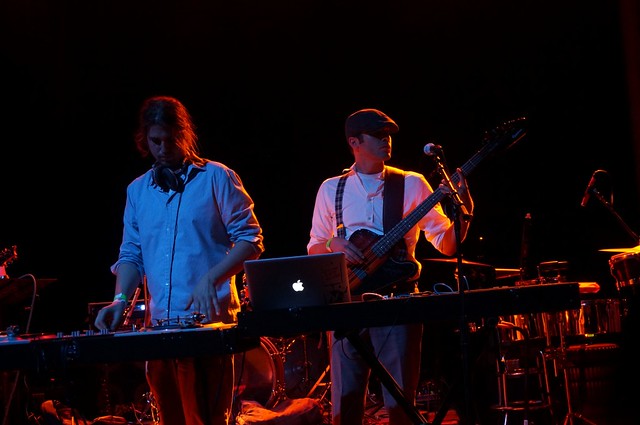
On the surface, Human Agency should have been a smoother fit on the bill. Unlike Arcoda, they had a horn section and their heavy drum beats tapped into a dance friendly space. Unfortunately, their set never really gelled and they lacked the stage presence to engage the audience. To be fair, it turns out that this isn't really the group's usual milieu; normally, they're an electronic dance trio with a pair of DJ/sound engineers and a live drummer. In that world, the shoegaze focus on the equipment would be perfectly fine. Incorporating the brass and a guest guitarist for this show provided some protective coloration, but the amorphous repetition couldn't hide that they were out of their element.

027 Human Agency
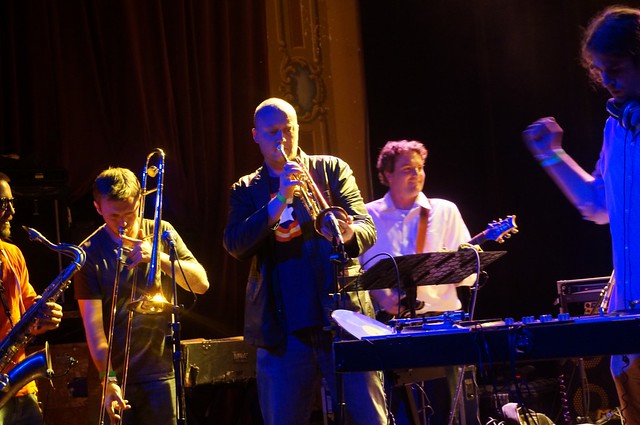
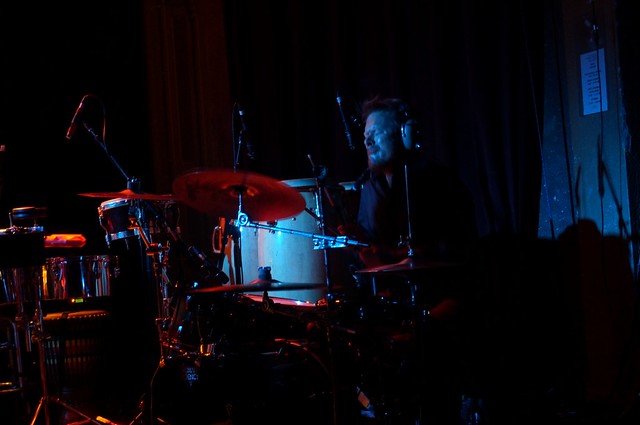
The side players integrated in fairly well, responding to signals so breaks and endings were tightly synched, but there wasn't enough structure to suggest more than just some horns jamming along to a pre-recorded backing track. The muddy mix did them no favors; the turntablist may have had more technique than a transformer scratch and a bit of chopping, but it was impossible to tell. Even the horns alternated between blaring and anemic. The drums were the only instrument that consistently stood out. The good news is that Jonas Otto was a phenomenal player. Locked into his own world with eyes shut and headphones tight, he nonetheless nailed every tag and dismount.

032 Human Agency
Listening to Human Agency's Soundcloud page, they do have some decent tracks. I recognized some of "Half Plug" from the show, but the recording had nuances that we couldn't begin to hear at the Bluebird. They did provide a buffer between Pete Pidgeon's set and the horn heavy sound later, but it proved to be more filler than filling.


061 DBRS
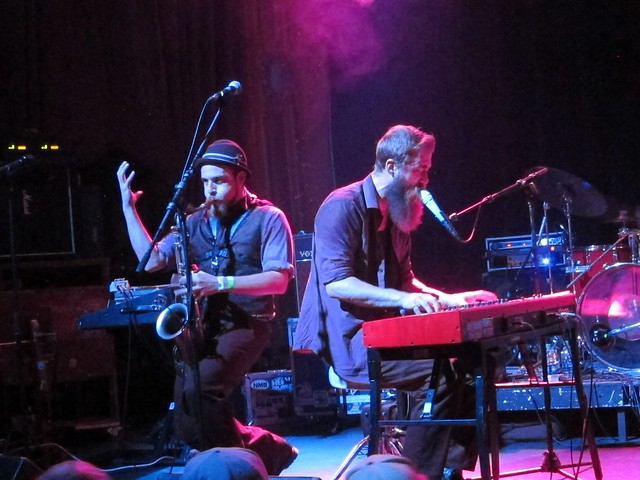
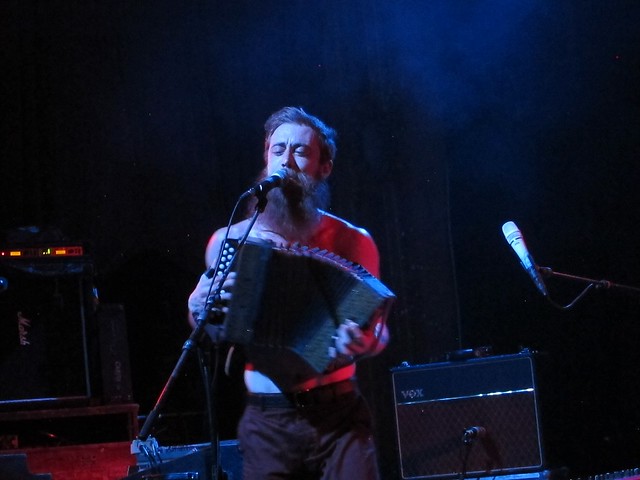
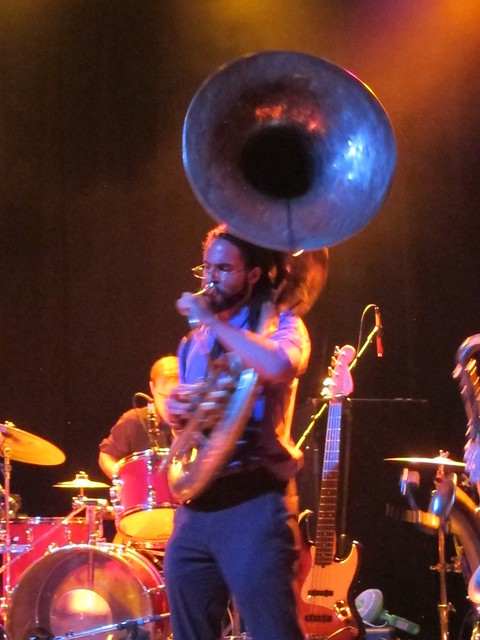
About five minutes into Dirty Bourbon River Show's set, I realized I was face to face with my newest performance nightmare: the thought of having to walk on stage after this band and their madcap circus dance music. Aside from being great players, all of these guys are very visual, with the king of the crew being frontman Noah Adams. Adams had a thick, scary beard that three mountain men could easily timeshare, but he was also one of the most electric performers I've seen in quite a while. His sense of showmanship and magnetic personality were almost unnerving. While he mostly played keyboards, he had a couple of surprises up his sleeve. including a pocket trumpet and a miniature soprano trombone, so we were never sure what else he might do. He and the band knew how to work the crowd up and manage their energy.

058 DBRS
DBRS opened with the Eastern European gypsy jazz of their song, "Wolfman" and Adams embodied the character, taunting and challenging the crowd. This was a strong start, but he showed that he could bring that same intensity to a more serious tune on the drag blues of "Esmerelda" from their recent album, Important Things Humans Should Know. As the band wound their way from these sounds through Dixieland turns to funky grooves, the overall sense was a mix of Dark Carnival and danceable funk. Several times during their set, a couple of the players referenced "Entry of Gladiators" in their solos to cement that sense -- if you imagine a circus song, that's almost certainly the one you're thinking of -- but, despite the sardonic humor, DBRS was no novelty act.

073 DBRS
Instead, they're like a high quality party band pumped up to Major League level, but leavened with just the right amount of quirky weirdness to keep the audience off balanced and intrigued. Adam's rough growl was more than balanced by backing vocalist Sandra Love, who drifted on and off stage to add her seductively soulful voice as needed. Regardless of who was singing, though, DBRS was always swinging. The crowd's dancing and cheers were all the encouragement the band needed.

043 DBRS
As much as I enjoyed Adams' musical romps from keys to accordion to trumpet, I was most impressed with their boss of the bottom end, Jimmy Williams. Williams divided his time between the electric bass and the sousaphone (and a one-off flute line). At one point, he muscled his way through a tight walking run of 16th notes on the sousaphone, maintaining the rolling rumble of bass notes without missing a beat or looking out of breath. Given that the band is from New Orleans and this was in the Mile High City, that was an impressive feat!

053 DBRS
At the end of their set, after the flashy drum solo on a full kit and extension ladder, DBRS finally took it home with their last song, but even then, they sprung a twist. They dragged out the ending with a final loose meandering riff that suddenly transformed into a quick reprise of their opening tune. Adams is indeed the Wolfman, and we cannot stop him.


089 Atomga
A lesser band might have worried about being upstaged by Dirty Bourbon River Show's manic set, but Atomga was unflappable as they set up for their turn. They were clearly excited to deliver the goods to the nearly sold out house. Everyone found their position on the darkened stage and, after a brief amount of preparation, a simple horn line coalesced into a steady vamp with everyone falling into place. In standard Afrobeat fashion, they took the time to assemble and set that groove until it became a foundation for wider exploration. This was actually a good model for the show as a whole, because the first several songs stayed on familiar ground before the group started digging into their new material.

106 Atomga
By the second tune -- "Empire", from their eponymous EP -- Atomga were playing wholly in the moment, finding that shared space were everything just flowed: Frank Roddy's hand offs to Leah Concialdi's baritone sax were effortless and natural, singer Kendra Kreie's voice was soulful with an iron core, and the drums and percussionists toyed with syncopation, inciting the crowd to movement. It's hard to identify the exact moment that it happens in a given show, but there's always a tipping point where it's not just music, but an invitation to hypnotic, ecstatic dance.

097 Atomga
Atomga's dedication to the groove and to the joy of their music eliminated any sense of competition with DBRS or any of the other acts. As always, it's a treat to witness the band's interdependent yin-yang aesthetic: their arrangements are tightly coordinated, but it's just as important to them to have fun up there and leave room for improvisation. Roddy and Concialdi were focal points, as usual, but everyone in the band brought their own zest to the show, whether it was Alice Hansen's energetic trumpet riffs, Casey Hrdlicka ripping through a wah-wah driven minor key solo, or Peter Mouser's classic psychedelic organ work.

094 Atomga
Everybody pulled their weight, but if there was an MVP for the night, it was Samual Lafalce on bass, who was amazing. Apparently in honor of the title of the new album, he wore a karate gi and black belt. Although he stuck to the back line, he put on his own show, mugging for the crowd with a melodramatic scowl (and twinkling eyes) and hamming it up with rock star poses. His campy pantomime was eye-catching, but it was even better to surrender to his expertly fashioned bass lines that locked into fine-tolerance perfection. His playing was central to setting up the backdrop for the rest of the band to work against, especially on the new tunes.

082 Atomga
Speaking of the new album, the setlist included some real gems that I'm looking forward to hearing again. I think my favorite was "Sly Devil", which set up a kind of reggae groove with Hrdlicka's guitar swaying through the chords rather than hitting a straight chank. Lafalce's bass provided a subtle bounce as Roddy's lazy, meandering sax work wound over the beat, but really everybody had the chance to contribute key elements to the intricately assembled whole. Kreie's vocal line reflected the relaxed mood of the sax groove, but the challenging vocal mix made it hard to catch the lyrics in detail. What I could discern sounded political in a similar vein to "Empire".

080 Atomga
Aside from all the musical fun, Atomga also celebrated Black Belt's release with their own party clowns for this show. Their "bubble brigade" filled the hall and they also tossed inflatable beach ball creatures out into the crowd. The only thing missing from this baby shower was a diaper cake. Check back here soon for a full length review of Black Belt, but in the meantime, if you get the chance to catch Atomga, jump on it: they continue to be one of the best live acts in Denver.

105 Atomga
More photos on my Flickr. Also Black Belt is available on Atomga's bandcamp page.

Tuesday, March 10, 2015

Recording review - The Delta Routine, You and Your Lion (2015)

Bluesy twang and a transparent agenda

3.25/5.0

Southern rock formed like a metamorphic mineral deposit when blues, country, rock and folk were combined and transformed under the social pressures below the Mason-Dixon Line. While the West Coast hippies spiraled off into loosely structured jams, bands like the Allman Brothers captured a laid back country blues that built on relatively coordinated musical arrangements. Later, Lynyrd Skynyrd, Molly Hatchet, and others expanded on the sound, but the country influence grounded the music with a folksy genuineness that contrasted with more flamboyant psychedelic excursions. Listening to The Delta Routine, with their plaintive laments and Antebellum dignity, you can tell they've drawn from the same well. The big surprise is that they're from Milwaukee, not Macon. They’re too raw and earthy to be dismissed as posers; instead, it marks them as disciples of the Southern diaspora, as well as the Americana legacy of bands like Uncle Tupelo.

You and Your Lion is chock full of bluesy twang, but unlike most Southern rock albums, it rarely slips into simple blues progressions. Instead, The Delta Routine shows a lot of versatility, relying on vocal tone and guitar style to pull it all together into a coherent sound rather than repeating a simple formula. Their big tent has room for James Gang style jams like “On a Saturday Night”, but also the stripped down drag beat of “Chains Off Me”, and they seem just as happy to lean towards the Rolling Stones as Commander Cody or the Georgia Satellites. When the band does drift further afield from the Southern rock mainline, such as the staccato Latin beat of “Nothing on Me” or the bouncy indie rock on the title cut, the rootsy flannel of Nick Amadeus’ voice reinforces the connection back to an Americana tone.

The Delta Routine deserve respect for creating that consistent feel without falling into a rut. But if there’s a Achilles heel here, it’s in the relative transparency of the songs: the band’s versatility is engaging, but each track is fairly straightforward. To some extent, that’s refreshing -- a solid hook and little lyrical pretension trumps the tortured artist who drapes their issues behind overworked metaphors and oblique allusions. On the other hand, I miss the intricate formation playing that Skynyrd or the Allmans were known for and these songs make their biggest impact on the first listen.

Still, the impact can often be quite effective. In particular, “Home With You” builds quite nicely, with a stark opening that lashes the raspy vocals to a light wash of accordion before rising into a fuller wall of instrumentation. Each verse starts out with a melodic tag that borrows from “Mother’s Little Helper” by the Rolling Stones, and the familiar riff and chugging bass evoke that song’s fatalistic sense of overwhelming outside forces. But the more assertive chorus shows that The Delta Routine hasn’t surrendered just yet. The contrasting pulls of the verse and the chorus give the song some emotional weight and the loose, down home family jam arrangement lends it a patina of sepia-toned tradition.

You and Your Lion isn't a life changing album, but just like a backyard pig roast or Fourth of July picnic, it's a comfortable ritual that most of us can relate to and enjoy, whether we're Southerners or not. In that, The Delta Routine's name is completely appropriate, even in Wisconsin.

Friday, December 5, 2014

Recording review - Jackson Browne, Standing in the Breach (2014)

Solid hooks can't quite fill the gap between the personal and the political

It’s taken six years but Jackson Browne is back again to refute both the critics and himself. On 2008’s Time the Conqueror, Browne was so immersed in his political message that he lost his connection to the emotional core that has driven his popularity. Worse, reviewers rightly bemoaned the album’s weaker musicality. On Standing in the Breach, Browne digs deep and resurrects the subtle but full arrangements, the rich melodic ideas and the well-crafted songwriting of his early albums. While about half the material carries forward the idealism and leftist politics he’s emphasized since the 1980s, he leavens that with a variety of life sketches that bring back the missing personal element. To a great extent, the album succeeds in delivering the classic Jackson Browne sound, in part because his voice is as strong and clear as it’s ever been. But nothing in this offering is as moving as “Song for Adam” or “From Silver Lake” from his solo debut. “Here” is the closest contender, with lyrics about loss and disconnection, but it only offers Zen comfort for the pain, rather than empathy or catharsis. Despite this, it’s still a very elegant little package. The music captures a sense of clarity and coming acceptance while the meditative vocal delivery bridges the divide between the music and pain in the lyrics. That complexity is the hallmark of Browne’s best work.

Browne begins the album with a peace offering to longtime followers, “The Birds of St. Mark”, which dates back to 1967, well before his solo career. This had only been released in a live piano version on 2005’s Solo Acoustic, Vol. 1, but this studio take settles into his original vision of the tune as a Byrds-style song. True to that, he’s picked up the tempo and his collaborator Greg Leisz fills the piece with Rickenbacker 12-string chiming worthy of Roger McGuinn. The track rolls out easily and the arrangement is quite polished. Those old fans will appreciate the gift and it does call back to the rich metaphorical lyrics of his earliest work. It’s a good song, but it feels a bit precious and dated. Written (appropriately) in the voice of a much younger man, it’s a bit out of place on Standing in the Breach. There’s an immaturity in the flowery language and allusion, using them as a shield against being seen as shallow or uncomplicated. It’s not clear if Browne is reaching back to his lost youth or merely reminding us of who he was. In either case, although it’s quite pretty, it doesn’t seem as engaged as his solo piano performance.

The album’s title offers its own multilayered message. The song, “Standing in the Breach”, is an affirmation, even as it recognizes the dire times we face, “Try to put our world together/ Standing in the breach.” But that phrase also touches on where Browne is trying to position himself, reaching out to both ends of his long career and proposing continuity between emotional meaning and social message. To his credit, he draws on both sides, but he rarely connects with the two on the same song. The closest he comes is on “The Long Way Around”, which ties a personal perspective to his commentary in an attempt to soften the preachiness. He doesn’t quite pull it off, but it still turns out to be one of the strongest tracks on the album. The low-key, sparse arrangement relies on a simple acoustic riff, a steady drum beat and the melodic bass work Browne has a penchant for. It’s a hopeful sound that contrasts with the litany of societal ills he identifies, shoehorning in pollution, greed, gun violence and ingratitude among the privileged. The vocals fit the music best, with a bouncy flow like “All Star” by Smashmouth and Browne lays down some tight lyrical turns. The track is filled out by reverse-gated guitar licks and sweet femme harmonies. Unfortunately, his message ends up a little muddled by the kitchen sink list and dated references like, “It’s hard to say which did more ill/ Citizens United or the Gulf oil spill,” but it’s catchy enough to gloss that over.

Flaws aside, Standing in the Breach is a big improvement on Time the Conqueror and it rekindles my appreciation for Browne as a writer and performer. While it doesn’t turn the clock back to the early 1970s and he can’t quite close the gap between his classic hits and later activism, the album shows that he can still turn a nice phrase and craft a solid hook.

(This review first appeared on Spectrum Culture)