(Artwork care of Karen Ramsay (www.karenramsay.com), profile photo care of brianlackeyphotography.com)
Showing posts with label recommended. Show all posts

Thursday, June 25, 2015

What's cool? Mastodon, "Asleep in the Deep"

What a long, strange trip

Mastodon guitarist Brent Hinds may have slipped his leash recently when he ranted about his hatred of heavy metal in an interview with Guitar Player. He's evidently been trying to overthrow the band from the inside for years, to make them into something "not such a heavy metal band." A quick listen to their latest single, "Asleep in the Deep" from last year's Once More 'Round the Sun shows that he's still got his work cut out for him.

The song has a fair amount of progressive rock influence, with rhythmic shifts, an interesting harmonic flow, and a trippy bridge interlude, but the band's metal credibility remains intact with offset guitar grind, restless bass throb, and a thickly shadowed vocal atmosphere.The lyrics paint a paranoid picture of threat, but ultimately seem to find victory against the dark miasma of fear. Maybe so, but the feeling is anything but joyful or confident.

As enjoyable as it is to settle into the Gothic embrace of "Asleep in the Deep", this showed up on my radar because of Mastodon's new surreal video for the tune, directed by the artist, Skinner. Think of it as the psychedelic response to the GoPro cat channel on YouTube. With his owner passed out on the couch, our feline hero splits in search of adventure. Almost immediately, he finds himself in a strange black-light zone, surrounded by a pack of bizarro cat-monkey puppets. And that's before the cat is dosed with some psychoactive milk. Then it gets a little strange...

This is definitely a treat, so sit back and enjoy:

Thursday, June 4, 2015

What's cool? Post Paradise, "Ordinary"

Driving guitar and silky cello power a solid new single 

This is not a humble brag, but as a music critic, I get around a hundred emails a day promoting an overwhelming variety of bands. That's one of the ways I find out about all kinds of under-the-radar acts and their music. Occasionally, though, the system tosses out a surprise. This time, it was a local Ft. Collins band, Post Paradise. I've seen these guys several times, but haven't gotten around to reviewing their show. Fortunately, their PR people at LaFamous Press brought them back to my attention with a track from their upcoming EP.


"Ordinary" starts with a tight nervous energy spawned by the one-two punch of Nick Duarte's driving guitar and the edge of desperation in his vocals. "A heart, a flame/ An ordinary name/ Too smart to believe it." The band joins in for the second time through the opening lines, creating a relentless sense of inevitability; the ride has started and we're buckled in. It's a solid song, but Amy Morgan's cello makes it anything but ordinary. She flows between the registers of her instrument, first offering silky bass accents and then sawing through some higher notes to support a staccato guitar strum.

Morgan enriches the band's sonic palette, but Post Paradise builds on it with songwriting that takes advantage of all their players to develop stronger dynamic changes and a range of melodic motifs that are both non-trivial and catchy. All of this serves to remind me of how much I've enjoyed their performances, and spurs me to catch another show soon -- this time for more than just my own enjoyment.

Sunday, May 10, 2015

Concert review - Southern Culture on the Skids with the Revelettes

7 May 2015 (Shubas Tavern, Chicago IL)

4.75/5.0

Fort Collins, CO has a decent music scene and I often make it down to Denver for shows. This time, though, I went a little further afield. My friend, Brent, invited me to Chicago to see Southern Culture on the Skids, and I couldn't say no. In a stroke of brilliant timing, I arrived for possibly the nicest two or three days Chicago has had since before the winter. The days were warm and clear and it was a pleasant evening walk from Brent and Lu's place to Shubas. The venue was relatively small, but SCOTS' enthusiastic fans made it a party evening. Great music, killer weather, and warm hospitality made this a wonderful vacation trip.

010 The Revelettes
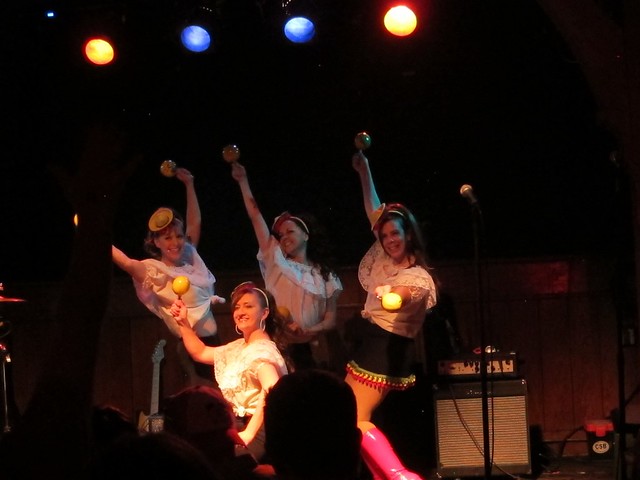
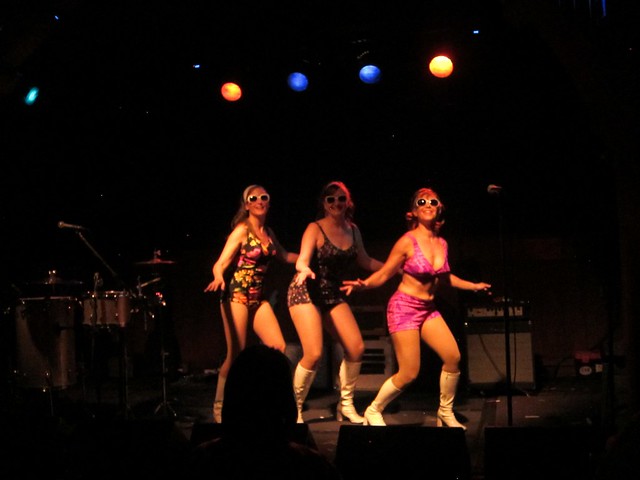
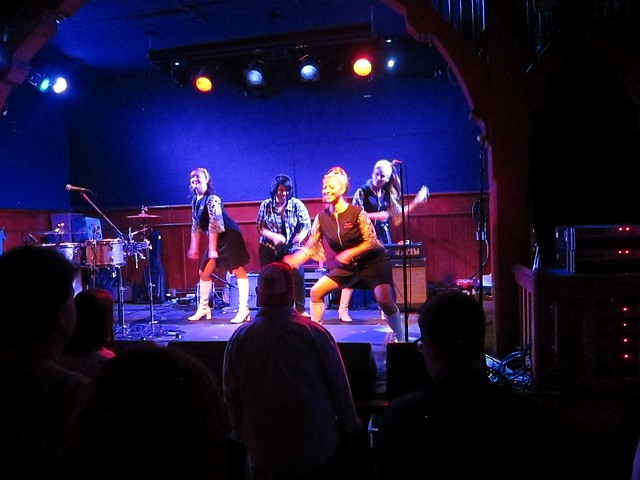
Finding the right opening act is always a challenge . Most bands are either thrown together by the venue or they partner up for a tour, but that doesn't always turn out well. Sometimes the problem is that the audience resents anyone that makes them wait for the headliner. Worse, the opener can foster the wrong mood and make it harder on the main act. Southern Culture on the Skids solved that problem handily by bringing in local go-go troupe The Revelettes as their cheerleading squad.

004 The Revelettes
The show started with a pair of  dancers shimmying in retro campy style accompanied by pre-recorded music. Then, the remaining three Revelettes tag teamed in for the next song. After a bit of choreographed fun, they got down to business. SCOTS has recently re- recorded their 1994 album "Ditch Digging" and the Revelettes brought up an audience member to help teach us all some dance moves for the title track. The volunteer picked up the steps quickly and soon fell directly into formation with the troupe. She had such a good time that she stayed on stage for the remaining songs.

006 The Revelettes
The fun vibe and enthusiastic dancing made this a perfect warm up for the band and, later, we'd get the chance to prove we remembered the "Ditch Diggin'" steps.

041 Southern Culture on the Skids
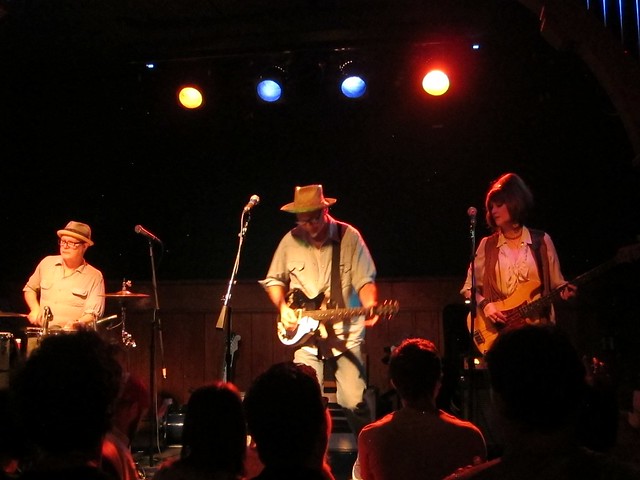
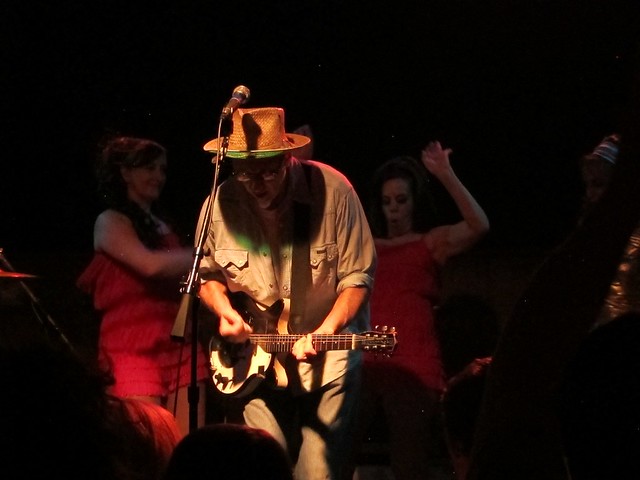
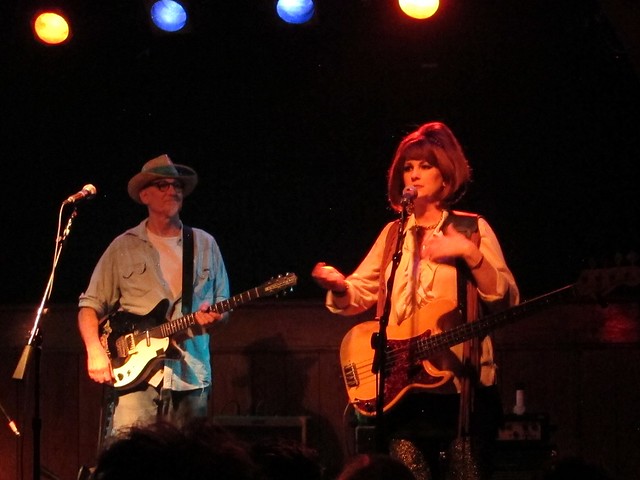
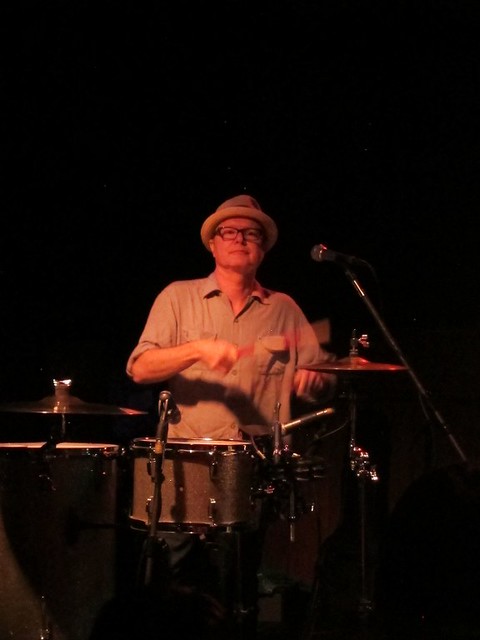
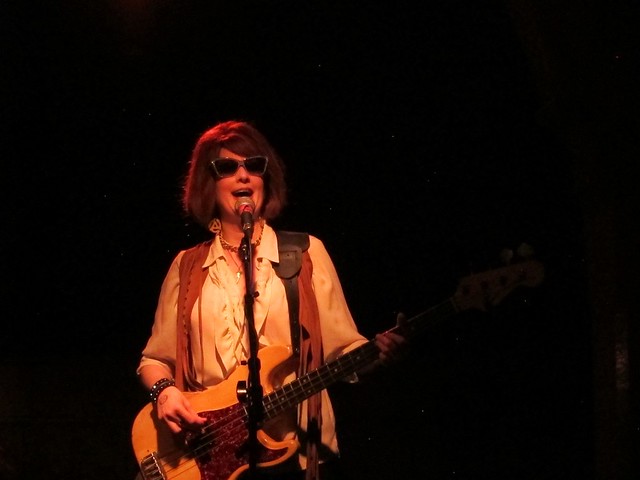
Southern Culture on the Skids had a casual start as bass player Mary Huff and guitarist Rick Miller sauntered out first and picked up their instruments. Huff briefly launched into Lynn Anderson's "(I Never Promised You A) Rose Garden", but it was just a tease before Dave Hartman came on stage on drums and the show officially began with the sharp-edged twang of "Skullbucket". Huff's solid bass vamp gave Miller all the foundation he needed to shred his way through the surf-style instrumental, and the crowd reveled in the bright distortion of his overdriven Silvertone.

046 Southern Culture on the Skids
As the set progressed, I was struck by the communal feel between the band and their fans. They somehow bridged the relaxed celebration of a Southern pig roast and the congregational fervor of a faith healing service. Even as they tapped into a campy sense of fun, the trio imbued the songs with a respectful intensity. They smoothly flowed from surf to garage rock, chicken-picked pedal tones to thrashy punk rhythms, and bluesy vamps would give way to honkytonk country. The crowd tracked every twist and turn, intimately familiar with the songs, ready to sing along or feel the beat deep in their bones.

011 Southern Culture on the Skids
SCOTS' playful attitude was at the forefront, with the tongue-in-cheek Southern themes of the lyrics and the band's stage presence and appearance. They pulled out some of their classic audience participation moves: volunteers distributing oatmeal pies from the stage and launching fried chicken into the crowd during "8 Piece Box". It was fun to watch Miller get a mischievous twinkle in his eye before he launched into those songs whose title says it all, like "Liquored Up and Lacquered Down" or "Put Your Teeth Up On the Window Sill". And while his green visored fishing hat and Huff's bouffant wig may have played to some campy stereotypes, they wore them comfortably, with little sense of affectation.

020 Southern Culture on the Skids
But while we all laughed with them at the silliness and spectacle, it was clear that the band and the fans took this music seriously. Surf numbers like "Meximelt" locked into a psychedelic swirl, driven by Hartman's relentless tribal drum pounding while Miller intently channeled the legendary Dick Dale with a brambled wall of guitar notes. "Papa Was a Preacher, But Mama Was a Go-Go Girl" could have been a one-joke tune, but the honkytonk rhythm cradled Huff's twangy vocal, and it wasn't hard to think that there's a grain of truth in that: SCOTS understands the surety of the preacher, the physicality of the dancer, and the balance to love both equally.

049 Southern Culture on the Skids
After the show, the band wandered out to sign autographs and chat with the fans, many of whom had seen them the night before in Berwyn. Plenty of performers do the meet-and-greet ritual, but even here SCOTS distinguished themselves. Rather than rush people to clear through the lines, they took the time to connect with each one. They'd humbly deflect the gushing praise and try to have a real conversation.Audience members understood that and waited patiently, knowing they'd get their chance to reminisce about their favorite show or tell the adventure of how they had made it to the venue that night. It was great way to show why, on stage or off, Southern Culture on the Skids are a class act.

043 Southern Culture on the Skids
More photos on my Flickr.

Wednesday, May 6, 2015

What's cool? Martin Gore, Europa Hymn

Unscripted reflection

When I was a kid, I loved to go to the natural science museum and look at the dinosaurs. There was something cool about seeing the articulated skeletal fossils next to artists' renditions of how they might have appeared in life. It was a while before I realized that those sketches were basically just guesswork, but that epiphany opened up possibilities in my mind as I imagined alternatives to what had been put before me. Even now, I prefernot to have everything all spelled out. The best books, movies, or music leave a bit of mystery that pushes some of the work onto the audience.


That's exactly why Martin Gore's new single, "Europa Hymn" is so enjoyable, It's more like a gesture drawing than a fully developed song. Even though it's barely more than three minutes, Gore takes his time to place a small set of elements -- synthesizer swells and electronic beats -- and he lets them just reverberate within the sonic space. The track is moody and reflective, but the sparse arrangement doesn't provide much additional narrative direction. It rises from the synthesizer waves, builds up some rhythm to suggest a kind of down-tempo electro-pop, and then sinks back under the lonely surface, leaving room for a world of interpretations: it could represent the arc of a relationship, the ebb and flow of life, or even the sense of a sculptor finding the shape that hides within a block of marble.

Gore is best known as one of the founding members of Depeche Mode, and it's easy to hear the connection between this and his band work. But while the palette is familiar, this song distills synth-pop down to its electronic essence, discarding the urgency and tension to focus on an ethereal sense Zen purity, where the listener project their own meaning.

"Europa Hymn" is one of 16 tracks from Gore's new album, MG, which came out at the end of last month.

Tuesday, April 28, 2015

What's cool? Ovenizer, "Satan's Washing Machine"

Campy goodness, but solid post-metal delivery

Scratch the surface on most stuff and it's all the same, whether it's the latest tween girl pop fluff or a technically accomplished bluegrass banjo picker. What you see is what you get, and either you already like it or you don't. Like everyone else, I have my share of simple tastes, but I really love music with some layers to it, where you can dig in and find something unexpected. It's why I love bands like Too Much Joy, with tight-rocking, smart ass songs that often turn out to be more serious than they seemed at first.

With all the bands that I come across, it's always pleasant when something surprises me, and that's what caught my attention with the Finnish post-metal band Ovenizer and their new single, "Satan's Washing Machine". The title alone is powerful in its ridiculousness: how deep in the barrel of metal imagery did they have to scrape to come up with the idea of Lucifer's home appliances? Before I even listened to it, I was ready for either the most pathetic metal band ever, or some group trying to pull a Spinal Tap.


The opening lines recall Spinal Tap's "Stonehenge", suggesting it's more likely a parody play: "Spark flew from the tree/ Spawned in Satan's Washing Machine." But I've watched the video a few times and they treat it pretty seriously, avoiding any sly, subtle winks. Regardless of how offbeat the theme is, though, the song is well made. The opening imports some folky acoustic guitar to give the tune some roots while the lead singer's husky voice adds the visceral punch. The open, airy arrangement quickly fills up with solid drumming and a tight guitar riff. The chorus expansively edges into post-rock with thick walls of cymbal, guitar, and bass The double pedal kick drum work gets more impressive as the song builds, hitting a climax during the bridge.

The video adds its own perspective. It may have been shot on a budget, but it's lovingly constructed. The band plays on packed snow, surrounded a stand of tall trees with a torch burning in the background. In a nod to the inspiration, the set also includes the titular washing machine. You can tell it's Satan's because it's been eviscerated and it's conveniently labeled with "666". To match the rising intensity of the song, members of Flamma Fire Group add some pyro excitement with spinning torches and spitting flames. Eventually, everything is on fire, including the instruments. By the end, the camera tracks through the snow to find the smoking, demonspawn Kenmore and then cuts back to the instrument pyre, merrily burning.

The video may revel in campy goodness, but the band plays it straight. If you don't pay too much attention to the lyrics, it's a solid post-metal outing. Maybe it's less Spinal Tap than Frank Zappa. Zappa was happy to entertain his audience with silliness like "Don't Eat the Yellow Snow", but that was the sugar to get them to swallow his musical ideas. Ovenizer certainly isn't the metal Mothers of Invention, but their growling tribute to Hell's laundry room is weightier than the first glance.

"Satan's Washing Machine" is from Ovenizer's latest album, SWM, on Norwegian Pope Records.

Recording review - Colin Stetson and Sarah Neufeld, Never Were the Way She Was (2015)

Violin and saxophone circle like perfectly paired dancers

4.25/5.0

Surrounded by inorganic synthesizer tones, it's good to be reminded of not just analog sounds, but traditional instruments as well. Woodwind music is rooted in the raw physicality of breath. Strings, on the other hand, can sing with the expressiveness of an unchained voice that transcends mere respiration and can also slant into otherworldly realms. On Never Were the Way She Was saxophonist Colin Stetson and violinist Sarah Neufeld blend their unique sonic fingerprints to find a magic in that meld that yields a yin-yang of cooperation and conflict. Of course, they've had plenty of time to learn each other’s style, working together in Arcade Fire and Bell Orchestre. This album of duets finds them gracefully connecting like perfectly matched dancers; the interplay sounds effortless, but closer attention reveals the complexity.

While Stetson’s side work is always impressive, his solo trilogy series, New History Warfare shows off his development as a master of his instruments. In particular, he’s learned how to harness a variety of techniques -- growls, vocalizations, and creative recording tricks -- to create stunning soundscapes. Over the course of these albums, he’s evolved his vocabulary and expanded the boundaries of the instrument. In his hands, the sax moves beyond breathy riffs and warps into experimental electronic tones and dark rumblings.

Neufeld is perhaps less inclined to play at the outside edges that Stetson enjoys, but her own solo work, 2013’s Hero Brother, demonstrates her stylistic and melodic range. She has a good sense of dynamics and how to build just the right mood. Her playing has a fluidity that accommodates sudden shifts from anxious obsession to angelic soaring, from ethereal reverie to passionate engagement.

Never Were the Way She Was feels like a continuation of Stetson’s recent work, but Neufeld pushes him into dialog with melodic parts that accentuate his ideas even as they offer a counterpoint. As in any conversation, the lead can shift from one speaker to another, and Neufeld and Stetson are comfortable circling one another in this way. But the real treat comes in those rare moments when their playing doesn’t change roles overtly, but the context shifts and, like figure and ground reversing in an optical illusion, suddenly the supporting instrument is standing at center stage. “In the Vespers” is a fine example of this. Neufeld’s staccato violin sets up Stetson’s rolling minimalist line as the focus. While the arpeggiated riff seethes with impatience and ambition, the violin maintains order as it relentlessly slices out its measured pace. In a subtle move, Neufeld modulates the tonal base and Stetson follows, acquiescing the lead to her. The tension builds and Stetson adds an anguished vocalization to his part and the tune becomes a battle of wills. Neufeld disengages and the sax twists in on itself. As the busy notes percolate, the violin returns with longer tones that calm the track down into resolution. Stetson is adept at creating that sense of roiling conflict, so Neufeld’s sense of harmony, both on violin and wordless vocals, provides a nice counterbalance.

Following the model of Stetson’s New History Warfare albums, this collaboration was recorded live, with no studio overdubs. While I’m sure the pieces were largely worked out, these songs have an immediacy that heightens their impact. Thus the anticipation and nervous excitement of “The Sun Roars into View” is visceral as it builds from predawn calm and a rising glow to a fast-motion blur once the day is truly underway. It’s a good start, but my favorite track is the spooky “With the Dark Hug of Time”. It starts off with rattling bass notes and sweeping strings, emphasizing the contrast between the instruments. The bass takes over and builds a plodding rhythm, part elephant and part lurching Frankenstein’s Monster. Stetson’s sax vocalizations creep in, as if the monster were moaning its lament. All the while, Neufeld contributes to the tension with fearful sawing tones. It finally reaches a shimmering pause as the beat drops away. The night calms, fading down to a low rumble and Neufeld’s cooing vocals, both wrapped in a rough distortion that adds a sweet surreal quality.

It’s so nice to hear Neufeld and Stetson circle and build on one another. Never Were the Way She Was is certainly less structured than what they do with Arcade Fire, but this collaboration reflects wild internal worlds without sliding into self-indulgence. And the sound? It's probably like nothing else you've been listening to lately.

Thursday, April 23, 2015

What's cool? The Very Best with Mafilika, "Hear Me"

Roots come together from opposite worlds 

Sometimes, you can travel to the ends of the earth and still find yourself back at home. Esau Mwamwaya was an experienced singer when he left his home in Malawi and moved to London in 1999. A serendipitous meeting led to an unlikely partnership with the production team of Radioclit to form The Very Best. Their electronic production complemented his soulful singing to create an intriguing mixtape that featured some surprising contributions from acts like Santigold and samples from a variety of pop and indie bands.

Fast forward a half decade and The Very Best was centered on Mwamwaya and DJ Johan Hugo. The pair had temporarily relocated back to Lilongwe, Malawi in 2013. They left the capital for village life in M'dala Chikowa to work on their new album in earnest, which edged their sound to away from its electronic foundations to develop a more band-oriented focus. The resulting project, Makes a King, just came out this month. It still ties back to their earlier work, but it's looser and more vibrant.

"Hear Me" is the first single off the new album, and that version features bass work from Chris Baio (Vampire Weekend). The glitchy production adds a brittle quality that emphasizes the fragility of Mwamwaya's voice. It straddles synthpop reminiscent of Tears For Fears along with a deep African heart. While the studio take is pretty nice, this live version, recorded with Malawi Afrojazz band Mafilika, has a more organic feel.


Mafilika mixes in live drums to go with the drum machine beat, which softens the stark edge of the studio recording. Hugo's production touches are still there to maintain the modernity of the song, but the sadness and resignation of the vocals comes through even stronger than before. Listening to the two perspectives side by side, it's easy to hear how the live version taps into the soul of the song as it first entered the world, before the studio production added a veneer of complexity to shade the tune.

Both takes are strong signs that Makes A King is worth digging into to hear how roots from opposite ends of the earth can intertwine.


Thursday, April 16, 2015

What's cool? White Reaper, "Make Me Wanna Die"

Breaking up never sounded so easy

White Reaper's secret super power comes from the the synth-pop keyboards that sneak in during the first break of "Make Me Wanna Die". Up until that moment, it's easy to pigeonhole them as another set of low--fi, power-pop garage rockers from somewhere in the U.K. The punk sneer and throbbing downstroke guitar are anchored by a dead simple beat and pulsing bass -- it all sounds fine, but when the Cars-style synth riff drops, the poppy bounce is completely unexpected. Another surprise is that despite singing with a slight British accent, Tony Esposito and the band are from Louisville, Kentucky. I'm guessing they spent a lot of time listening to the Sex Pistols and the Ramones, but they've found their own unique balance.


"Make Me Wanna Die" is a mixed up little gem, but in a fun way. It's a break up song, celebrating that moment right after the split is out in the open, when all you want to do is walk away and put it behind you. The relentless beat captures that discomfort and restless impatience, but the poppy keys say that they knew it was never going to work out anyway, and we should all just get over it.

White Reapers full length debut, White Reaper Does It Again, is due out in mid-July. That will be a treat.

Thursday, April 2, 2015

What's cool? Hot and cold electronic pop from Coeds and Tei Shi


Mirror images and musical reflections

Browsing through virtual piles of music this week, I found myself trapped between two extremes. Even though both of these tunes are rooted in electronic pop and feature strong female singers, they reflect radically different sensibilities. One runs hot with retro synthpop passion, packed with noisy energy. The other is a chill blend of polished pop vocals and precise sequencing.


Coeds' new single "Sensitive Boys" kicks off with Ryan Kailath's tight synth riff and a solid drum machine loop and quickly captures the retro new wave synthpop of Men Without Hat's "Safety Dance" along with some Billy Idol edge. Merideth Muñoz doesn't sneer like Idol, but she can summon a post-punk Blondie-style glee on lines like, "New chicks/ The same tricks/ Six six six." The production on her voice is just a little saturated, so she sounds like she's ready to rip right through the speaker. Her knowing tone fits the lyrical theme as she chastises all of the sensitive boys who will never be the kind of player that she is: "Who said anything about love?" Coeds fill the track with percussive bits and pieces, which makes it as danceable as it is catchy.


Tei Shi is every bit as memorable with "Go Slow", but instead of overtly pumping the track full of energy, she lets it simmer with repressed tension. The verses are buttoned down, with a sparse electro-pop groove behind Shi's breathy vocal. The brief bridge opens up into a freer expression when she loosens her control and sings, "Baby, won't you reach out to me." Almost immediately, though, she bottles it back up. The production is exquisitely choreographed, balancing the movement of rhythm and bass into a give-and-take dance of advance and retreat. It's clear that every sound is carefully chosen and placed. That precision is in turn complemented by the dreamy softness of the vocal line.

I love listening to these tracks together, where the heat and life of Coeds can contrast with delicate crafting of Tei Shi's music. Either one sounds great alone, but together they mirror one another. It's a dichotomy where both sides are right. 

Thursday, March 26, 2015

What's cool? No Valentine, "Bowl of Cherries"

In praise of simplicity

When Link Wray played "Rumble", it was never about capturing a virtuoso performance. Ray Davies didn't set out to make a poetic masterpiece with "You Really Got Me". "I Want to be Sedated" didn't arise from the Ramones agonizing over an aesthetic ideal. All of these powerful songs were based on artists tapping into what they could play and how they felt. They're simple songs, but their no-frills approach makes them universal.

Like the long chain of garage and punk rockers before them, No Valentine locks into that same mindset. Cindy Pack's simple pentatonic riff on "Bowl of Cherries" is instantly familiar and gives the track a perfect serving of distorted guitar jangle. Mike Linn on drums and bassist Laura Sativa provide a pounding accompaniment that only pauses periodically to give that riff room to ring out again. Pack's lyrics are full of dead simple truisms about life sucking, but the tune never sinks into nihilistic surrender. Instead, Pack settles for detached annoyance and takes a couple of shortish solos that echo the song's small scale frustration.


It's easy enough to imagine that every teenager with a guitar has written a version of this song at one time or another and there are plenty of well-known examples on this theme. It's also true that No Valentine isn't breaking new sonic ground like Wray or the Kinks did. But it doesn't matter if you've heard this sort of song before; the punch lands because you already know it in your gut. Familiarity doesn't breed contempt, it just lowers your defenses, letting the band waltz in with swagger and just the right amount of sneer.

It's a good lead-off track for No Valentine's new EP, Can't Sleep, which is chock full of cathartic rockers. Drop by their Bandcamp site and give them a listen. Aside from "Bowl of Cherries", I also really liked the closer, "You Don't Care". 

Thursday, March 19, 2015

What's cool? Amanda Palmer, "Bigger on the Inside"

A poignant sense of perspective

The haters aren't all wrong about Amanda Palmer. Of course they're suspicious of her near constant attempts to be outrageous and provoke reaction; Palmer herself drives most of the controversy and her innocent surprise at the fallout seems a bit disingenuous. The Dresden Dolls gave her a theatrical platform and, with the help of her fans, she's erected that into a ziggurat of overwrought emotion. While she sometimes plays the martyr, she is certainly no saint.

But -- and this is the key -- as much as she courts indignation, her image is more grounded in her personal truth than any other pop performer I can think of, especially the queens of shock facade, Madonna and Lady Gaga. I believe that most of the time, Palmer knows exactly what kind of response she'll get and she embraces that. But it's also clear that her own expressions of outrage, pain, and childlike joy are truly sincere reflections of her inner life. That's what makes a song like "The Killing Type" so powerful: she's not afraid to face the contradiction of her pacifist front and her sublimated anger. and the juxtaposition gives both sides equal weight.


Palmer's latest piece, "Bigger on the Inside" has a very similar sound to "The Killing Type" and it also crosses her higher ideals against the reality of her feelings. This time, though, instead of fury, the track is grounded in heartbreak. Her voice skips right along the edge of falling apart as she chides herself for her own bitterness and frustration in the face of real pain, like dying friends and abused children. A big part of the impact is that those examples are specifically grounded rather than generalities. It's particularly poignant that Zoë Keating plays cello on this piece, which was recorded during her late husband's illness.

The song starts out a bit defiant, with the hook admonishing Palmer's critics that she is "bigger on the inside" and they're "only hating other people's low-res copies," but by the end, she's comforting us and herself that everyone is deeper than their surface looks from outside. A resonant discord of string buzz builds for the final line, but drops away on the last word to punch the resolution. "Bigger on the Inside" is maudlin and a bit melodramatic, but it touched me because it captures an emotional truth.

Drop by her page on Patreon to download your own copy.

Thursday, March 12, 2015

What's cool - Geographer, "I'm Ready" (acoustic)


Unplugged, but the vocals are electric

Geographer's Mike Deni starts out with soft, simple fingerpicked line, but misses his second chord to blow the take. A whispered, "I'm sorry" of self-admonishment and he tackles it again. That false start humanizes his performance, but he's convincing enough on his own. While he doesn't engage with the camera, his singing is lush and warm, and the dynamic build to the chorus strum is powerful. I love the effortless way his voice slides into its upper register when he gets soulful. Geographer is known for solid songwriting and emotional depth and this version of "I'm Ready" plays to those strengths.


It's really interesting to compare this stripped down arrangement to the full band version. Aside from toning down the sharper extremes of soft and loud, the solo version has a looser sense of rhythm that adds a rueful edge to the wistful mood. The original is a beautiful song; the chiming synths and delicate strings add a lot, but it's nice to get a better sense of Deni as a solo artist.

"I'm Ready" is on Geographer's upcoming release, Ghost Modern, due out on March 24.

Sunday, March 8, 2015

What's coming - Beardyman!

13 March (Beta Nightclub, Denver CO)

British beatboxer Beardyman knows how to work a crowd. He's a full on entertainer, more than just another mouth percussion guy. It's clear from his performance that he's learned how to elevate his craft with mime, sketch comedy, music, and commentary to create an engaging show. Denver is incredibly lucky to get another visit (he was just here last month).

Beardyman has developed his toolset, the Beardytron 5000 Mk III, to enable his latest release, Distractions, which allows him to quickly evolve musical ideas into richly layered works. I'm psyched to catch this performance, which will also feature Shank Aaron and Sureshot.

Thursday, March 5, 2015

What's Cool - Young Guv, Crawling Back to You

Never judge a book by its cover (or the publisher's hype)

I never saw it coming. Digging through the pile of promo emails to find a gem to share, I came across the most over-the-top, hyperbolic sell job on behalf of Young Guv's new album, Ripe 4 Luv. The last paragraph reels through some crazy comparisons: Cheap Trick produced by Jimmy Jam,  Drake's producter 40 engineering Hall and Oates...it was obviously tongue in cheek, but the hype was so thick that I almost blew it off. Not only that, but the title, "Crawling Back to You", promised a sad whine about unrequited love, which is seldom worth the trouble. For some reason, though, I decided to give it a minute's listen.


Thirty minutes later, I had replayed it a half dozen times, because Young Guv had me hooked. The opening anarchy of scraping strings collapses into a strong indie rock groove worthy of Big Star or Too Much Joy. It builds up before receding behind tightly harmonized vocals reminiscent of the Byrds. The tune is packed with familiar sounding DNA, but somehow transcends any of its inspirations. The jangly walls of guitar and the slick pop vocals combine to form a hook almost as big as the hype from their label. The off-kilter lyrics are also a pleasant surprise, comparing the bygone relationship to the womb. I can honestly say I've never heard the phrase "Placenta sleeping bags for two," before, but I was fairly amused when I teased that line out from the opening verse.

The back story offers its own surprise. Young Guv aka Young Governor aka Ben Cook had his start with hardcore punkers No Warning and then played guitar with the progressive punk Fucked Up. Along the way, he wrote  "We're All To Blame" for Sum 41, That paints a relatively clear picture, but he also claims to have ghostwritten songs for Taylor Swift and Kelly Clarkson and he's celebrated '80s style pop with a side project, Yacht Club. Maybe that makes Young Guv a nice median persona for Cook. In any case, Ripe 4 Luv is due to release on March 10.

Thursday, February 19, 2015

What's cool - Pussy Riot, "I Can't Breathe"

Power games

Vladimir Putin probably isn't the only one wishing that protest artists Pussy Power would just shut up and go away. The group has just released a new video that will likely have the right wing American rant-o-sphere joining him in decrying the group. What brings together these ideological opposites? Their spiritual brotherhood in hating dissent and feigning outrage. Not content with speaking out against Putin's dictatorship, Pussy Riot uses their latest video, "I Can't Breathe", to draw a direct connection between the leader's state sponsored terrorism against his political opposition and the recent American cases of police overreaction and lethal violence against people of color.

Nadezhda Tolokonnikova and Maria Alyokhina, who spent 21 month in prison for Pussy Riot's church protest in 2012, partnered with Russian bands Jack Wood and Scofferlane to create the song and video. As the two women are buried in shallow graves while wearing Russian riot police uniforms, the lyrics refer to Eric Garner, who was choked to death by NYPD officer Daniel Pantaleo last year. After the opening lines that describe Garner as a martyr, they go on to say "If it's unfair my friend/ Make up your mind./ It's getting dark in New York City." At the end of the song, famed punk icon Richard Hell reads the transcript of Garner's last words on the police video of the incident, inflecting them with frustration and, finally, panic.


Unlike most of Pussy Riot's guerrilla protests, "I Can't Breathe" is actually a very polished and moving piece. While their raw anger and direct confrontations of the past have made their point, this video will probably reach a larger audience and make a deeper impression. The music is stark and powerful and Sasha Klokova's vocals are haunting. The simplicity reminds me of Sinead O'Connor's "Black Boys on Mopeds", which dealt with a similar topic. The video imagery is not all that subtle, nor is their accompanying press statement, but none of that detracts from the song. They draw a clear link between Russia's actions in the Ukraine, Putin's riot police assaulting protesters and the police violence and protests here.

Plenty of people here will say it's an unfair comparison that's disrespectful of police officers just trying to do their job, But just as anyone ambivalent about Russian imperialism would be leery speaking up too loudly, it shouldn't be surprising that people of color, especially young men, have trouble thinking of the police as public servants. It's too much to expect this song to effect a real change on its own, but it can certainly help keep up the pressure.

Thursday, February 12, 2015

What's cool - GZA, "The Mexican"

Updated and appreciated, a classic made over: restated

First of all, a shout out to my oldest friend Vince, who recently gifted me with the Fantagraphics Hip Hop Family Tree. It's been great to learn more about the street side of the culture and how familiar artists fit into the narrative, as well as names I hadn't come across before. Even though "The Mexican" by Babe Ruth (1972) shows up as #17 on the "Breaks and Beats" discography in the back of Volume 1, I had never heard this unlikely influential track. It's fitting that this British prog band did their own version of sampling by incorporating Ennio Morricone's "For a Few Dollars More" into the song, but that's not really how they became so relevant to the budding hip hop scene. For that, you can thank DJs like Jellybean Benitez who keyed into the Latin beat and turned it into a freestyle/disco club hit and B-Boy favorite. Benitez went on to remix/record his cover of the song in 1984 to top the dance charts.

Now Wu-Tang Clan's GZA has taken the tune on and expanded it with his own lyrics. The original version laid out the bare bones story of Chico Fernandez, who signs on with Santa Anna's army and presumably dies in the siege of the Alamo. GZA digs deeper, painting Fernandez as an outlaw player, gunfighter and hustler. It should come as no surprise that GZA's flow maintains the edge that fans expect with taut imagery, relentless rhythm, and a compelling rhyme scheme.


Jose "Choco" Reynoso's arrangement also updates the piece. It sounds like he's pulled in elements from both the original and Jellybean's cover, but he adds his own twists, starting with layering Janita Haan's first sung line into the classical introduction as a foretaste just before it rushes into the beat and GZA's rap. Tom Morello (Rage Against the Machine) steps in with a guitar solo that provides the real musical treat. The first time around, he plays with some spaghetti Western riffs, but the second pass rips into some wicked glitched out jams before taking it home.

GZA continues working on his next release, Dark Matter, but this gem is apparently just a side gift to fans to keep us patient. Thank you, Sir. May we have another?

Thursday, January 29, 2015

What's cool - Beech Creeps, "Sun of Sud"

Mood music for garage rockers

Some times call for contemplation and calm. Other times, what you really need is intellectual stimulation. "Sun of Sud" won't help in either of those situations. Instead, it's a prescription for the flip-side, when gut churning physicality is necessary to quiet down the monkey brain. It's an adolescent sound, full of throbbing tension, angst, and frustration. It's primitive, riff-driven rock and roll at it's purest. Beech Creeps tap into a timeless vein of visceral punch -- Led Zeppelin and Black Sabbath before they grew old, Iggy Pop rolling around in broken glass, and Kurt Cobain screaming his transcendent self-doubt.


Okay, maybe that's overselling it a bit, but this song reminds me of garage jams, where the rumbling bass, screeching distortion, and pounding drums weave together in a thick psychedelic swirl and become a mantra that holds the outside world at bay. More importantly, it makes me want to pull out my Les Paul right now and set my ears ringing with the warm wash of overdriven tubes.

Beech Creeps eponymous debut album comes out on March 3. The only other sample I've found is "Times Be Short", another fun track that's similarly noisy with guitar grind and sneered vocals. While that song doesn't have the same intensity of "Sun of Sud", I'm looking forward to hearing more of what these masters of meditative mayhem have to offer.

Tuesday, January 27, 2015

Recording Review - Dengue Fever, The Deepest Lake (2015)

Retro mod, moody, and hypnotic -- take a sonic dip in exotic waters
4.75/5.0 

Cosmically speaking, three and half years is the tiniest of intervals. Halley’s Comet takes around 75 years to swing by, so a three to four year pause between Dengue Fever releases should be bearable. But given the hothouse worlds that bands live in, the anticipation can be challenging. Last time around, 2011’s Cannibal Courtship (review) reassured fans that the group hadn't turned away from their Khmer rock foundation, even if they had added bits of funk, ska, and soul. Now Dengue Fever is back with The Deepest Lake, and they continue to refine their playing, this time emphasizing the spy music and cocktail aspects of their sound.

Of course, any time you run into old friends again, you compare them against your memory for changes, and the band takes advantage of that to prank their fans a bit. The opening track, “Tokay”, kicks off with a drum machine and synths laying down a Latin dance vamp. The ten measures intro is long enough that I started to wonder if the band had reinvented themselves. But when Chhom Nimol started singing, the keyboards tag-teamed out to let Zak Holtzman’s tremolo heavy guitar come in, connecting with the group's canonical style. Senon Williams still revels in his Latin-flavored bassline and the percussion includes cuíca accents, but that all fits perfectly with the familiar sounds of Nimol’s haunting voice, echo laden guitars, and Ethan Holtzman’s moody organ solo.

After “Tokay” teases, “No Sudden Moves” offers a strong taste of what The Deepest Lake is all about. The mod, mid ‘60s cocktail vibe is Dengue Fever a go go. Tight horns harmonize the twisting guitar riff and a bass sax blatts out the punches. The chorus softens the edges with sweet pulsing guitar winding around the vocals. The bridge interlude veers forward in time, kicking off with an angular new wave guitar pattern, setting up a slinky bassline to accompany Nimol’s staccato Khmer rap. Then the band drifts into a spy soundtrack interlude to recapture the mod flow of the song and take it home.

That hip retro feel continues through The Deepest Lake, meshing well with the reflective tone of reverb-soaked guitar and hypnotic bass. Nimol’s voice is born for this milieu, sexy and seductive, somehow creating understanding, even if most of the lyrics are in Cambodian. While these songs share DNA with earlier tunes, the group seems to be branching out a bit to explore other cultures. “Ghost Voice” features a distinctly Nigerian guitar, even though the other instruments are anchored in Asian tonality and “Still Waters Run Deep” has an infectious upbeat rhythm that blends Bollywood with “Spy Who Loved Me” chic.

Not all of these tunes are completely new; two were featured on the Girl From the North EP that came out just over a year ago (review). “Taxi Dancer” and “The Deepest Lake on the Planet” are just as good here, but The Deepest Lake is full of great tracks. Probably the best one is “Rom Say Sok”, which features Zac and Nimol’s vocal chemistry and draws on the psychedelic soul the band toyed with on Cannibal Courtship. I can’t help but picture “it” girls doing the frug as the tune spins out. Although this is one of the few songs here with mostly English lyrics, they're trippy and oblique, “French boyfriend will never be wed / Alligator's dried up and now it's dead.” The lines may not form a coherent narrative, but the heady music plays along, with tweedly organ and cool little feedback echoes in the margins. A little over halfway through the tune, the horns come in and pump up the soul to lay down the groundwork for David Ralicke’s raging sax solo.

The Deepest Lake proves that Dengue Fever still have their fingers on the exotic, cross-cultural pulse that has inspired them since the beginning. There are precious few truly original bands out there, and I’m glad to hear that one of my favorites is keeping the faith. We may need to wait another three years for the next album, but this one will tide us over till the comet swings by again.

Thursday, January 22, 2015

What's cool - Denk an Musik

Accessible high-brow

Like most American's, cartoons served as my introduction to classical music. Even now, the only thing that dilutes my association between Elmer Fudd and Wagner's "Ride of the Valkyries" is an occasional flashback to Apocalypse Now. While I am much more familiar with contemporary popular music, I can still appreciate classical music, especially when a virtuoso performance is involved. The thing is that, while those great musicians are always impressive and the music can be very moving, I don't tend to find them particularly entertaining. I'll be the first to admit that I'm an ignorant cultural Philistine, but most of those performers are so focused on their playing that they convey little more than their intensity and perhaps a hint of their personal appreciation for the power of the music itself. That brings me to a radically different experience this week.

Pianist Jeremy Denk blew me away with a solo program at the Griffin Concert Hall at Colorado State University. Impressing me with his considerable technical ability was no particular challenge, instead -- or rather, in addition -- it was the combination of his physicality, his interaction with the audience, and the structure of his program that challenged my expectations. He began the show with Haydn's Sonata in C Major, H.XVI:50, which did a lot to define his persona. Haydn's music often reflects his sense of humor and Denk capitalized on that with his approach. His movements and facial expressions were large, humorously acting out his performance. Speedy sections seemed almost to slip away from him, but then he'd steel himself and attack the piano with greater ferocity only to fall under the spell of a quieter, more delicate section of the piece. Even as he flirted with caricature, it never distracted from his dexterity or perfect sense of dynamics. It was a knife-edged balance between the brilliance of his technical skills and his humanity.

He deepened that connection when he moved into the next section of the program, which mixed a set of pieces by Franz Schubert and selections from On the Overgrown Path by Leoš Janáček. As he explained his rationale for this iTunes shuffle of compositions, he spoke of the connections that he had found between these two fairly different men, rooted in Eastern European interpretation of major and minor scales, similar uses of ambiguity, and ultimately a single note that grabbed his attention. His casual lecture walked the audience through this idea, using excerpts to show the musical thread that stretched across the 80 odd years separating these composers. Aside from providing the context to appreciate his intent, Denk's lack of condescension leveled the playing field for neophytes and aficionados alike.

When he began playing through these pieces, it was easy to hear the points he had made. And even without the broad humor he displayed during the Haydn, the visual impact of his stage presence loomed large during this performance as well. His body interpreted the work of producing this music, making it clear that this was not effortless, but it was highly directed. Where some performers are fixated on economy of motion, Denk appeared to be no more economical than necessary. His left hand might raise up high and create the tension of expectation, waiting for it to swoop back down to the keys. His fingers were a blur relative to his relatively static hand position as they zipped through a trill of notes, but then his whole arm might soften as the music became less demanding. Oftentimes, I'll close my eyes at a concert to shut out distractions as I listen to the music, but I was unwilling to do that here because I didn't want to miss the extra dimension that Denk added to his show.

The second section of the program featured Mozart and Schumann, with the latter providing a great opportunity for Denk to show off his amazing technical chops with some lightning fast fluid runs. It was an exhilarating treat to witness, but his engaging performance made an even deeper impression. Think about music? Sure, I'm ready for that. 

Thursday, January 15, 2015

What's cool - Rebekka Karijord, "Use My Body While It's Still Young"

Comfortably numb? Not necessarily...

Is it time to turn away from what we take for granted and challenge ourselves? The path of least resistance promises a smoother trip, but without stepping off that path, we'd never know what we're missing. I think about this as my high school aged son is an exchange student overseas, immersing himself in another culture and other assumptions. It also rears its head when I talk to my friends about the bands that excite them the most. Music can be like comfort food; many of us just want to soothe away the irritants of the day with familiar soundtracks. It's nice to know that that band you loved in high school never changes...well, they never change if you don't listen their later work or clean your palate with some fresh sounds. I have my comfort foods, but if I were still only eating the food I loved at 15, I'd never have tasted curry, harissa, or wasabi. And even though I never became a big fan of wasabi, I'm a better person for having tried it.

Norwegian born singer/songwriter Rebekka Karijord has never blipped on my radar before this, but I just came across her song, "Use My Body While It's Still Young" and it made a strong impression. The piece is the first single off her 2012 album, We Become Ourselves, which is due to see its American release on February 5, 2015 and I'm looking forward to hearing more. She describes the song as a "momento mori", a cautionary reflection on mortality, and the lyrics take us to a place that most of us would rather not think too much about:
Use my body while it’s still strong.
Wrap yourself in all of this warmth,
This aching love
Come use it while it’s alive
This aching love
Come use it while it’s alive
We’ll all be gone in hundred years
Those philosophical lines are paired with a dreamy electronic pop groove. The music takes a song that could be brooding and nihilistic and turns it to celebration. Just as Karijord's words recommend, the song surrenders to the joy of dance and movement. Sweet and sour, she savors her gifts even as she feels the passage of time.


The video complements this with a powerful collaboration with Siv Ander, a Swedish dancer in her 70s. The visual contrast is sharp, with loving closeups of Ander's body and her choreography evolving from stiff and static to richer physicality.

This is the perfect finish to a day: discovering fine music from an artist I've never heard of, seeing a video that moves me, and having it help me think about the choices we make from day to day, while we can. Let them be conscious ones.