(Artwork care of Karen Ramsay (www.karenramsay.com), profile photo care of brianlackeyphotography.com)
Showing posts with label pop. Show all posts

Tuesday, June 16, 2015

Concert review - Pete Pidgeon and Arcoda, with The Way Down Wanderers and Mama Magnolia

13 June 2015 (Fox Theatre, Boulder CO)

3.5/5.0

Sometimes, I think the hardest thing about playing music professionally isn't the hours of rehearsal time, nor is it loading equipment in and out. It's certainly not standing up in front of an audience and baring your soul. No, the hardest thing is to get those people there in the first place. Each of the three acts playing this bill at the Fox managed to entice a small cadre of fans to turn out, but most only stayed for their one band, leaving a lot of space in the hall. The performers all took it in stride, making the best of it, but there's no denying that a bigger crowd would have fed the energy for the evening.
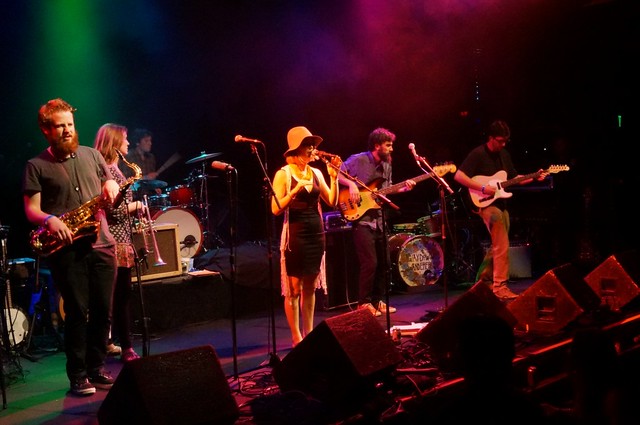

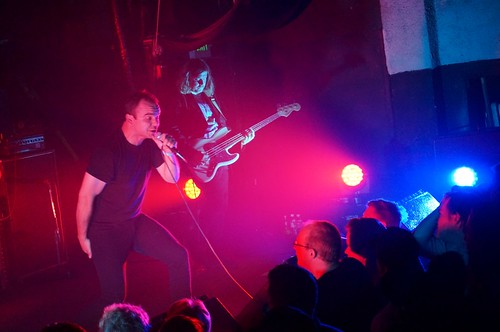
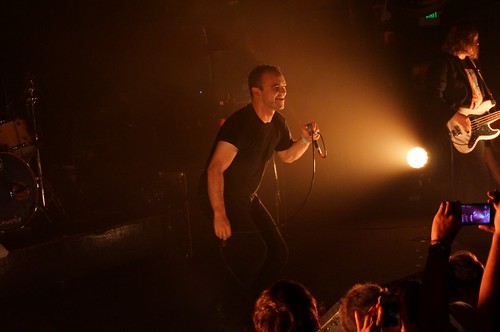
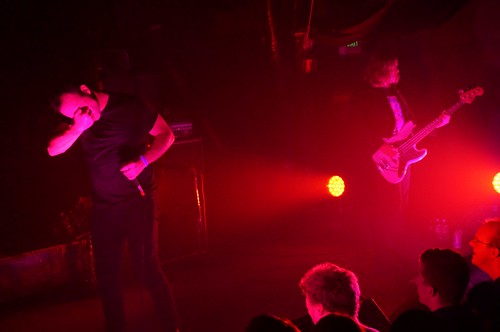
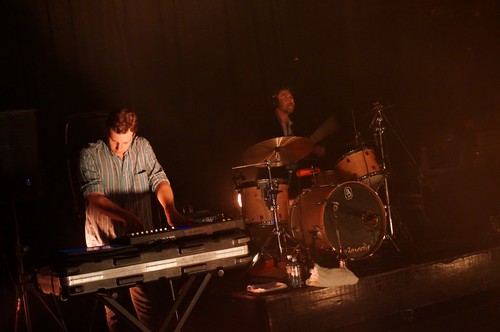
034 Mama Magnolia
Preparing for the show, I was already familiar with Arcoda's sound and I knew that the Way Down Wanderers were a bluegrass band, so that set some expectations for the line up. Since, I hadn't come across Mama Magnolia before, I assumed that they'd fit in with that: sort of folky, maybe a bit country or bluegrass. Seeing the horns on stage pretty much put that idea to rest, and when they jumped into a jazzy soul groove, I felt the pull.
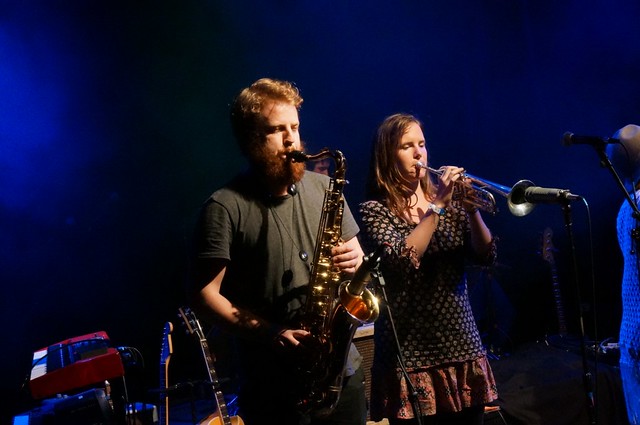
001 Mama Magnolia
Despite the lazy sway on that first tune, it quickly became clear that the band was a crack squad of musicians. The horn punches fell perfectly into place and the solid rhythm section left plenty of room for ornamentation. Lead singer Megan Letts was great. Between songs, her stage presence was very unassuming but quietly confident. Before that first song began, she seemed a little mousy and shy, but it took no time to dispel that impression. Her vocal range was very dynamic as she dropped from full powered diva mode down into a softer emotional space, only to build the songs back up again. All the while, her gestures subtly supported the mood. During the instrumental breaks, she gave over to the music and danced along.

033 Mama Magnolia
Letts was a strong front woman, but she didn't eclipse the rest of the band. The horns got plenty of chances to step forward as the set developed. Carrie McCune's trumpet riffs were particularly sharp, but Sean Culliton did a fine job on sax, as well. Later in the set, the songs brought in more funk rhythms and Zachary Jackson pumped up the party with his sharp bass lines. The last song they played wrapped up with a cool vocal ending that segued into a dreamy floating interlude, building and subsiding as they looped through the changes. This is definitely a band to catch live; their versatility introduced a good range of sounds from danceable funk to pop R&B.


084 Way Down Wanderers
I never thought of Chicago as a haven for bluegrass pickers, but banjo player Ben Montalbano assured me that the city has a healthy, supportive scene, and it's diverse enough there that I'm willing to believe him. On their website, The Way Down Wanderers bill themselves as folk-Americana, but their set at the Fox was steeped in bluegrass, with a fair mix of modern folk and the occasional country twang. Instrumentation goes a long way towards setting that mood, with banjo, upright bass, and a tag-team fiddle and mandolin combo.

059 Way Down Wanderers
But more than that, the vocal stylings and tight harmonies were right on target. Guitarist Austin Thompson had a Dylanesque sound, reedy and nasal, but blending with the others, he could push the songs into that high-lonesome zone. It turns out that most of the band's front line could sing, and the vocal trade-offs meant that each of them got to share lead singing duties.
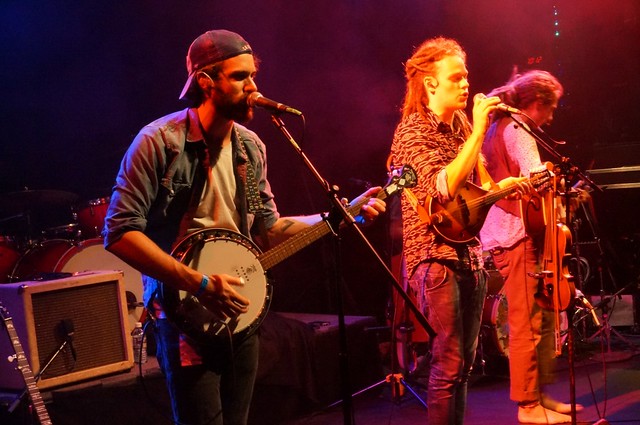
072 Way Down Wanderers
The Way Down Wanderers had a relaxed, friendly stage presence and a genuineness that resonated with the audience. Even though the venue was far from packed, the band had been out earlier at the farmers' market and had generated some local interest, including a group of Chicago transplants that were happy to reconnect with their home town. The music stayed fairly upbeat and the crowd caught the rhythm and moved along.

085 Way Down Wanderers
The playing was topnotch, but Collin Krause was the most impressive as he alternated between mandolin and fiddle. At one point, the band dropped out to give him some room and he tore it up on the mando, tossing off lightning fast runs as he developed his motif. When he hit his final note, there was just the briefest pause and then the song began with a vengeance as the whole band launched into the changes that Krause had just laid out. Krause may have stood out the most, but the rest of the band were no slackers.
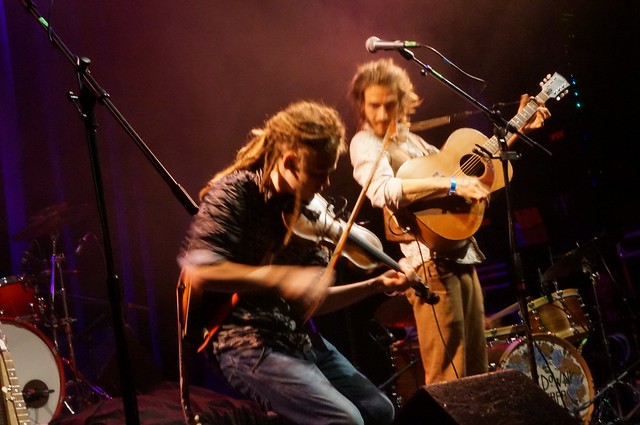
061 Way Down Wanderers
The Way Down Wanderers hit most of the songs on their new EP, Wellspring, Of these, my favorite was "Burn This City". Although the banjo and mando tied it to their core sound, they pushed the folky sound of the recorded version into a darker rock direction, driving to a speedy thrash ending that had the audience jumping along. "Circles" was a close second, drawing on a host of comfortable, familiar sounds like the Nitty Gritty Dirt Band and Ryan Adams' folkier material.
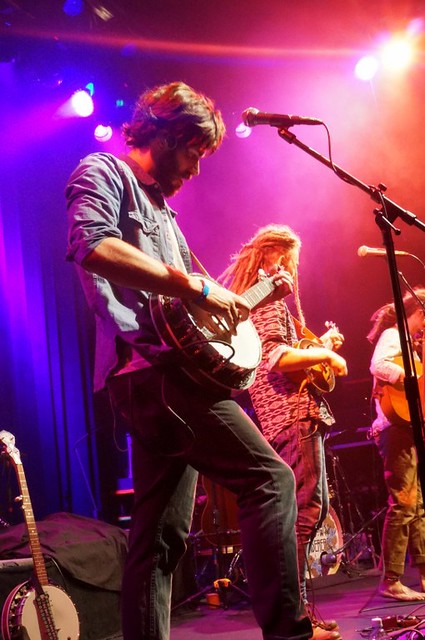
082 Way Down Wanderers
Within the relaxed bounds of folk-grass playing, the band still managed a number of nice unexpected treats, including a couple of surprising covers. The first was a treatment of "Someday" by the Strokes. A couple of tunes later, they introduced "a very sentimental tune," which turned out to be their ripping version of "I Want You Back" by the Jackson 5. The audience played their part and sang along. The band wrapped up their set with a strong take on the old standard, "I'm Sitting On Top of the World". The Way Down Wanderers' version was fairly peppy, taking it home with a big bluesy ending that tipped it's hat to Cream's reworking of the tune.
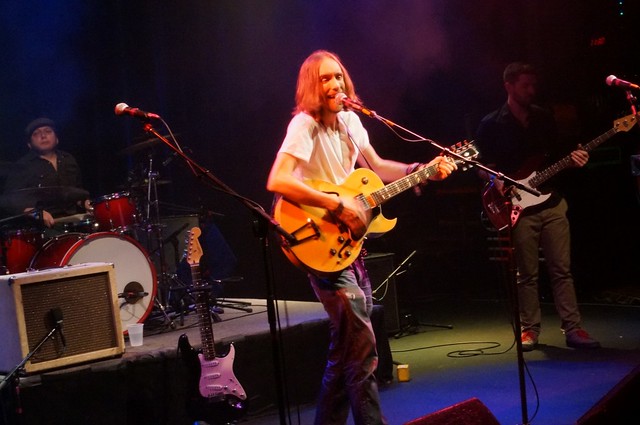

131 Arcoda
After seeing Pete Pidgeon and his band open last week's show for Atomga, I was excited to catch them as headliners. Where they were an outlier on the bill at that show, this time Arcoda straddled the two opening acts. Their retro 70's vibe and Pidgeon's soulful vocals fit with Mama Magnolia's work, and the main folky/Americana thrust was in line with the Way Down Wanderers' approach. As a bonus, the mix was a lot clearer, making it easier to hear everybody's parts. Both Pidgeon and keyboard player Adam Bodine had great lead chops and this time I could pick out both instruments.
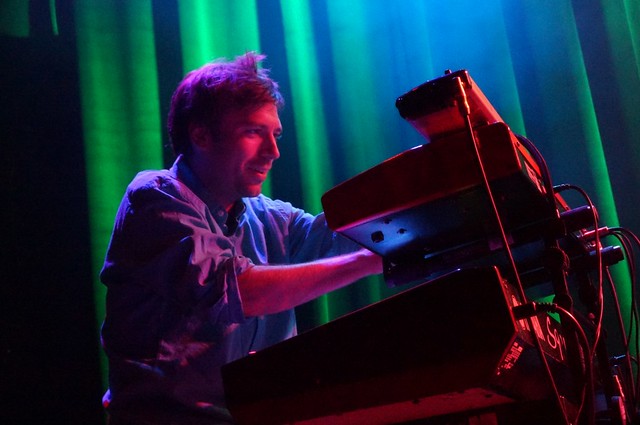
108 Arcoda
It was probably coincidental, but as Arcoda were completing their setup, the house music came around to a jazzy arrangement of Jimi Hendrix's "Little Wing". This provided a perfect segue for a very relaxed start. Pidgeon improvised along with the house music as they were getting their levels set, and then the band sidled into their first real song, playing some spacy, amorphous changes that fit well with Pidgeon's earlier noodling. The meandering keyboards and gentle swells contributed to a trippy groove before it coalesced into a soulful singer-songwriter arrangement, but still with a loose jam band vibe. That made the impact of the tight punches and breaks more powerful when they came.

100 Arcoda
My first impression last week was that Pidgeon seemed fit to channel one of those early '70s folk-rock bands, but this show expanded on that with a wider range of material. Arcoda brought in some jazzier rhythms and retro tones that, along with Bodine's keyboard work and the band's polished arrangements, were very reminiscent of Boz Scaggs and also of Rickie Lee Jones. Pidgeon's voice was flexible enough to support all that and more. His ballads were especially nice. On "Growing Pains", his singing anchored the sweet, wistful music with a grownup wisdom and depth.

154 Arcoda
While the band did a fine job on their own, the evening included a couple of guest appearances that really deserved a bigger audience. Soul singer Dechen Hawk joined the band for a tune, and his voice was a perfect match for Bodine's Leon Russell style playing. Hawk and Pidgeon turned out to be birds of a feather, reinforcing one another and finding the emotional heart of the song. Later, local guitarist Peter Stelling sat in and added some great leads on his classic Gibson SG. In both these cases, Arcoda created a good match between their song selection and the guest artist, showing everyone off to their best effect.
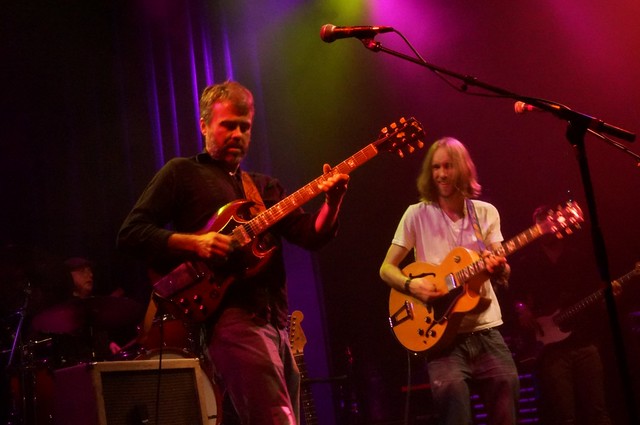
204 Arcoda
I'm not all that familiar with the band's originals yet, but there were two songs that really jumped out the most for me, maybe because they pushed the band to test their technical ability and generate some excitement at the same time. The first of these was "The Wind and the Lover", a funky number that could have been an outtake from Frank Zappa's Over-Nite Sensation. Bass player Nate Marsh locked in with Pidgeon on the tag riff and then settled into a foot-stomping, gut-bucket bassline. Jared Forqueran contributed to the fun with some wicked drum fills that made the chorus snap. The other high point was near the end of the set; it must have been the next to last song. I didn't get a title for it, but it was a jam band instrumental that started out jazzy, but developed into a monster tune that reminded me of Jeff Beck. While everyone stretched out here, Pidgeon's guitar work was the star attraction. Despite the late night and the poor attendance, this was an ecstatic celebration of shred.
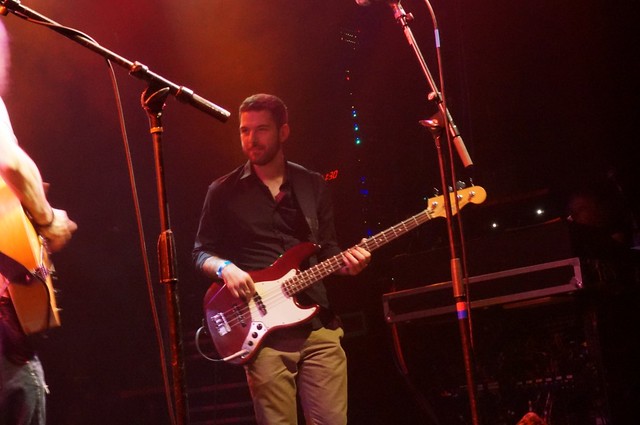
134 Arcoda
I'm sure the band would have appreciated a better turnout, but no one in the hall could complain about Arcoda's performance. Like professionals, they played like it was a sold-out show and they challenged us to be an audience worthy of that experience.

109 Arcoda

More photos on my Flickr.

Thursday, April 9, 2015

What's cool? Moodoïd, Heavy Metal Be Bop 2

And now for something completely different...

If Fark.com has taught us anything, it's that the Japanese are the masters of WTF video. Other countries may throw their hats in the ring, but they seldom offer any threat to the reigning kings. Now Parisian Pablo Padovani (AKA Moodoïd) has risen to the challenge with "Heavy Medal Be Bop 2". To be fair, his video lacks the innocent inscrutability that is the hallmark of Japanese TV, but it's such a hot mess that it overcomes that hurdle with ease. It's become a truism that things can be "so bad they're good," but there's never any doubt that the word "good" is always in air quotes. This video is a veritable double rainbow of campy perfection. I flip-flopped from bad to good so many times during this song, that my sense of irony got whiplash.


Imagine if Andy Warhol, Devo, Lady Gaga, and John Waters went off on a drug binge and had a contest to make the most absurd music video ever. Even if you have trouble with that, Padovani not only imagined it, but he took notes, threw their ideas into a blender, and then made the damn thing. Bizarre fashion, twisted sci-fi surrealism, '80s pop video deconstruction -- "Heavy Metal Be Bop 2" has it all and then some.

The tight, uptempo abstract jazz section at the start doesn't just reference his father, saxophonist Jean-Marc Padovani, but it even bolsters the younger Padovani's essential French credibility. That interlude doesn't last long, as he abruptly pulls an about-face to lay down a chill pop-funk groove. The jazz elements come back later to support a stylized sax solo later in the song. That, along with the muddle of the two genres, suggest why he named the piece in tribute to the Brecker Brothers' Heavy Metal Bebop, but despite the juxtaposition of outside jazz and pop, music is fairly tame compared to the imagery he's chosen. Truth be told, I enjoy his guitar work with Melody's Echo Chamber more than "Heavy Metal Be Bop 2", but the video is so entertaining that all is forgiven.

Tuesday, April 7, 2015

Recording review - Tree Machines, Tree Machines (2015)


Diffident emotion can't quite stick

2.5/5.0

Humor me for a moment as I take us back to the early ‘90s and revisit alternative darlings Blind Melon. If it weren’t for 1993’s “No Rain” catching fire on MTV, they probably would have sunk without a trace, but that single pushed their eponymous debut album into everyone’s CD collection. I still have it myself and it’s a decent album. Personally, though, it hasn’t turned out to have true staying power. Maybe if lead singer Shannon Hoon hadn’t died of a drug overdose, they might expanded their sound and impact, but his voice -- plaintive and a bit self-absorbed -- is what anchored their songs, and that alone is just not enough to push it into my rotation anymore.

The problem with Tree Machines’ debut EP is that it’s an indie pop version of Blind Melon, without the hyped single to pump it up. It’s easy to draw the comparison because Douglas Wooldridge’s disengaged whine seems to favor Hoon’s distinctive tone, but it’s also due to a similar songwriting style where the songs get wrapped up in themselves and shut out the rest of the world. Like Blind Melon, Tree Machines create some dreamy moments, but their songs don’t really connect, much less stick. Wooldridge imparts some emotion, but it’s delivered in an offhand, diffident way, lacking urgency or immediacy. As a result, these songs don’t make enough of a statement to rise above the already familiar sound.

"At the Wheel" is a perfect example, because it borrows from Blind Melon with a dram of Jane's Addiction thrown in for good measure. Wooldridge turns in one of his stronger emotional performances with lots of overwrought slurring and the arrangement is theatrical with thick reverb and cymbal wash accents. The hazy music and moody lyrics have a lot of potential; if they had accentuated the contrast between calmness and threat, this could have evoked a sense of sleep paralysis or a dream state of being powerless in the face of fate and trauma. The band shoots for this, with the words painting the shadowy part of the picture while the music remains almost idyllic, channeling a blend of The Youngbloods' "Get Together" and "If You Could Read My Mind" by Gordon Lightfoot. But any tension from the dark imagery is undercut as Wooldridge settles with, "It's dark out here / But I feel no fear at all." The swell of noise at the end is the best part, but it comes too late to add any real weight and I’m left wondering what the point was.

The best songs on Tree Machines come late in the playlist. "The Fire" summons more energy and features the most interesting arrangement here with a strong bass line and nice electronic touches in the background. The song also delivers some good dynamic swings, although the vocals blunt the power with dragged out syllables buried in echo. Still, if the whole album had been like this, it would have been something to get excited about. Similarly, "Black and Blue" effectively balances soft and loud sections to make a bigger impact, and it  features more interesting instrumentation.

Even if Tree Machines is a bit of a disappointment, I’m not ready to write the band off yet. Those two peak moments suggest that they do have some more promising directions to explore.

Thursday, March 5, 2015

What's Cool - Young Guv, Crawling Back to You

Never judge a book by its cover (or the publisher's hype)

I never saw it coming. Digging through the pile of promo emails to find a gem to share, I came across the most over-the-top, hyperbolic sell job on behalf of Young Guv's new album, Ripe 4 Luv. The last paragraph reels through some crazy comparisons: Cheap Trick produced by Jimmy Jam,  Drake's producter 40 engineering Hall and Oates...it was obviously tongue in cheek, but the hype was so thick that I almost blew it off. Not only that, but the title, "Crawling Back to You", promised a sad whine about unrequited love, which is seldom worth the trouble. For some reason, though, I decided to give it a minute's listen.


Thirty minutes later, I had replayed it a half dozen times, because Young Guv had me hooked. The opening anarchy of scraping strings collapses into a strong indie rock groove worthy of Big Star or Too Much Joy. It builds up before receding behind tightly harmonized vocals reminiscent of the Byrds. The tune is packed with familiar sounding DNA, but somehow transcends any of its inspirations. The jangly walls of guitar and the slick pop vocals combine to form a hook almost as big as the hype from their label. The off-kilter lyrics are also a pleasant surprise, comparing the bygone relationship to the womb. I can honestly say I've never heard the phrase "Placenta sleeping bags for two," before, but I was fairly amused when I teased that line out from the opening verse.

The back story offers its own surprise. Young Guv aka Young Governor aka Ben Cook had his start with hardcore punkers No Warning and then played guitar with the progressive punk Fucked Up. Along the way, he wrote  "We're All To Blame" for Sum 41, That paints a relatively clear picture, but he also claims to have ghostwritten songs for Taylor Swift and Kelly Clarkson and he's celebrated '80s style pop with a side project, Yacht Club. Maybe that makes Young Guv a nice median persona for Cook. In any case, Ripe 4 Luv is due to release on March 10.

Tuesday, February 24, 2015

Recording review - Kate Pierson, Guitars and Microphones (2015)

A long time coming, but real and in-the-moment 

4.25/5.0

It's not that hard to see why Kate Pierson has finally made her first solo album. While her voice has always been a central part of the B-52s, their party atmosphere doesn't easily accommodate more serious feelings or deeper expression. The real surprise is that, despite numerous guest appearances with artists like Iggy Pop or REM, it's taken her nearly 40 years to get to this point. Fortunately, Guitars and Microphones is a confident step forward, facing hard situations, regret, and loss with strength, depth, and resilience. But fans shouldn't expect this to be a downer; these songs are anchored in a contemporary aesthetic that buoys the mood.

Pop icon Sia Furler bears some credit for this; she helped inspire Pierson to make the album, she contributed several songs, and she acted as the executive producer. Pierson’s new wave foundation has been infused with a lot more electro-pop beats and production and that seems to reflect Sia's influence. It’s not too much of a stretch, though, because Pierson's distinctive voice neatly slides into this polished setting, with some of these tracks, like “Bottoms Up” or “Time Wave Zero”,  rivaling Katy Perry and other diva youngsters for bouncy, danceable fun. More importantly, her trademark spunk and personal experience give the material weight and demonstrate that she hasn't surrendered her character or sold out for a desperate shot at relevance.

Guitars and Microphones leads with that sass on “Throw Down the Roses”, where Pierson pumps up the infectious groove with poised attitude, refusing to be a mere follower. Girl Power is nothing new, but she sells it with the perfect amount of poisonous sneer and tight lyrical turns, "I don't ever do rocker boys like you/ I'm an artist, too/ I'm a show stopper." A couple of songs later, though, the autobiographical feel of the title track trades some of that pride for a more ambivalent mood. Pierson free associates memories of sweet youth and loss, with the raw edges of her voice conveying her mixed emotions over a synth-driven new wave melody that recalls Dale Bozzio and Missing Persons. The music is smooth, but those occasional crumbling notes in her voice imbue the piece with an essential realness.

That depth continues on “Wolves”, one of the most impressive songs on the album that moves even further away from her B-52s past. The lush production matches the poetic lyrics about love and freedom. There’s a touch of Disney musical magic in the epic beauty of the tune, with Pierson's aching sincerity adding the right poignant note on lines like “We all love to play/ We play at love then run away.” This and the somber “Pulls You Under” represent a much more nuanced character than we've heard in the past.

Where those songs are fairly direct, Guitars and Microphones also features a number of more oblique tunes. “Bring Your Arms”, for example, is full of cool imagery (“And we are running with a light bulb”) that never gelled until she provided the back story in an interview. But even without the context, the dreamy intensity and urgency make their own kind of compelling sense. It’s worth remembering that plenty of B-52s songs were built on flimsy lyrical conceits that just sounded right, like “Rock Lobster”.

The only sour note on the album has been with the first single, “Mister Sister”, which stirred up a controversy with some members of the trans community. Pierson has made it clear that her intention was to continue the same kind of supportive attitude that her band has often expressed for alternative lifestyles and anyone who feels like an outsider. Unfortunately, not everyone has received it in that spirit. While I am certainly not qualified to tell anyone how they should feel about the tune, I can empathize with Pierson’s surprise at the backlash. The song itself serves as the cleanest bridge between her quirky B-52s roots and her desire to show more emotional depth on this solo project. With or without it, she's definitely achieved that goal on Guitars and Microphones.

Thursday, January 15, 2015

What's cool - Rebekka Karijord, "Use My Body While It's Still Young"

Comfortably numb? Not necessarily...

Is it time to turn away from what we take for granted and challenge ourselves? The path of least resistance promises a smoother trip, but without stepping off that path, we'd never know what we're missing. I think about this as my high school aged son is an exchange student overseas, immersing himself in another culture and other assumptions. It also rears its head when I talk to my friends about the bands that excite them the most. Music can be like comfort food; many of us just want to soothe away the irritants of the day with familiar soundtracks. It's nice to know that that band you loved in high school never changes...well, they never change if you don't listen their later work or clean your palate with some fresh sounds. I have my comfort foods, but if I were still only eating the food I loved at 15, I'd never have tasted curry, harissa, or wasabi. And even though I never became a big fan of wasabi, I'm a better person for having tried it.

Norwegian born singer/songwriter Rebekka Karijord has never blipped on my radar before this, but I just came across her song, "Use My Body While It's Still Young" and it made a strong impression. The piece is the first single off her 2012 album, We Become Ourselves, which is due to see its American release on February 5, 2015 and I'm looking forward to hearing more. She describes the song as a "momento mori", a cautionary reflection on mortality, and the lyrics take us to a place that most of us would rather not think too much about:
Use my body while it’s still strong.
Wrap yourself in all of this warmth,
This aching love
Come use it while it’s alive
This aching love
Come use it while it’s alive
We’ll all be gone in hundred years
Those philosophical lines are paired with a dreamy electronic pop groove. The music takes a song that could be brooding and nihilistic and turns it to celebration. Just as Karijord's words recommend, the song surrenders to the joy of dance and movement. Sweet and sour, she savors her gifts even as she feels the passage of time.


The video complements this with a powerful collaboration with Siv Ander, a Swedish dancer in her 70s. The visual contrast is sharp, with loving closeups of Ander's body and her choreography evolving from stiff and static to richer physicality.

This is the perfect finish to a day: discovering fine music from an artist I've never heard of, seeing a video that moves me, and having it help me think about the choices we make from day to day, while we can. Let them be conscious ones.

Tuesday, October 21, 2014

Recording review - Rene Lopez, Love Has No Mercy (2014)

Feel the funk with mirror ball beats 


Rene Lopez continues spiraling in on his idealized target of electric Latin soul. His last release, Paint the Moon Gold,veered away from the funk to lurch toward R&B pop. On his new EP, Love Has No Mercy, '70s pop has given way to the hybridized disco funk of that same era. The album isn't a one trick pony, but Lopez is more dedicated to club-style rhythms on this release. The first half explores this borderland with a series of tracks that wrestle with co-dependence, love withheld, and unbalanced relationships."I Won't Love You Less" lies directly between the two genres. The sparse arrangement, the harmony vocals, and ringing keyboard fills are like the bright, spinning reflections of a mirror ball, while the crisp rhythm guitar suggests the chill nonchalance of Bowie's Thin White Duke and the steady, syncopated beat has a foot in both worlds. The choppy guitar bobs and weaves with nervous energy and Lopez's voice is strained to a falsetto whisper as he sings his unconditional love. His serene tone suggests that he's an ecstatic martyr to his chosen one's fickle whim: "You can lie and cheat and leave me cold / I won't love you less, I won't love you less / you can throw your stones and break my bones /I won't love you less, I won't love you less." From here, he wanders through electro-pop dance beats and Latin flavored disco before reaching my favorite track on the album.

The title tune is a duet with Carol C , and the two create a playful interaction that frames the song as a debate between the sexes. They share the chorus tagline, but the verses show how far apart they are. Drawn like moths to the flame, the two can only agree that, "Your love has no mercy, but I like it." After the break that summarizes the positions as, "Love-lust and love-love," Lopez takes a pseudo-rap turn,speak-singing his way through his lines with an expressive tone that maintains a nuanced tension. Meanwhile, the track is anchored by a snaking baseline and fenced in by stereophonic flickers of choppy guitar. Between the volley of vocal exchanges and the insistent dance beat, "Love Has No Mercy" is Lopez at his best.

From here, Lopez settles into a chain of solid funk pieces, with the fun attitude of "Lovegod", the Prince driven ''City Streets Are Dead Tonight", and the loopy electro funk of "Show Your Light". These are all strong, dance-friendly songs, but none of them follow a set formula. Even better,
Lopez adapts his singing style to each tune to flesh out the right character. Love Has No Mercy is another step towards perfecting his vision of electric Latin soul. The Latin element may be a bit restrained compared to earlier releases,but the music still calls you to surrender to the syncopation and dance.

Thursday, October 9, 2014

Fresh single: Jarabe de Palo, "Vecina"

Hoping that the summer never ends

The first taste of "Vecina" is rootsy and sincere. Calling the vibe "Americana" hardly seems appropriate for Barcelona's Jarabe de Palo, but this band has a great ear for setting up a simple rhythm and letting it flow. Imagine The Rolling Stones' "Beast of Burden" without Mick Jagger's pouty strut. The groove is as comfortable as a perfect pair of Levi's and well-worn boots. The organ and sax accompaniment provide soulful touches. This is a song that captures an end-of-summer feel that seems just right for a chilly Autumn day with damper weather.


The lyrics capitalize on that feel; after spending a summer admiring his beautiful neighbor as she soaks in the sun, lead singer Pau Donés finally works up the nerve to make his move: "Soy ese chico que ves desde tu jardín/ Solo quería algún día invitarte a salir." (tr. "I'm the guy you see from your garden/ I only wanted to ask you out someday") Don't let the voyeuristic story line color your impressions; "Vecina" is fairly innocent and wholesome, with more metaphor than sly innuendo.

Jarabe de Palo are on tour here in the US throughout October, wrapping up November 1 in San Francisco. If they pass through your town, immerse yourself in some continental Latin music. It's also worth checking out their latest release, Somos. In the meantime, I'll settle into the sunny sway of "Vecina" and, just like Donés sings, "Este verano que espero no tenga fin."

Tuesday, September 2, 2014

Recording review - Got a Girl, I Love You But I Must Drive Off This Cliff Now (2014)

Moody pop with swinging retro French style

While it's not quite as surprising as finding out that Phil Collins is a recognized expert on the Alamo, you're still likely to be taken aback by Daniel Nakamura's deep appreciation for retro French pop. Dan the Automator is known for quirky and creative production, but his work with Got a Girl is refreshingly direct. Collaborating with the actress Mary Elizabeth Winstead, Got a Girl fills I Love You But I Must Drive Off This Cliff Now with chill sophistication and nuanced musical allusions that demonstrate an understanding of the genre without slavishly recreating the past. The two of them flow like top grade dance partners, effortlessly leveraging moody grooves into lush gems while drawing on contemporary pop.

Nakamura and Winstead met when they both worked on the 2010 film Scott Pilgrim vs. the World, and that connection laid the groundwork for Got a Girl. They nailed down the idea for I Love You But as early as 2012, but it took a long time for the project to come to fruition. Along the way, Winstead contributed vocals to Deltron 3030′s Event 2. Listening to their work on that album, it’s hard to hear the continuity with Got a Girl’s sound, although there’s a hint of Winstead’s pop chops in her backing for “Looking at the Sky”. Of course, the Deltron project was a completely different animal, with Dan the Automator taking a more typical hip-hop approach on his beats and Winstead’s voice used more for texture than lead. Still, that contrast make this new release more satisfying for its ambiance.

The album sets the hook early, with “Did We Live Too Fast”. The carillon intro sets a thoughtful tone, and then the main groove drops the song into the middle of a ’60s mod movie. Winstead alternates between coy seduction and sultry distance, and Nakamura’s music masterfully supports her performance with horn punches and sighing strings. His arrangement captures the sense of the era, but it incorporates modern touches, periodically tagging lines with a light glitch skip or using a glaring synth melody on the bridge. As the title suggests, the lyrics are filled with both wistful nostalgia and jaded fatalism. The pair tap into that same vein again on “Things Will Never Be the Same”, this time getting darker and more theatrical.

Later, on “Close To You”, the synth instrumentation and disco rhythm push the album forward into the ’7Os, but the bridge reaches backward as it paraphrases the classic late ’60s hit, “Love Is Blue (L’Amour Est Bleu).” It’s almost subliminal and probably too subtle for younger listeners, but it shows that Nakamura has done his homework. Even the seemingly normal pop tunes like “I’ll Never Hold You Back” or “Last Stop” have a sparse beauty. Winstead uses these tracks to show her versatility; her voice opens and softens, complementing the sweet simplicity.

I Love You But is remarkably even with one exception, the poorly conceived “Da Da Da”. The rest of the album maintains a well-crafted sense of time and mood, but this one tune sabotages all of that work. The music doesn’t drift too far, but Winstead’s petulant boredom and the crass lyrics hit like a warm spray of spittle. This is clearly intended to be a joke, but as she announces, “This song is shit/ It sucks/ It’s a piece of shit,” her point is all too true. The slinky tension of the final song, “Heavenly”, does its best to recover, but the bad smell lingers. Unfortunately, it’s hard to unhear the offending track; the best I can do is delete it from the playlist and wait for its memory to fade.

(A version of this review first appeared on Spectrum Culture)

Thursday, August 28, 2014

Recording review - Wunder Wunder, Everything Infinite (2014)

Retro rehash, with occasional glints of interest

Is anyone else getting tired of the glut of twee retro bands? Sure, jangle and reverb are cool, but there’s got to be a limit. Wunder Wunder’s spin on this old game is to aim for the sound of a pop psychedelic band plucked from 1967 and whisked forward to the present, where a modern producer introduces them to electronic tones and helps them make a record that bridges the decades. If they had succeeded at this, it would have been great. Unfortunately, they don’t achieve that degree of originality or excitement. Instead, they’re just another band obsessed with the past that can’t quite let go of their modern instruments and sensibility. Ironically, they produce their strongest material when they fully indulge their craving for headier times, but Everything Infinite hits the wall on the tunes where they break character and slip into more recent pop fluff. Since their two extremes can’t quite meet, the album is disappointingly uneven.

The opening run of songs shows most of what the band has on offer. They lead off with the title track, a beautiful Beatlesque bit of psychedelia. The intro is starker than the Fab Four would do it, suggesting a power pop setup, but it quickly finds its footing with echoing vocals and a strong McCartney style bass line. While they decorate the tune with occasional fountains of anachronistic synth arpeggios, this is as close as they come to any kind of time traveling ideal. “Coastline” gamely throws in some old school flanger and the same echoed singing, this time summoning more of a sunny ’70s sound. Unfortunately, the skinny keyboard tone and flat mix feel cheesy after the richer sound of “Everything Infinite”. As they continue, they completely lose their mojo early into the third song, “Hail the Madmen”. The track is a muddled mess of random ideas, executed as an animatronic interpretation of danceable ’80s music. The chorus celebrates a mundane mindlessness with inane lyrics, “Hail the madmen/ Help me get you off the street/ Hey, you madmen/ You need some time off your feet.

Then, Wunder Wunder pulls it together for another gem, “Trouble in Utopia”. They can’t resist some programmed percussion, but the trippy radiance overwhelms the cross-time distractions. Meditative repetition and bubbling tones create a wonderfully skewed sense of surrealism, which is propelled forward by the steady pacing of the arrangement. The tune peaks with a chaotic jam that feels like they’re self-consciously sifting for the perfect frequency combination to blow our minds. The lyrics declare trouble, but Utopia trumps. Still, as nice as this is, it definitely whets my appetite for the real thing, like The Moody Blues or Strawberry Alarm Clock. This only grows stronger by the time that “Sure Stuck” kicks in. The verses borrow heavily from The Bangles’ “Walk Like An Egyptian” and while the other sections turn up the paisley, they still can’t make it sound original.

Wunder Wunder is certainly adept at harnessing sunshine spaciness on Everything Infinite, but that’s hardly a unique skill. Their compatriots, Tame Impalas, have that ground well covered and have done a better job of updating the ideas beyond their nostalgic value. To break out ahead of the retro pack, Wunder Wunder will need to find their voice and work out a better melding between the Summer of Love and the summer of 2014.

(This review first appeared on Spectrum Culture)

Friday, August 22, 2014

Recording review - Sia, 1000 Forms of Fear (2014)

Too natural to be a diva, great material spawns an uneven flow

Let me tell you a story about a girl who missed her first shot at pop stardom. Although her debut release was poorly received, she eventually found some success as a singer, but it looked like writing for others, such as Rihanna, Flo Rida and Beyoncé, was as close as she’d get to her dream of achieving big-time pop glory. Health problems and panic attacks threatened to sideline her into performance retirement, but she finally tapped into her well of struggle and pain, partnered with a talented producer friend and made her bid for the spotlight.
Sure, there’s a surface fit, but anyone familiar with Sia would recognize that this is not her narrative. In particular, she’s always been an introspective person with ambivalence toward fame, to the point that it seems she’s intentionally stayed to the background. Her latest release, 1000 Forms of Fear, is a reinvention because she’s putting herself back in the center with a strong array of songs that she could have easily sold to the pop superstars she’s helped in the past. But the biggest break in the patter is that she doesn’t embody the pop diva ideal, even if her songwriting satisfies all the pop tropes. Beyoncé, Rihanna, Shakira and the others are all packaged with fashionable production, catchy melodies and vocal showcasing, but more importantly, they also have an instinctive knack for staging and constructing an over-the-top public persona. This album is a credible attempt at gaining entry to the diva club, but, although Sia picks up on all the trappings, she can’t quite find the right image to make it click.

That’s not to say that she should sculpt her stage façade with an eye to the pop audience, but, if that were her intent, she’d likely fall short. Ultimately, Sia lacks the necessary larger-than-life character, but, to her credit, she is still just the right size to fit her own life and imbue it with a natural poise. Rather than a cardboard cutout, she’s like any other real person; she doesn’t have only a single face and she expresses that complexity here with a scattershot collection of songs. Each one aspires to some flavor of pop perfection, but together they make a cracked mirror reflection of the current pop scene. From track to track, it’s interesting to imagine the right star to run with the tune, but Sia’s rawer voice and personality give the songs a depth they might have otherwise lacked.

The first track and lead single, “Chandelier”, sets some immediate expectations. The sparse start sets up a soulful groove as her pouty voice slurs through the first verse, but the chorus goes big and she soars to her upper register. It’s all too easy to let the lyrics glide past and just hang onto the tagline of the chorus, “I’m gonna swing from the chandelier,” hearing it as an indulgent brag. But the opening line, “Party girls don’t get hurt/ Can’t feel anything,” casts the whole tune into a more damaged space. A closer listen reveals that this song is a cry for help and the club party sound is just a mask. That charade may not slip until the third or fourth time through, but once it’s seen, it can’t be forgotten. That frisson of fear and desperation is a direct connection to the album’s title.

My favorite track, though, is “Straight for the Knife”. Like “Chandelier”, the musical mood and the lyrics are at odds. Sia sings the languid ballad with a distant detachment as the words run through a codependent tale of mistreatment. Her bruised fatalism captures a kind of doomed beauty as she sings again about swinging, but this time from the rafters instead of the chandelier. The song works, in large part because her vocals are not overproduced, which would have glossed over the expressiveness of her performance.

Most of the other tunes are pretty good, too. But it doesn’t take long to feel distracted by the uneven flow, because these tracks really mix it up. Swooping soulful singing in “Eye of the Needle” sits alongside the bouncy pop of ”Hostage”. The raw vulnerability of “Fair Game” is pressed up against the choppy defiance of the Dido-produced “Elastic Heart”. While that lack of polish might keep 1000 Forms of Fear from propelling Sia’s career to the next level, it still makes for an enjoyable listen.

(This review first appeared on Spectrum Culture)

Thursday, August 14, 2014

Concert review - Future Islands with Operators

12 August 2014 (Aggie Theatre, Ft. Collins CO)

Ft. Collins is quite lucky, it seems. As Future Islands winds their tour across America, they managed to squeeze in a single show in Ft. Collins on the way to Salt Lake City. After looping through California, they'll pass through Denver later in the month at the Gothic, but that show is already sold out. So, we got to see them first and, although the turnout was good, it wasn't over-packed like a sold-out show.

It didn't turn out to be an particularly late night either. Tour mates, Operators, were the only opener and Future Islands followed them with a good show and still wrapped up their encore around 11ish.

005 Operators Dan Boeckner, from Wolf Parade and Divine Fits, kicked things off with his latest band, Operators.
The line up features his previous bandmate Sam Browne (Divine Fits) on drums and electronics artiste Devojka tweaking buttons and dials. Their opening song blended a classic synth pop sound with Tom Tom Club dance beats. Crowded against the front of the stage, the trio offered a study in contrasts. Brown was deeply focused as he pounded out the rhythm, barely noticing the audience at all. Boekcner, on the other end of the line, was full of anxious energy as he paced forward and back. In between these two extremes, Devojka directed most of her attention towards her table full of toys, but she still engaged with the crowd.

008 Operators
As the set progressed, Operators settled into an electro-pop flavored post-punk feel, somewhat like Shriekback partnering with a laptop artist. Looping synth arpeggios and beep-boop punctuated dance grooves kept the crowd moving. While the bottom end was covered well enough, I would have appreciated a real bass player to partner with Brown's solid drum work.

013 Operators
While I enjoy listening to the gear-driven beats, to some extent, they leave me cold during a live performance. The obsessive knob-work and frantic activity can add a serving of sweeps and laser tones, but they never quite relate to the steady roll of the backing track. Fortunately, Boeckner's charisma and stage presence were exciting enough to carry the show. The crowd was primed with plenty of his fans, several of whom called for tunes from his older bands. Eventually, Devojka got irked enough to ask the audience member if they could play the song ("If not, shut up"). In any case, the energizing pop repetition of the music was a good warm up for Future Islands.

033 Future Islands There is an aesthetic concept called the "uncanny valley", which quantifies how people react to things that are near, but not quite human. For example, robots, dolls, and clowns can each trigger a kind of aversion when they fall into that space between clearly artificial and a natural human appearance or behavior. The more times I see Samuel T. Herring perform, I can't help but revisit that concept as I watch his stylized movements and unnatural dance moves. He doesn't trigger a sharp repulsion, but  he's off by just enough to make his performance riveting in its strangeness.

049 Future Islands
While he was actually singing, he tended towards overly emotional theatricality, with melodramatic gestures and exaggerated facial expressions. In between his lines, though, he surrendered to his inner muse and chaotically danced with wild lunges and stiff-postured positions. On the one hand, this physicality was cool; there was the sense that Herring was channeling the song with his outsider-artist choreography. But as he waved his arms and crouched like a gorilla, mimed tearing away the mask of his face, or spasmed into a fixed-stare duck walk, it was hard not to be gobstopped. That oddness is certainly part of why the band has hit it so big in the wake of their David Letterman appearance.

066 Future Islands
Fortunately, Future Islands had more going for them than a sideshow performance. First of all, the band was remarkably tight. They casually delivered perfection in form of danceable tunes where every note was polished and carefully placed. That distilled performance could have turned cold and mechanical, but between the deeply personal tone of the songs and Herring's expressiveness, the music was surprisingly emotional, especially for a synth-driven pop band. In sharp contrast to their frontman, William Cashion, Gerrit Welmers and their touring drummer all played with a restrained economy. Cahsion moved the most as he played his bass, but seldom got further than two steps from where he started. Welmers almost melted into his keyboards, barely acknowledging the audience or the rest of the band, even when Herring introduced the players during "Spirit".

051 Future Islands
Future Islands slid through their set with little pause, moving from hypnotically danceable interludes to driving bass-driven darkness and then shifting into soulful brooding. Late in the set, Herring surprised me, though, with an unexpected bit of humor. During "A Song For Our Grandfathers", he spent much of the tune gazing up to his right, as though looking up to Heaven. After wrapping it up, he paused and then gestured up at the large posters that decorate the walls of the Aggie. He pointed up at the one he'd been staring at and said, "By the way, my grandfather isn't Tech N9ne." That little bit of self-deprecation made up for a lot of crazy dance moves.
043 Future Islands
Vocally, Herring veered from a strained soul tone reminiscent of Roland Gift (Fine Young Cannibals) to hoarse, death metal growls. Those changes were all in service to the whatever raw sense he was trying to evoke at any given moment. He apologized a few times about his voice, but seemed to give everything he had to his performance. By the end of the night, his tight black shirt was soaked with sweat and he looked a bit drawn. Future Islands finished out their three song encore with "Little Dreamer" and Herring was finally able to take a well-deserved break.

More photos on my Flickr.


Monday, August 11, 2014

Recording review: Rene Lopez, Paint the Moon Gold (2014)

Bless his electric Latin soul

My first taste from Rene Lopez was 2010's People Are Just People (review), which celebrated his R & B and soul roots. A year later on E.L.S. (review), Lopez reinvented himself and claimed his own genre, "electric Latin soul".  His most recent release, Paint the Moon Gold, bridges the two sides, picking up on pop influences and toning down the funky club beats, but still holding fast onto Latin textures.

Lopez introduces himself on the opening track, "Purpose and Place". Latin percussion and a restless keyboard vamp provide a background to this autobiographical journey. From Spanish Harlem to his father's record collection, he recounts his influences, casting them as signposts that led him to his calling as a musician. The personal perspective he takes here is a good example of how Lopez approaches most of his songs. Although the arrangements are fully developed, he remains true to his singer/songwriter roots by dressing up his personal experiences with just the right touch of evocative metaphor. "Steal Your Love" is typical, elevating a romantic obsession into a bodice ripping conquest. A flute winds its way through the insistent rhythm, adding an air of exotic tension. The instrumentation is solid but he could easily carry the tune with nothing more than a solo guitar if necessary.

Like People Are Just People, this album is full of retro sounds, this time reaching more for 1970s pop than classic soul. This gives the project a familiar feel, especially on easy flowing tunes like "Just a Man" or "Don't You Change your Heart". That's not a bad thing, but it can become easy to take the music a bit for granted and not get as deeply engaged. Almost as though he recognizes this, "Your Soul Is In Danger" breaks the pattern and refreshes the listening experience. Except for occasionally intoning the title through a veil of reverb, the song is an instrumental, but the mood is unique for Paint the Moon Gold. The shaker beat and weird echoes push the tune into the strange and even when a more focused jazzy groove starts up, the sinister aura smiles in from the edges. It's possible to treat the piece as a bit of camp - his own laughter on the track indicates that he gets the joke - but I could also hear it as a tip of the hat to Dr. John's "I Walk on Gilded Splinters", using horns instead of the choral backing vocals. In any case, the change-up pulls you out of complacency.

Paint the Moon Gold rises from this dark interlude and closes out with a tight, upbeat run of songs: from the soulful sway of "Midnight Love" through the danceable electro-funk of "Come Along Now" to the chill soul-revue of "Hey Papa". Lopez has put together a solid collection that will click for a range of audiences. It blends pop, soul, and funk, all spiced by a generous serving of Latin rhythms. While it doesn't push as many boundaries as his last album, I think that Lopez is finding his most natural voice.

Thursday, August 7, 2014

Recording review: Red Wanting Blue, Little America (2014)

No wolves in Little America

Have you heard the story of the boy who sang “wolf?” Red Wanting Blue infuses every inch of Little America with an overblown sense of import and meaning, but the album fails to deliver on its promise, turning out to be little more than a tempest in a thimble. Perhaps if the lyrics were a bit more poetic or oblique, the songs might be able to support that kind of responsibility. But they’re buried under the fervor of Scott Terry’s vocals, which attack each tune with enthusiasm, stealing the show almost every time. Terry is a decent singer, but he has no idea how to give a nuanced performance.

The album starts with ”Hallelujah”, whose fade-in intro becomes a stirring march. Terry launches himself at his lines like the Proclaimers covering Neil Diamond’s “America”. But the opening words don’t give him much to work with: “We’re lost, I’m sure of it/ But I know the sun will rise again/ So, we will rise with it and try again/ To make our way home.” The band does seem lost. From that beginning, this song could go in two different directions; they could either tap into a personal story line, or they could make a broader statement. Instead, they split the difference, juxtaposing specific memories with vague metaphors. The justification for the title, “… listening to Jeff Buckley croon/ The Leonard Cohen tune,” falls in the former category and various roads and signs fill out the latter. Against my will, I feel my posture straighten and my chin rise, responding to the relentless snare and string accompaniment. But after the bombast of the song fades, it’s hard not to feel cheated.

“Dumb Love” redeems the album somewhat with a poppy bit of college radio rock. The members of Red Wanting Blue are competent musicians, and the production has polished them to glossy perfection, leaving Terry’s voice to provide the personality. He has the same gentle drone as Michael Stipe, but he’s spent a lot of time studying more extroverted singers like Bono, Bruce Springsteen, and Brad Roberts (Crash Test Dummies), cherry picking from their most intense moments. None of those guys are bad influences, but they all know how to tell a story, and each has a good sense of dynamic drama that Terry could use.

Occasionally, the group finds a topic worthy of the weight. “Black Canyon” takes on life’s path and the promise of an afterlife. The idea is a good one even if casting Heaven as Black Canyon is less than obvious. But they still have trouble finding a solid message, instead settling for overworked metaphors and trite clichés. It doesn’t help that they’re short on lyrics; with two sparse verses and a single line bridge, they let the chorus do all the heavy lifting. Unfortunately, that makes weak lines like, “Happiness is a balloon/ So, we steer it proudly for the blind side,” stand out that much more. Despite the less than stellar writing, the tune is an earworm that won’t let you go.

Red Wanting Blue reaches their nadir with the country pop fluff of “Drawing Board”. It’s a goofy little ditty, but they lay it on thick, wondering whether to tackle love again, then tossing out the lyrical gem, “Heroes require damsels in distress/ A kiss requires lips, no more no less/ Love requires worlds to be shaken/ Success requires that I must bring home the bacon.” It’s like a perfect storm of WTF. Is Terry saying that love is a job? Is he trying to summon up some ambition? Has he ever had a soul kiss? Honestly, I have no idea. All I know is that neither the sweet female harmonies nor tight exchange of acoustic and electric guitar riffs can salvage this one. For an even stranger moment, check out their video for "You Are My Las Vegas", which features Red Wanting Blue's mothers performing in drag as the band.

Pop music has never required lyrical depth, and I’m sure the band has plenty of fans that love their anthemic delivery. Coupled with the silky production and session-quality musicianship, their hand-wringing theatricality is geared toward audiences that appreciate the music on “American Idol” or “The Voice”. Red Wanting Blue has a clear path to commercial success with Little America, but I’m still waiting for the wolf.

(A version of this review first appeared on Spectrum Culture)

Tuesday, August 5, 2014

Recording review: Bassnectar, Noise vs. Beauty (2014)

Trippy, danceable, and catchy as hell

Go ahead, judge Bassnectar’s latest release by its cover. Bits of analog are scattered into the digital interstices, the repetitive patterns turn out to be somewhat irregular and it’s not clear what the overarching meaning is, although one is implied. Noise vs. Beauty delivers on all of that as it juxtaposes both titular elements in a fairly satisfying proportion. Longtime fans will find plenty of the throb, grind, and intensity they’d expect, but Bassnectar continues to color outside the traditional electronic lines, which makes him accessible to other audiences.

He indulges his predilection for crossing the organic with synthetic sounds right from the start. The opening track, “F.U.N.”, is a collaboration with Seth Drake, remixing one of Drake’s original symphonies. It launches with a lightly reverbed piano motif that is quickly woven into a pretty tapestry, with synth string layers and delicately echoed tones. This intro creates a sense of plans unfolding, but then gives way to a mix of dark, orchestral strings and shriller violins that portend an approaching threat. Bassnectar takes that tension and seamlessly transitions into an electronic buildup. Swirling mechanical vibrations and dubstep belches of bass drift in and out of the mix, but a quiet interlude reveals the piano and string skeleton that seemingly still underpins the piece. After another anxious slab of head-twisting pressure, the thoughtful finish virtually suggests that despite the Sturm und Drang, everything will play out as intended. Another nice feature of this track is that it’s purely instrumental. While most of Noise vs. Beauty reflects the personalities of the guest vocalists, “F.U.N.” and a small handful of instrumental tracks let the music and production speak for itself. Aside from the opening cut, “Ephemeral” is another intriguing instrumental, offering crystalline mazes of introspective distraction.

Although those voiceless islands provide fine moments of clarity, the guest singers do make some strong contributions. In particular, W. Darling adds the perfect pop polish on the lead single, “You & Me”. The song leads off with a U2 guitar riff that captures the Edge’s trademark chorused echo, but instead of Bono’s strident tone, W. Darling’s breathy sweetness is refreshing. Early on, the tune sounds like a Missing Persons reissue, but it slides into EDM with a tight rhythm and pulsating synth arpeggios. The chorus is an infectious affirmation that makes this song the earworm track of the album. Bassnectar does a good job of matching production to the guest. In sharp contrast to the easy flow of “You & Me”, “Noise” chops and mutates Donnis’ low key, casual rap delivery into a confrontational assertion, “I do what I want to do/ I do what I like.” His untreated voice is a touch defiant, but the pitch-shifted, cough syrup-infused sections darken the mood into sociopathic menace. When the noisy clash of saw blade whine and bass scrape eventually take over, it just feels like an inevitable explosion, like Chekhov’s gun.

Aside from “You & Me”, “Mystery Song” is most likely to catch on with a wider audience. The mix takes a solid synth-wave tune worthy of Siouxsie and the Banshees and gives it a wicked, electronic serrated edge. Samantha Barbera from BEGINNERS effortlessly flips from detached moodiness on the verses to wilder acting out for the chorus. The lockstep beat and sawtooth bass update the sound, but stay in service to the song’s innate new wave pop. Bassnectar throws in some odd ideas that ultimately work out very well, especially the mid-song drop that pushes everything deep underwater before letting it bob back up to the surface. As a result, Noise vs. Beauty is trippy, danceable, and catchy as hell.

(This review first appeared on Spectrum Culture)

Thursday, July 24, 2014

Video pick: Team Spirit, Teenage Heart

A bloody wonderful video from the thrash pop savants

First off, I need to offer a full disclosure: I am in the employ of Team Spirit and have been for some time. It's a loose arrangement; they pay me in killer recorded music, great videos, and amazing shows. Oh and the occasional interview. Every critic has their favorite bands and Team Spirit is one of mine. Aside from their joyous, irreverent thrash pop sound, they're genuinely friendly guys. Now, after waiting for more than a year, they're very close to releasing a new album, Killing Time, scheduled for the end of September.

Their latest video is a teaser single for the project, featuring front man Ayad Al Adhamy and his "Teenage Heart". It's less weird than the animated videos from the Team Spirit EP and less irreverent than some of their earlier videos, too, but it's every bit as intense. It also encapsulates much of what I love about the band: it's simultaneously over-the-top with theatrical cheesiness and it's deeply committed. The plot is as sketchy as the song is simple - there's a motorcycle accident and Al Adhamy plays both patient and surgeon in the Grand Guignol tradition. But that simplicity strips the song down to its roots as a sincere plea for mercy, sung straight from the doghouse: "Come on, baby, give me another second chance."

Tuesday, July 22, 2014

Recording review - The Clientele, Suburban Light (2000 / Reissue: 2014)

Dreamy surrealism shines through

Where many bands can take years to discover their voice, Alasdair MacLean and The Clientele seem to have effortlessly nailed that down from the beginning. Although their 2000 “debut”, Suburban Light was largely just a loose collection of previously released singles, it held together as a coherent statement of gently drifting introspection. This new reissue combines the original U.K. release with a second disc that contains the alternate songs from the U.S. version and a number of additional tunes. Bonus content is generally a treat, but when tracks are shoe-horned in, they can end up diluting the experience of the main album. But rather than defocusing their sound, this expanded set flows smoothly, with each song falling into place. The only bit of distraction comes at track 21 of 23, “Monday’s Rain (Portastadio Version),” which triggers a déjà vu moment, as it reprises the album version from back at the fifth track of the first disc.

In this case, though, the extra material makes this reissue particularly attractive because it includes some very well crafted songs. For example, “Driving South” begins with a ’70s easy listening vibe that invites a musing detachment. The chorus picks up energy even as it turns more melancholy, “Me and Mr. Jones / So, so speechless and alone.” Then they borrow the descending riff from the Beatles’ “Dear Prudence” for the next lines to recover the earlier dreaminess and set up the next verse. Although the progression is fairly sophisticated, the band makes it feel loose and inviting. Later, “Tracy Had a Hard Day Sunday” effortlessly blends a casual jazz vamp with the band’s trademark mid-’60s psychedelic pop. The lyrics seem both mundane and profound, “People are papier mâché/ People and the games they play.” But even if MacLean slips into non-sequitur, it all fits because the music weaves a dream logic spell that’s irresistible.

Suburban Light takes all of The Clientele’s influences – especially the Beatles, but also the Byrds, Love and the Hollies – and filters them through a dreamy surrealism. They fall into a reverie of sun-dappled pop; they’re turned inward, but hopeful. At times, the thickly reverbed vocals and guitar jangle can seem a bit precious, but their sincerity is strong enough to overcome jaded ears. Even so, there’s an intriguing skew that keeps them from falling into predictability. In “Joseph Cornell”, they get esoteric with a cryptic line, “151 or 145 or twice times 123,” and it’s not clear what that or any of the other lyrics have to do with the surrealist artist of the title. The meaning may be obscure, but it still just sounds right. Then, too, relatively straightforward songs, like “Monday’s Rain”, can turn up evocative poetry like, “Is the lamplight curling from your fingers to your face/ Leaning out into the wind with fear?” Those creative sparks keep the music far from falling into a pastiche of their inspirations.

Over time, with better budgets and nicer recording equipment, The Clientele would polish their sound, but that sonic clarity never fundamentally changed their aesthetic. The band may be more or less defunct now (although they've announced a few appearances in honor of the reissue), but it’s a joy to sink into this extended bit of elevated pop that still feels as fresh as it did a decade and a half ago.

(This review first appeared in Spectrum Culture)

Wednesday, July 2, 2014

Recording review - Tori Amos, Unrepentant Geraldines (2014)

Unrepentant, but that's how she's always been

With a recent foray into classical music on Night of Hunters (2011) and Gold Dust’s orchestral interpretations of her back catalog in 2012, it seemed like Tori Amos had left her contemporary pop days behind. Last year’s musical staging of I for the National Theatre in London suggested that this was how she planned to grow old gracefully, abdicating her earlier career and setting herself new challenges outside the image and age conscious pop world. This new work was worthwhile, but lacked the visceral punch of Amos’ heights of righteous indignation, sly sedition, and her richr inner life.

Unrepentant Geraldines is so satisfying because it proves that Amos has not given up on pop music. More moody than confrontational, the album recalls both Little Earthquakes (1992) and Under The Pink (1994), its storytelling lyrics rooted to an inner truth, its intimacy and connection reliant on her piano and rich voice. From the very start, Amos weaves a spell that shuts out the rest of the world. The Beatlesque opening of “America” weaves a fine tapestry for her breathy sighs and vulnerable vocal catches. Her stylized singing stretches out, creating a dreamy detachment that complements the oblique lyrics. Her protagonist, “the other America,” is sketched with the barest of details, and it’s not until the flashy psychedelic pop of the bridge that her political message creeps in. Then the hypnotic lethargy of the piece becomes a commentary itself. The protective shell lingers even as she shifts gears and throws off the languor for the work-song cadence of “Trouble’s Lament”. It’s a strong lead single for the album, offering a frisson of dark abandon in her knowing tone as she sings, “If danger wants to find me/ I’ll let him in.

At this point, the album seems to promise a roster of allegorical woman characters, but Amos breaks the pattern with “Wild Way” and this is where Unrepentant Geraldines moves into deeper currents of confession and disclosure. Although the arrangement gradually fills out, it starts out as a stripped down ballad of piano and voice that showcases her painful emotional ambiguity. Amos conveys the weariness of being worn down by the broken chemistry of her relationship, yet she’s still wistful for what once was. She sidesteps the wordplay and clever conceit of the first two pieces with lyrics that are stark and direct, “I hate you/ I hate you, I do/ I hate that you’re the one who can make me feel gorgeous/ With just, just a flick of your finger/ It is that easy.” It’s a powerful moment that shows that Amos can still capture the raw truth of songs like “Mother” or “Me and a Gun”, but with more clarity.

The album flows smoothly from this auspicious beginning, with plenty of notable moments. The duet with her 13 year old daughter, “Promise”, calls back to Amos’ smart pop and infuses it with modern R&B swoon. The title song is a stripped down, lazy evocation of “Cornflake Girl” and “God”, from Under The Pink. But my favorite track looks more forward than back. “16 Shades of Blue” is built upon Amos’ archly precise vocals and light piano accompaniment, but the production is thoroughly up-to-date. Producer-collaborators Mark Hawley and Marcel van Limbeek apply a heavy hand, twisting the initial recording into an arty remix. They add electronic fills and sound effects, program an understated beat and mutate the vocals. The contrast is particularly apropos because the lyrics are a jaundiced take on aging and relevance. The piece walks a fine line; it would be easy to slip into pastiche, but it works because it preserves Amos’ pensive and poisonous intent. Although this is one of two outliers on the album, the artistic risk pays off, even as she almost sneers, “There are those who say/ I am now too old to play.

The other odd duck, “Giant’s Rolling Pin”, doesn’t fare nearly as well, more for context than content. It’s a whimsical potshot at the spooks and spies of the world, with the jaunty feel of early pieces like “The Wrong Band”. It doesn’t mesh with the rest of album, and might have worked better as a bonus cut outside the tracklist flow. Despite that minor quibble, Unrepentant Geraldines is a remarkably consistent, strong album. On “Oysters”, Amos sings, “‘Cause I’m working my way back/ I’m working my way back to me again.” It’s been a long time since she started, but she’s definitely still herself.

(This review first appeared on Spectrum Culture)

Tuesday, June 17, 2014

Recording review - Fujiya & Miyagi, Artificial Sweeteners (2014)

Settling for Kraut-tronica dance grooves, if that's a thing

Atists often treat their careers as metaphorical sharks; if they aren’t moving forward, they’ll suffocate and die. So they “broaden their direction,” they reinvent themselves or, if they’re particularly full of it, they “recontextualize their artistic statement.” Half the time that means that they only change the story around their music, but no one wants to admit that their groove may be just fine. The unspoken risk is that when an act does actually veer off into something surprising, they may jump the shark rather than ride it, but bands bow to pressure and take that chance all the time. Following that mindset, there’s a sense that we should look down on bands that merely settle. Fujiya & Miyagi apparently considered that conventional wisdom when they started on Artificial Sweeteners and decided not to play the game. Although the album makes minor tweaks to the formula that they followed on 2011’s Ventriloquizzing, the band doesn’t seem driven to break new ground or import trendier sounds into their music. While they turn up the dance beats and damp the psychedelic edge a bit, they still happily draw on the same palette of Krautrock, synth-pop, and electronica they’ve used in the past.

The one new thing they bring to this project is a conscious sense of irony. This begins with the album title itself; between the detached engagement of David Best’s vocals and the smooth sheen of the music, it delivers a kind of sweetened artifice. But rather than saccharine pop, they fill the album with insistent beats and electro-pop polish. On the title track, which seems to be a casually delivered shot at the music industry, Best sings “Superficial/ Super superficial/ Superficial sweeteners,” essentially making it clear that words are not the band’s strong point. Indeed, most of the album’s lyrics tend towards repetitive slogans that mostly serve to justify the song titles. But fortunately the music generally redeems the pieces. In this particular case, the song’s motorik rhythm and synth-pop melody set a droll mood and a smug disaffection that calls back to Brian Eno-era Roxy Music.

Artificial Sweeteners starts out strong with “Flaws”. A harsh wash of synth lays the groundwork for a steady beat keyboard riff. But, with the inevitability of impending catastrophe, the pace picks up to mutate the piece into a danceable mechanical groove. Best is at his most engaged, actually injecting a bit of inflection into his singing as light psychedelic touches creep into the edges. Over the course of almost six minutes, the piece surveys Fujiya & Miyagi’s Krautrock influences. They fuse Kraftwerk’s restless rhythmic drive with Can’s surrealistic tension and add a veneer of electro-pop verve. Like the title track, the combination evokes a Brian Eno feel, but this time it’s a more derivative version, like Talking Heads’ Fear of Music or David Bowie’s Low.

The band hits their stride though with the instrumental track, “Rayleigh Scattering”. Geeky physics allusion aside, this tune comes closest to evoking the tension that infused Ventriloquizzing. The synthesizers fan out in flickering minimalistic arpeggios and sparkling glints while the bass and drums lock the beat into a tight, unstoppable force. It manages to be both expectant and inevitable. But although the song is quite enjoyable, it’s not a new step for the band or for electronic music in general.

On the first listen or two through Artificial Sweeteners, this pervasive complacency was exasperating; it felt like the band was unwilling to challenge themselves. Over time, though, I came to appreciate how Fujiya & Miyagi dedicate each tune to a particular groove, letting the song’s personality emerge. It’s hard to tell whether this strategy will pay off; their current fans along with the wider audience may not find enough novelty to make Artificial Sweeteners stand out. It’s a safe bet, though, that their music will continue to find its way into commercials and soundtracks, where their thematic focus will provide the biggest bang.

(This review first appeared on Spectrum Culture)

Thursday, June 12, 2014

History lesson: Elvis Costello, Brutal Youth (1994)

A revisit reveals the depths

Is older really wiser? By 1994, the angry, bitter young man of My Aim Is True, Next Year’s Model, and Armed Forces had long vented most of his vitriol. The year before, Elvis Costello had dabbled in chamber music on The Juliet Letters, which suited his eclectic nature, but, like many other fans, I still hoped that 1994′s Brutal Youth would break a string of less interesting releases. “13 Steps Lead Down” and “20% Amnesia” provided some joy, but I was still disappointed. It would have been foolish to expect him to retrace old ground, but it seemed more like he was slowing down and getting too old to summon the angry energy of those early albums. While I never purged it from my collection, I haven’t really listened to it in the 20 years since then. But coming back and giving it a fresh listen, I’m struck by how strong an album it is. Some of that perspective comes with my own growth, but it’s clear now that Costello was well on his way to developing an adult voice that blended his acid words and attitude with his strong ear for pop harmony and taut arrangements. He had already outgrown most of the behavioral excesses of his youth and this album shows him internalizing musical lessons from pop masters like Burt Bacharach, the Beatles, and Harry Nilsson. If he’s now recognized as a masterful writer and sought-after collaborator, this album plays a strong role in building that reputation.

Take “You Tripped at Every Step”, which initially comes across as a bit too mannered with its single-line chorus and simple harmonies. Costello gently croons over the polished pop surface, straining his vocal range at the edges, but the tune is perfectly balanced. Steve Nieve leads into the song with a striking piano intro, but then drops back to let Bruce Thomas’ bass take control. Nieve then alternates between tasteful organ fills and light piano accompaniment. His touch is delicate, letting the bass and drums provide most of the support for Costello’s vocal. For such a sparse arrangement, the track is remarkably full, largely due to the rich harmonic progression, especially the soaring, Beatlesque bridge. With each perfectly timed hand-off, it’s a treat to hear the Attractions together again, even if they’re playing pop rather than new wave.

But my stronger appreciation is not just due to my own maturity; pop music itself has grown up and caught up to Costello’s sensibility. While there are still plenty of teen idols making easily dismissed pop fluff, there’s been a renaissance of sharply focused pop writers since then, from Adam Schlesinger (Fountains of Wayne) and Jill Sobule to Mel Krahmer (Sirsy) and Mark Mulcahy. Costello’s flair on Brutal Youth didn’t likely inspire this aesthetic, but that context does make it easier to appreciate what he and producer Mitchell Froom accomplished. Each tune on the album receives a similar treatment. They present a placid pop veneer for accessibility, but the surface masks a musicality inspired by the kind of smart writing that Bacharach and Hal David effortlessly encoded in their seminal work of the 1970s. Where Costello had earlier copied his idols to create pastiches like “Baby Plays Around” (Spike, 1989), now his understanding is more intuitive and original. He matches his icons’ craftsmanship to his own trademark style – breathless delivery, dense word work and a strong appreciation for his own cleverness and oblique references – and the combination connects to the desperation and audacity of his first three albums while still showing his development as a writer. That’s the beauty of this album: sneers and snarls may be his stock in trade, but the song arrangements show that he’s sweated over the delicate shading of the background figures, as much in service to his own sense of musical perfection as for our benefit.

Those first impression songs – the thrashy “13 Steps Lead Down” and the theatrical “20% Amnesia”, along with the restrained contempt of “Sulky Girl” – are still favorites, if only for reasons of continuity, but they reveal the same artistic strength. Some of their appeal is certainly tied to hearing the Attractions back in classic form, as well as appreciating lines that allude to a more intriguing backstory like, “When nobody knows/ She puts on secret clothes / And lies in the meadow with her hands tied behind her back.” But Costello’s compositions are compelling and, lacking the sonic clichés of blues or classic rock, listeners are pulled in to the songs by novelty to be satisfied by the depth.

(This appreciation first appeared on Spectrum Culture)