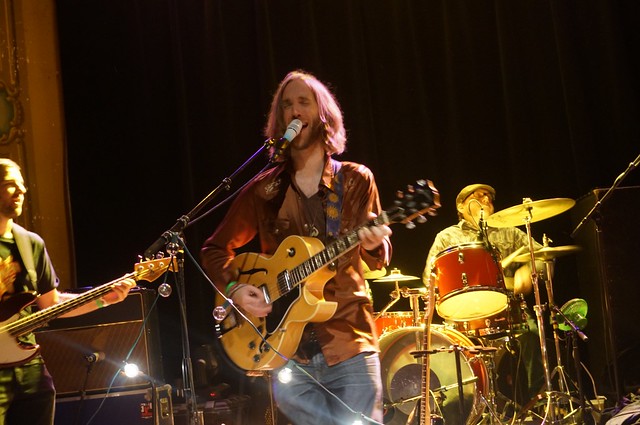
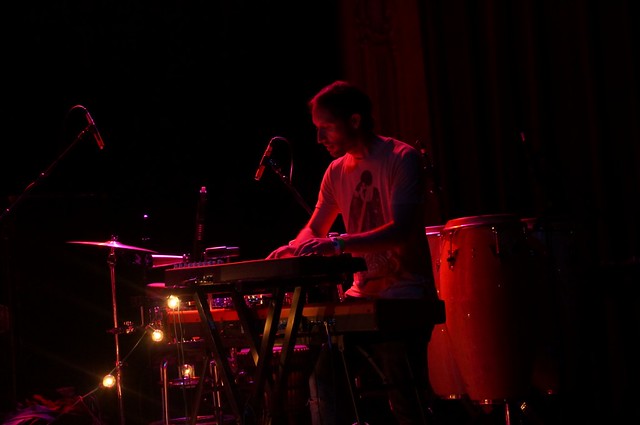
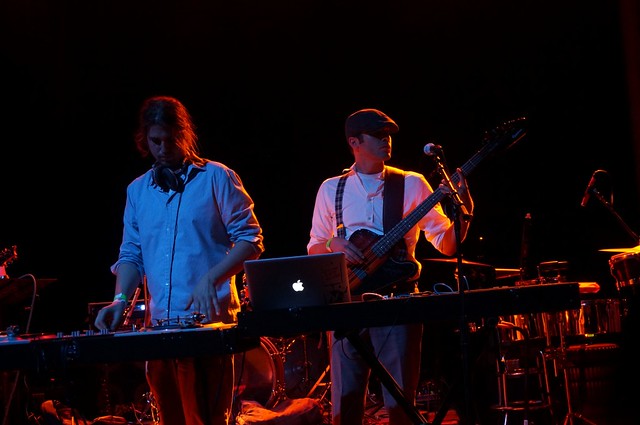
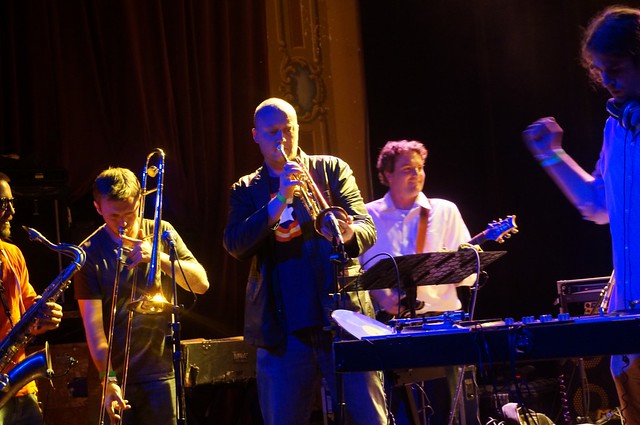
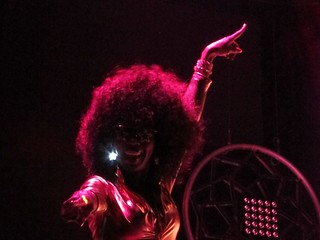
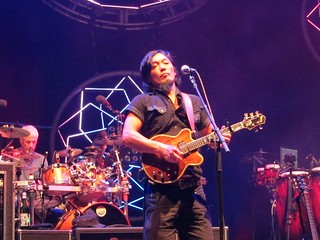
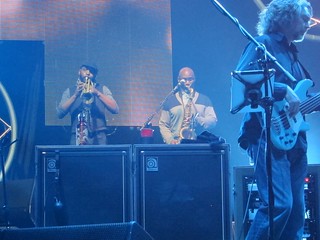
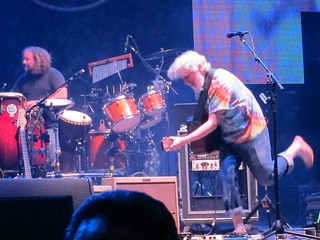
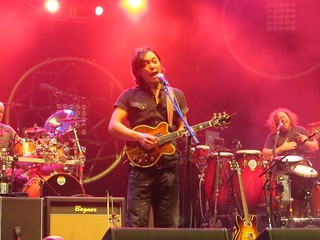
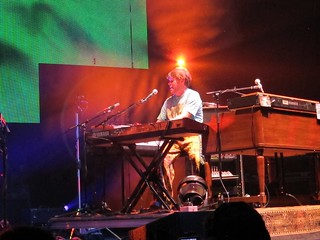
(Artwork care of Karen Ramsay (www.karenramsay.com), profile photo care of brianlackeyphotography.com)
Showing posts with label jam. Show all posts

Monday, July 13, 2015

Recording review - Atomga, Black Belt (2015)

Razor sharp arrangements that find balance between the booty and the brain

4.0/5.0

The sad truth is that studio tricks have leveled the playing field between barely capable musical clods and their more talented competition. A good engineer can make almost any band sound tight, with every pitch perfect note placed precisely on beat. That kind of work, though, leaves its fingerprints on the music. But listening to the interwoven horn parts and the hand-in-glove coordination between the bass and drums on Atomga’s full-length release, Black Belt, it’s clear that the recording engineers didn’t have sweeten these tracks; they just needed to capture the tightest of takes and focus on the mix. Their top-notch production brought the clarity to showcase everyone’s talent. Atomga has such a strong team ear for the groove that, even as they push themselves technically, the album never turns into a parade of egos. Instead, the album is packed with quiet epiphanies where you notice just how spot-on a particular part is.

Black Belt starts out appropriately enough with a brief musical kata that lets Atomga show off their Afrobeat form. Compared to any of Fela Kuti’s tracks, the instrumental “Salt and Pepper” is quite abbreviated, but it demonstrates the tight horn arrangements that the band is known for. The song starts out with a call and response between the horns and Casey Hrdlicka’s guitar exclamation points, but the verse changes gears and pits Alice Hansen’s trumpet against Frank Roddy’s and Leah Concialdi’s saxes. Then the tune takes it even higher with Concialdi locking into a hypnotic baritone sax riff that Hansen surfs cleanly over.

That introduction sets up a strong start to the album, where each track raises the bar. The second song, “Sly Devil”, is quite a bit moodier than the opener, with reggae and Latin influences creeping in. A simple guitar loop begins the tune, but it’s really all about the drums and percussion; they’re locked into the beat, but they never settle for simple repetition. The bass fits right in: relatively busy, but steady on. The horns contrast with the rhythmic complexity by holding longer tones -- the raspy caress of baritone sax is just about perfect. Kendra Kreie’s vocal is soulful and warm, even as her knowing tone makes it clear that she’s not buying the sly devil’s line. Peter Mouser’s organ solo is another treat as it slips into a beautifully retro Ray Manzarek style jam, reminiscent of the middle section of “Riders on the Storm”.

If “Sly Devil” is laid back with a bit of weary cynicism, my favorite track, “Cressidation”, is altogether heavier with powerful soul-gospel roots. Right from the start it’s more insistent, taking an anxious edge from the crisp, funky guitar chords, but the horns soften some of that tension. Concialdi swaggers through her solo with braggadocio, as if reassuring the nervous guitar. At first, Kreie's relaxed vocal seems a bit disengaged, but by the chorus, she picks up a righteous tone that closes the energy gap. Hrdlicka's jazzy solo is exquisitely phrased and I love how he plays just outside the lines. That sets up a dreamy interlude, where Samual Lafalce takes a richly melodic turn on bass before dropping some speedy funk runs. Hrlicka responds with a more aggressive second shot that ushers in the soulful chorus to take it home.

The rest of Black Belt carries on following the basic Afrobeat aesthetic that balances between the booty and brain. The feel-good music is danceable and blurs the lines between funk and jazz, but it’s also the medium for the songs’ socially conscious messages. Tracks like “Alaskan Pipeline” take advantage of that to provide cultural commentary, but the grooves defuse any risk of a hectoring tone.

If Black Belt has a flaw at all, it's that the clean production and razor sharp arrangements are almost too perfect. Not because of studio sleight of hand -- the songs are quite lively -- but more because the flow of smooth takes encourages the listener to take it all for granted. Without the risk of failure, the album misses some of the magical chaos that the band often finds onstage. Still, it’s a rare studio that can capture that kind of lightning. All in all, it's a fair trade.

Monday, June 8, 2015

Concert review - Atomga CD release party with openers

6 June 2015 (Bluebird Theater, Denver CO)

4.25/5.0

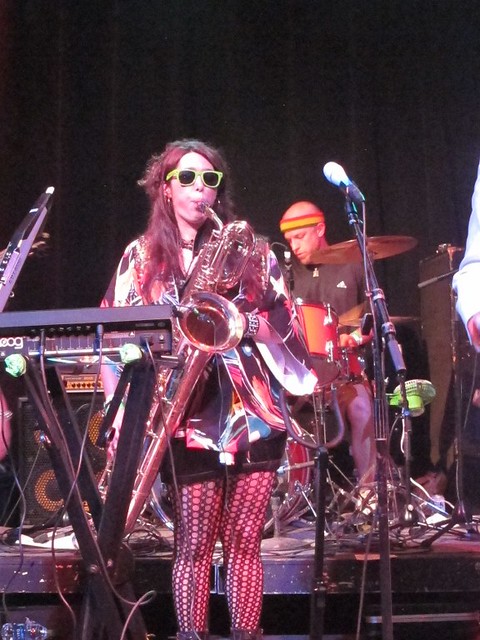
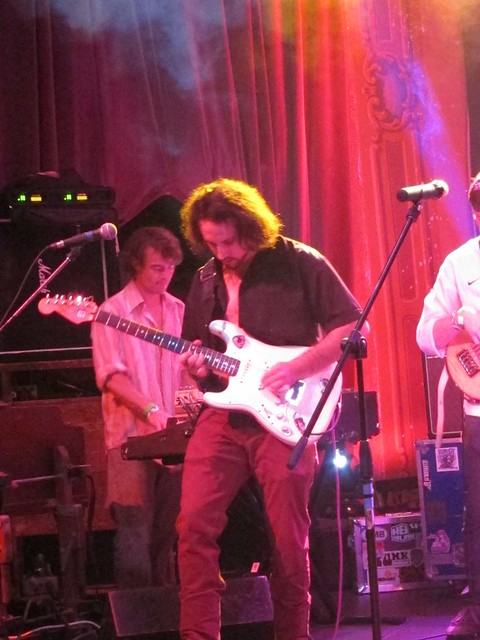
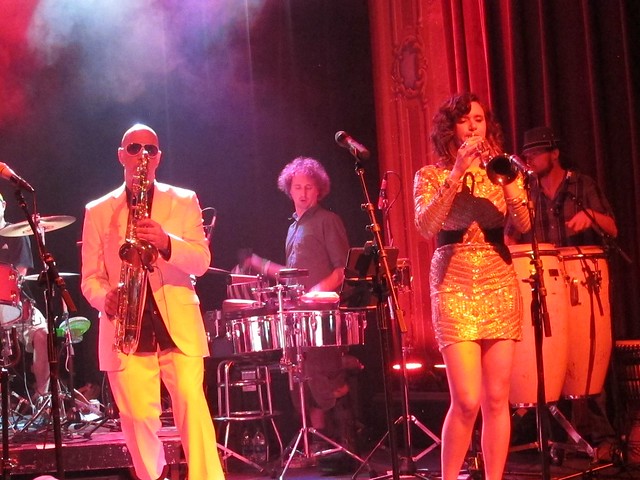
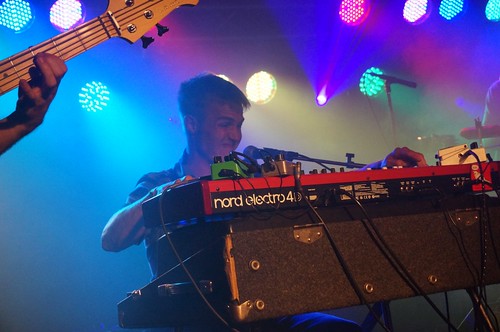
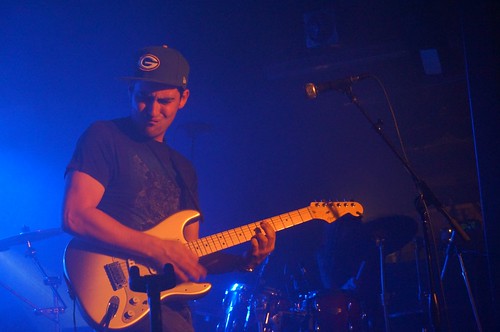
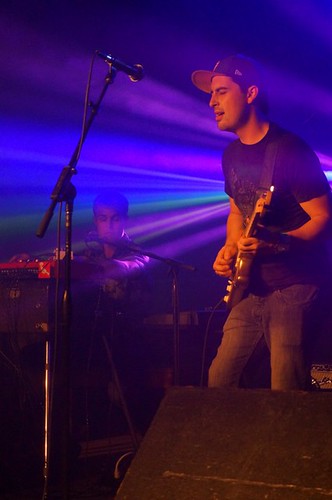
Concert lineups often make for strange bedfellows, but honestly, how many African-influenced, horn-intensive dance bands are knocking around Denver for Atomga to partner with? Okay, there are probably a few, but this bill opted for a potpourri of acts to build up the energy. For the most part, this worked out well. Atomga drew a big, supportive crowd, happy to move to the music. They've just released their new album, Black Belt, this week and this was a first chance for many of us to hear these songs live.

The Bluebird was an intimate setting for the show. The stage was a little cramped with band equipment and personnel, but the band transitions went fairly smoothly and quickly. Throughout the course of the evening, though, the mixes were far from ideal. The instrumental balance for the first two acts left some of the players seeming superfluous because their parts were so hard to pick out. Also the vocals were a bit muddy and indistinct for everybody. The audience had no trouble hearing the beat, though, and moving along.


013 Arcoda
Arcoda might have seemed like the odd band out: their retro-tuned Americana didn't have any horns and they only had a paltry four members. All true, but Pete Pidgeon and his group proved to be the perfect aperitif for the night. Pidgeon looks like he should be heading up one of those early '70s California rock bands, like the Eagles. Their set didn't settle for a peaceful, easy feeling, though. While the first song was relatively laid back, his cover of Bob Dylan's "Tonight I'll Be Staying Here With You" got things going with a tempo that was more upbeat than the live Rolling Thunder Revue version. Adam Revell's keyboard work recalled Billy Preston's soulful accompaniment, giving the tune a funky drive. Pidgeon's tight pedal tone guitar lines were buried in the mix, especially by the fat punch of the drums, but when they shone through, they sounded great.

016 Arcoda
The band largely deferred to Pidgeon, letting his expressive presence take center stage, and he had the confident spark to own it. Aside from that Dylan cover, most of the material seemed to be original, and Pidgeon inhabited the songs. As he and Arcoda deftly handled the dynamic musical shifts, his body language choreographed the intensity of the songs. Even though this was a very different groove than we'd hear for the rest of the night, the band's tunes did find enough funky rhythms to fit in, even when they shifted into a more modern indie rock style. I look forward to catching these guys at another show. I know they're playing at the Fox in Boulder next weekend.


021 Human Agency
On the surface, Human Agency should have been a smoother fit on the bill. Unlike Arcoda, they had a horn section and their heavy drum beats tapped into a dance friendly space. Unfortunately, their set never really gelled and they lacked the stage presence to engage the audience. To be fair, it turns out that this isn't really the group's usual milieu; normally, they're an electronic dance trio with a pair of DJ/sound engineers and a live drummer. In that world, the shoegaze focus on the equipment would be perfectly fine. Incorporating the brass and a guest guitarist for this show provided some protective coloration, but the amorphous repetition couldn't hide that they were out of their element.

027 Human Agency
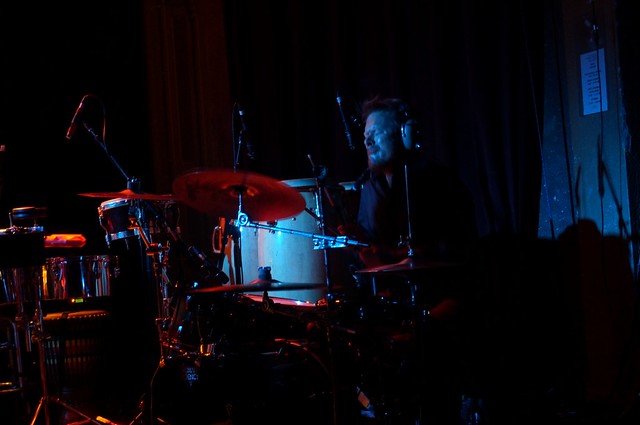
The side players integrated in fairly well, responding to signals so breaks and endings were tightly synched, but there wasn't enough structure to suggest more than just some horns jamming along to a pre-recorded backing track. The muddy mix did them no favors; the turntablist may have had more technique than a transformer scratch and a bit of chopping, but it was impossible to tell. Even the horns alternated between blaring and anemic. The drums were the only instrument that consistently stood out. The good news is that Jonas Otto was a phenomenal player. Locked into his own world with eyes shut and headphones tight, he nonetheless nailed every tag and dismount.

032 Human Agency
Listening to Human Agency's Soundcloud page, they do have some decent tracks. I recognized some of "Half Plug" from the show, but the recording had nuances that we couldn't begin to hear at the Bluebird. They did provide a buffer between Pete Pidgeon's set and the horn heavy sound later, but it proved to be more filler than filling.


061 DBRS
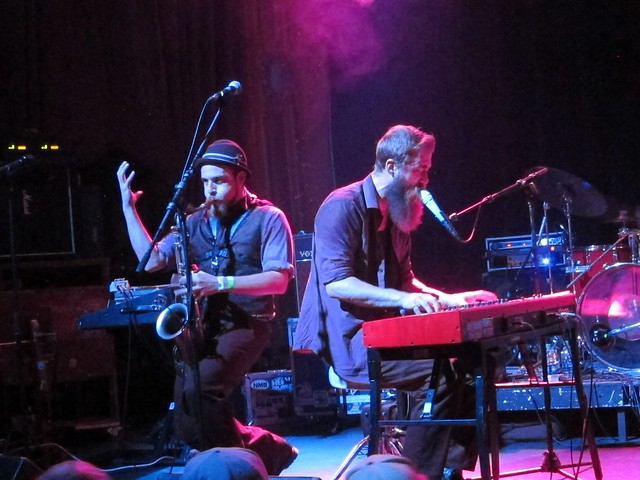
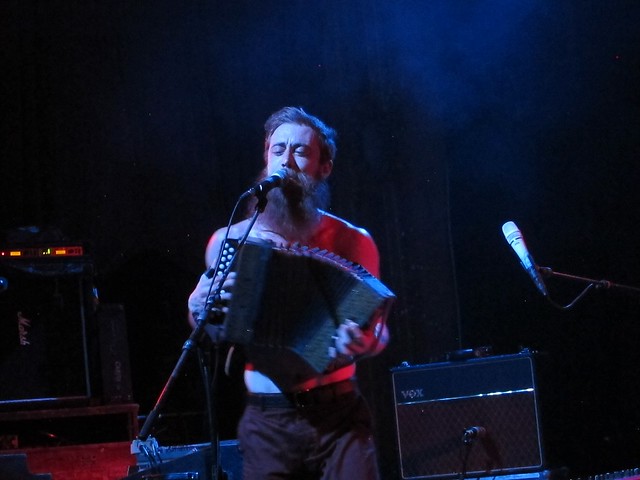
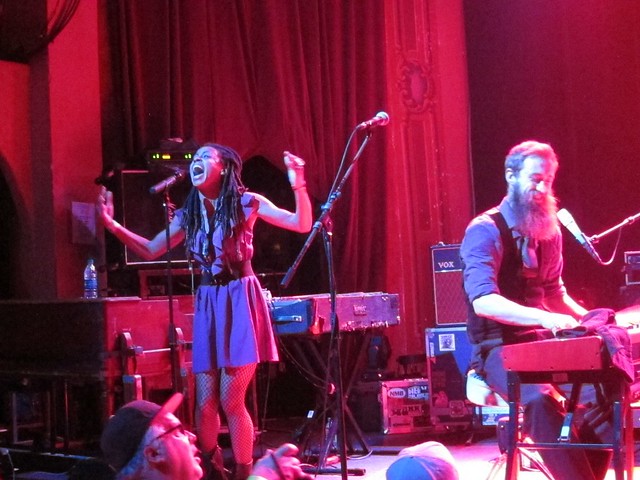
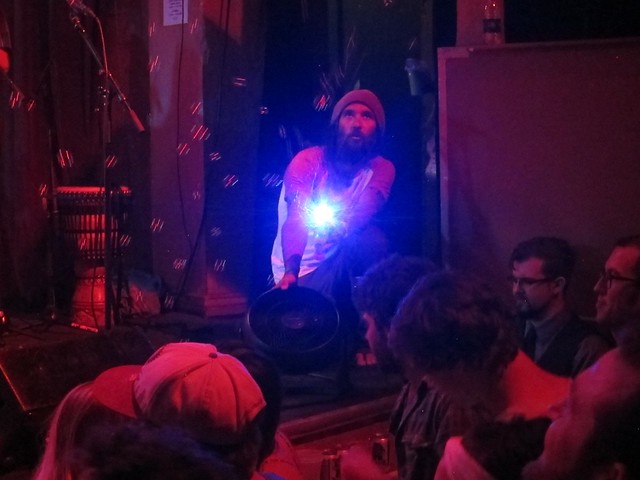
About five minutes into Dirty Bourbon River Show's set, I realized I was face to face with my newest performance nightmare: the thought of having to walk on stage after this band and their madcap circus dance music. Aside from being great players, all of these guys are very visual, with the king of the crew being frontman Noah Adams. Adams had a thick, scary beard that three mountain men could easily timeshare, but he was also one of the most electric performers I've seen in quite a while. His sense of showmanship and magnetic personality were almost unnerving. While he mostly played keyboards, he had a couple of surprises up his sleeve. including a pocket trumpet and a miniature soprano trombone, so we were never sure what else he might do. He and the band knew how to work the crowd up and manage their energy.

058 DBRS
DBRS opened with the Eastern European gypsy jazz of their song, "Wolfman" and Adams embodied the character, taunting and challenging the crowd. This was a strong start, but he showed that he could bring that same intensity to a more serious tune on the drag blues of "Esmerelda" from their recent album, Important Things Humans Should Know. As the band wound their way from these sounds through Dixieland turns to funky grooves, the overall sense was a mix of Dark Carnival and danceable funk. Several times during their set, a couple of the players referenced "Entry of Gladiators" in their solos to cement that sense -- if you imagine a circus song, that's almost certainly the one you're thinking of -- but, despite the sardonic humor, DBRS was no novelty act.

073 DBRS
Instead, they're like a high quality party band pumped up to Major League level, but leavened with just the right amount of quirky weirdness to keep the audience off balanced and intrigued. Adam's rough growl was more than balanced by backing vocalist Sandra Love, who drifted on and off stage to add her seductively soulful voice as needed. Regardless of who was singing, though, DBRS was always swinging. The crowd's dancing and cheers were all the encouragement the band needed.

043 DBRS
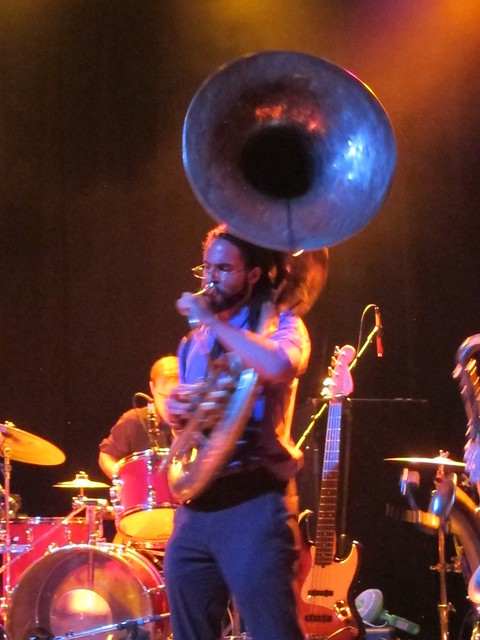
As much as I enjoyed Adams' musical romps from keys to accordion to trumpet, I was most impressed with their boss of the bottom end, Jimmy Williams. Williams divided his time between the electric bass and the sousaphone (and a one-off flute line). At one point, he muscled his way through a tight walking run of 16th notes on the sousaphone, maintaining the rolling rumble of bass notes without missing a beat or looking out of breath. Given that the band is from New Orleans and this was in the Mile High City, that was an impressive feat!

053 DBRS
At the end of their set, after the flashy drum solo on a full kit and extension ladder, DBRS finally took it home with their last song, but even then, they sprung a twist. They dragged out the ending with a final loose meandering riff that suddenly transformed into a quick reprise of their opening tune. Adams is indeed the Wolfman, and we cannot stop him.


089 Atomga
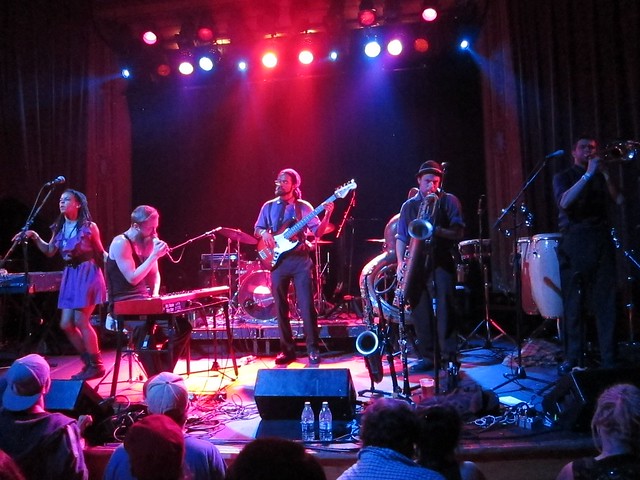
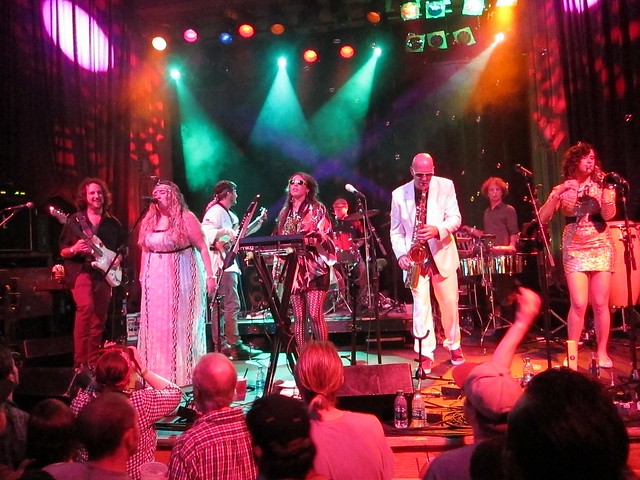
A lesser band might have worried about being upstaged by Dirty Bourbon River Show's manic set, but Atomga was unflappable as they set up for their turn. They were clearly excited to deliver the goods to the nearly sold out house. Everyone found their position on the darkened stage and, after a brief amount of preparation, a simple horn line coalesced into a steady vamp with everyone falling into place. In standard Afrobeat fashion, they took the time to assemble and set that groove until it became a foundation for wider exploration. This was actually a good model for the show as a whole, because the first several songs stayed on familiar ground before the group started digging into their new material.

106 Atomga
By the second tune -- "Empire", from their eponymous EP -- Atomga were playing wholly in the moment, finding that shared space were everything just flowed: Frank Roddy's hand offs to Leah Concialdi's baritone sax were effortless and natural, singer Kendra Kreie's voice was soulful with an iron core, and the drums and percussionists toyed with syncopation, inciting the crowd to movement. It's hard to identify the exact moment that it happens in a given show, but there's always a tipping point where it's not just music, but an invitation to hypnotic, ecstatic dance.

097 Atomga
Atomga's dedication to the groove and to the joy of their music eliminated any sense of competition with DBRS or any of the other acts. As always, it's a treat to witness the band's interdependent yin-yang aesthetic: their arrangements are tightly coordinated, but it's just as important to them to have fun up there and leave room for improvisation. Roddy and Concialdi were focal points, as usual, but everyone in the band brought their own zest to the show, whether it was Alice Hansen's energetic trumpet riffs, Casey Hrdlicka ripping through a wah-wah driven minor key solo, or Peter Mouser's classic psychedelic organ work.

094 Atomga
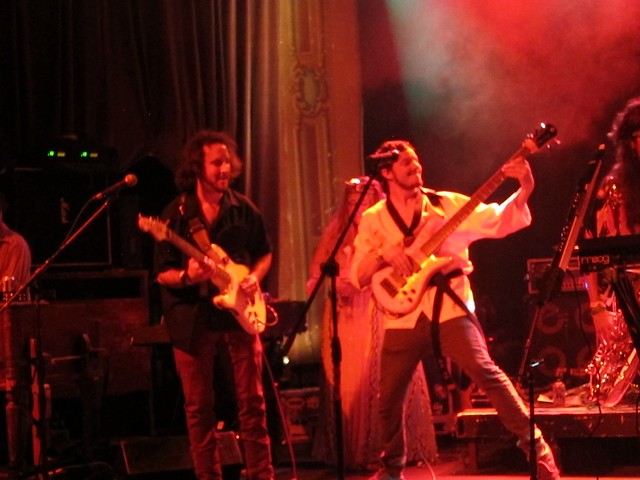
Everybody pulled their weight, but if there was an MVP for the night, it was Samual Lafalce on bass, who was amazing. Apparently in honor of the title of the new album, he wore a karate gi and black belt. Although he stuck to the back line, he put on his own show, mugging for the crowd with a melodramatic scowl (and twinkling eyes) and hamming it up with rock star poses. His campy pantomime was eye-catching, but it was even better to surrender to his expertly fashioned bass lines that locked into fine-tolerance perfection. His playing was central to setting up the backdrop for the rest of the band to work against, especially on the new tunes.

082 Atomga
Speaking of the new album, the setlist included some real gems that I'm looking forward to hearing again. I think my favorite was "Sly Devil", which set up a kind of reggae groove with Hrdlicka's guitar swaying through the chords rather than hitting a straight chank. Lafalce's bass provided a subtle bounce as Roddy's lazy, meandering sax work wound over the beat, but really everybody had the chance to contribute key elements to the intricately assembled whole. Kreie's vocal line reflected the relaxed mood of the sax groove, but the challenging vocal mix made it hard to catch the lyrics in detail. What I could discern sounded political in a similar vein to "Empire".

080 Atomga
Aside from all the musical fun, Atomga also celebrated Black Belt's release with their own party clowns for this show. Their "bubble brigade" filled the hall and they also tossed inflatable beach ball creatures out into the crowd. The only thing missing from this baby shower was a diaper cake. Check back here soon for a full length review of Black Belt, but in the meantime, if you get the chance to catch Atomga, jump on it: they continue to be one of the best live acts in Denver.

105 Atomga
More photos on my Flickr. Also Black Belt is available on Atomga's bandcamp page.

Saturday, August 30, 2014

Concert review - Punch Drunk Munky Funk with Miscomunicado

28 August 2014 (Hodi's Half Note, Ft. Collins CO)

In recent years, the "Phish pre-show party" has become a thing. In the days before Phish is due to play, bars in nearby towns throw some jam bands onstage and try to capitalize on the fans' excitement. Without naming names, I've been to a few of these and generally found them to be disappointing because the bands aren't a good fit or they just don't have the chops. This show at Hodi's served up a strong counterargument to my lack of enthusiasm. Both Punch Drunk Munky Funk and their opener, Miscomunicado, put on strong shows and made it a great summer evening of music, regardless of the space-time proximity of Phish's tour schedule.

018 Miscomunicado
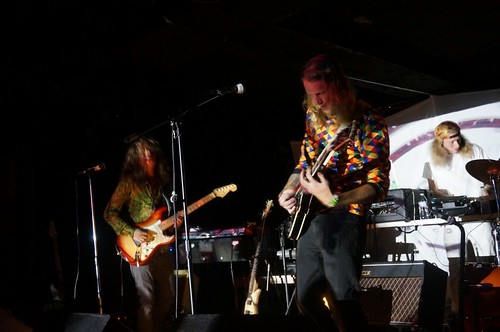
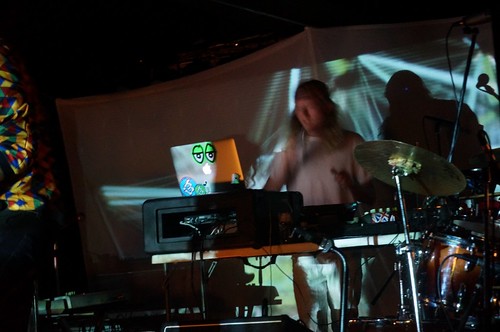
As much as I enjoy catching bands I love, one of the best thing about writing these reviews is that I am exposed to music I might never have otherwise come across. Opening acts can make or break the total show experience, so some people play it safe and show up fashionably late, just in time for the headliner. Anybody running that strategy for this show missed a very interesting band. Miscomunicado juxtaposed a few standard ideas into a strange, but cool band configuration. Drawing from electronic acts and hip hop, they relied on laptop driven tracks for the foundation beats and bass. But instead of MCs or turntablists filling out the group, they had a two-pronged guitar attack that expanded the sound into deep-space funk. Rounding out the performance, their live projection artist, skEYEfi, provided a psychedelic visual accompaniment.

017 Miscomunicado
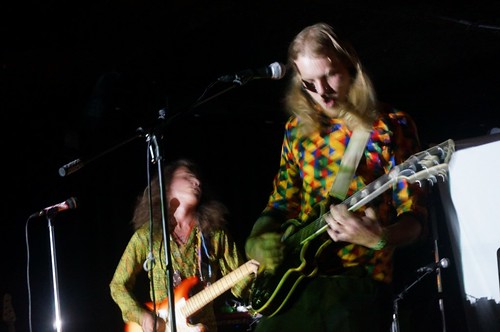
Luke Barone jump started the show with a solid funk groove. Dan Scott Forreal and James Hodgkins quickly joined in with their guitars, pushing the tune into trippier dimensions. The music had a strong improvisational looseness, but the backing rhythm maintained the structure. From song to song, Barone controlled the main mood via his pre-recorded chunklets. The guitars added riff-driven, heady accents for the jam. Barone had the flexibility to extend and mutate the backing, so they could milk the pieces for maximum effect. While several of the songs were instrumentals, Forreal and Hodgkins sang some of the time. For the most part, these were funk style sloganeering -- repetitive vocal accents that could provide a bit of context for the song -- but they also had some lyrics that rose above that simple role.

014 Miscomunicado
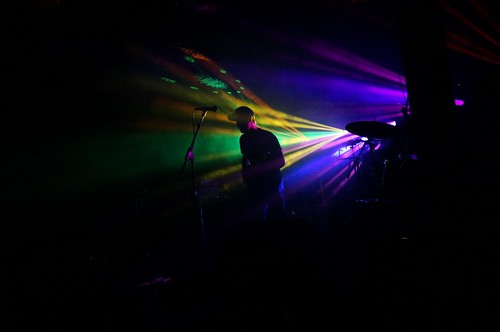
While Miscomunicado's music was anchored in improvisational funk, it was usually cross-pollinated with dance pop, electronica, uptempo rock, or psychedelic fringes. This meant that each song had its own character. The projection work adapted to the mood, taking advantage of found footage and movie clips or abstract kaleidoscopic patterns and animations. Given that the art was the primary source of stage lighting, that made it a supreme challenge to get good pictures, but the live experience is pretty fun.

056 Punch Drunk Munky Funk
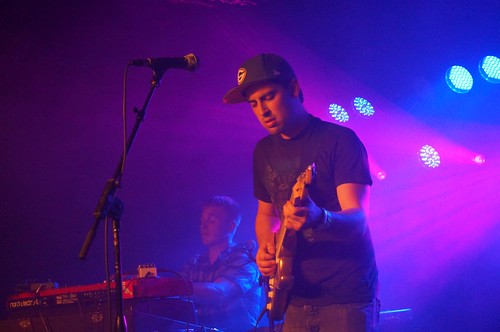
My introduction to Punch Drunk Munky Funk was the "Funk Your Face Off" show earlier this summer at The Mishiwaka. Their set impressed me then because they were undeniably capable of launching out into creative musical sojourns, but their impressively focused rhythm section anchored the songs. That tight-loose dichotomy lies at the heart of the best jam bands and this made PDMF a good fit for the whole Phish pre-show theme. But from the beginning of this show, the band wasn't going to leave any doubt. An amorphous lead-in created a trippy mood that opened the door for Chris Robbiano's bass heavy funk groove, and it quickly became clear that this was their version of Phish's "Down With Disease".

067 Punch Drunk Munky Funk
Keyboard player Mike Givens handled the vocal duties, doing a passable job of sounding like Trey Anastasio, while Alex Boivin showed that he had the guitar part well in hand. Switching adeptly between sharp funk chordlets and more flowing jazz melodies, he held court at center stage. While Phish can easily make the tune last a good 20 to 30 minutes, PDMF didn't drag it out as long, but it was a solid jam that pumped up the crowd.

044 Punch Drunk Munky Funk
The band went on to play some of their own music, including one of my favorite tunes, "Double Richard". "Double Richard, you found your twin/ A dose of Siamese peace within," the oblique lyrics became a mantra, backed by a cheerful march beat before the band sprang off into well-paced melodic exploration. They'd go on to round out the set with servings of disco funk, jazz (both spacey and cool), and even a bit of folky jam. This stylistic meandering let the band demonstrate their versatility between getting down and dirty on the beat and leaving more breathing room in the mix.

030 Punch Drunk Munky Funk
After a brief intermission, they came out for the second set, where they pretty much became a Phish tribute band. "Down With Disease" had gone so well, but let's face it, Phish is not an easy band to imitate in longer form. Most aspirants don't have the technical skills to sustain a full set, and those that do, often get there by slavishly recreating the originals. Either way, tribute bands usually leave me pining for the real thing rather than satisfied. Punch Drunk Munky Funk's second set broke that pattern about the time they slipped into their cover of "Stash". Boivin casually tossed off the trademark opening guitar riff and the rest of the band joined in, staying fairly true to the original: the tight percussion fills and electric piano vamps perfectly hit their marks as they supported the guitar line. The crowd loved it, providing the staccato claps on cue to help out the percussion. The band went on to make the tune their own, with the band members showing off their abilities without merely imitating Trey and company.

050 Punch Drunk Munky Funk
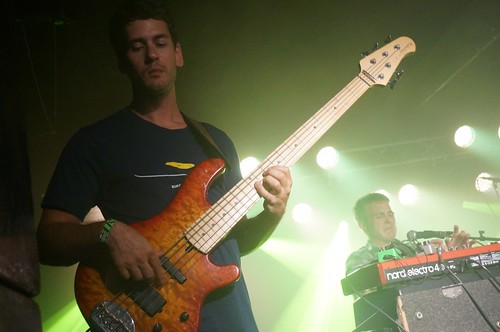
Michelle Pietrafitta's drumming, which blew me away at The Mish, was equally amazing here. She could find space to nestle some impressive open fills within her tight snare and high hat work. This relaxed the beat just enough to create both tension and a sense of inevitability as the beat, never lost, reasserted itself. Similarly, while the mix didn't always accentuate his contribution, Robbiano's bass playing helped drive the dynamics of the songs, drifting between flashy punch and bubbling melodic lines.

047 Punch Drunk Munky Funk
The set was packed with classic Phish tunes, with "Punch You In The Eye" and "Mike's Song" being standout moments. By the time it was done, I was flying with their versions of the songs, feeling little need to listen to the real band on the ride home. The encore performance of "Also Sprach Zarathustra" (AKA "2001") was just icing on the cake. This was a different side of the band compared to their Funk Your Face Off performance, but I'm eager now to hear what else they can do.

055 Punch Drunk Munky Funk
More photos on my Flickr.

Monday, May 26, 2014

Recording review - Atomga, Atomga (2014)

If you want a party, you need a crowd

These days, it's a stripped down DIY world. Electronic production and recording tools are cheap and ubiquitous, so it's easy for a person or two to create dense layers of complexity worthy of a studio full of musicians. Plenty of interesting work is produced by small groups like this, but oftentimes, the music lacks the spark and surprise that a larger band can bring to a shared moment. Music that favors larger ensembles, especially improvisational styles like Afrobeat, rely on cooperation to nurture an idea into vibrant life. The seed may be a simple melodic run or chord vamp, but the band takes the framework and negotiates how the song will develop. In Afrobeat, funk, jazz, and soul come together with African flair. Percussion and bass form the backbone, while horns, guitar, and keyboards add color and detail. In their live performances, Denver band Atomga does an excellent job of demonstrating how a larger group can coordinate on a piece and take it into surprising directions: the syncopated foundation shifts from congas to bells to snare and the horns turn the melody into a conversation. Sax player Frank Roddy has talked about simplified playing and the importance of leaving holes so the group can find their voice. Atomga uses this approach in combination with active listening to construct fairly intricate arrangements that adapt organically to the flow of the moment. While nothing can quite match the magic that happens on stage, their new, self-titled CD does capture that contradictory ideal where the band is tightly aligned but the tunes evolve loosely and naturally.


The album begins with a quick flourish before establishing a solid funk base. Vocalist Kendra Kreie launches into the conscious lyrics like a preacher rousing the congregation. The chorus warns, "Wake up!/They're building empires/ They're building on our backs." The progressive theme calls back to the socio-political criticism that has been at the core of Afrobeat since Nigerian Fela Kuti created the style, but the music animates the message. Each member of the band contributes a deceptively small piece to the overarching mix. The parts fall into repetition with minor variations, but they always leave enough space so they can interlock into a resilient chainmail of bouncing groove. The bass bubbles, the guitar ratchets a light call-and-response, and the organ just taps in the accents. The horns hang back but pull together after the chorus for a thick, droning set of punches. Even during the solos later in the tune, Atomga's horn section works as a team. After a spicy percussion interlude, Alekzandr Palesh leads off with an impressive trombone line. Leah Concialdi's baritone sax jumps in to overtake him but this becomes an exchange between the two instruments.

The following tracks show off the band's range. "Boneyard" slides into a darker, reggae influenced sound with a hot set of Latin horn solos. Then guitarist Casey Hrdlicka drifts into an expressive jazz-blues run. These stylistic shifts are based more on subtle coloring than heavily telegraphed change-ups. "Still Today" on the other hand stays in a jazzy space, with rolling triplets that propel the tune forward. The pensive rhythm is a bit like Dave Brubek's "Take Five" but Atomga uses it like a launching pad. The first solo features Tim Lee's trumpet taking a Miles Davis turn. He hands off to Hrdlicka, who starts out calmly enough, but he builds to a fiery climax of guitar shred. All the while, the rhythm section maintains their composure and the keys float dreamily. The eight and a half minute run time gives the tune plenty of room to stretch out.

"Still Today" turns up again at the end of the album in a remix by Craig Welsch. Welsch has worked with The Avett Brothers and a number of reggae bands like 10 Ft. Ganja Plant and John Brown's Body. His treatment here follows a dub style approach, giving the horns a rich echo and stripping the track down to its roots. The bass gets most of the love, along with the thoughtful Doors style keys. The percussion is still upbeat and active but Welsch locks onto the groove and emphasizes its hypnotic languor.

The only downside with Atomga is the all too brief running time. Even with the remix, the album's five pieces only fill about 33 minutes. By pop song standards, the six minute average track length is expansive, but Fela could lavish a half hour on a single track. On stage Atomga has no problem following his example, but it makes sense that they'd rein in these tunes on the CD: studio time is expensive and plenty of jam bands have proven that a long, meandering live cut can turn wooden without the crowd there to feed off of. While I'm a bit greedy and want to hear more, I'll settle for another time through the album to appreciate the hidden details I might have missed before.

Drop by their Bandcamp page to check out Atomga for yourself.

Tuesday, April 29, 2014

Recording review - Mike Gordon, Overstep (2014)

Polished performances resurrect jam band magic

It’s funny how you can totally misread a band’s internal chemistry. Like many people, I had always placed Trey Anastasio as the creative heart of Phish. It’s a natural mistake; he’s acted as the front man, wrote most of the songs (along with lyricist Tom Marshall) and covered the bulk of the singing. This is not to dismiss the rest of the band; Mike Gordon, Page McConnell, and Jon Fishman were all vital to Phish’s live sound and contributed their own material, too, but Anastasio seemed to be the center. In the years since Phish went on hiatus in 2004 and then returned in 2009, this seemed especially true. The band’s last album, Joy, reflected more of Anastasio’s tumultuous history rather than the band’s classic strengths.

But listening to Mike Gordon’s latest solo project, it’s strikingly clear just how wrong that analysis is. Sure, Anastasio may have dragged Phish down a bit on their last release, but Gordon’s songs on Overstep find the band’s old magic and it’s easy to imagine these tunes drifting into expansive live jams. In fact, “Yarmouth Road” and “Say Something” both turned up in Phish setlists last year. Maybe it’s a case of osmosis, but Gordon seems to have picked up a fair amount of his bandmate’s compositional approach. Take “Ether”, for instance. Once it winds its way past the ambient intro, it has a taste of Anastaio’s “Cayman Review” before it slips into the same lazy zone of Phish classics like “If I Could” (Hoist) or “Horn” (Rift). Similarly, “Paint” would fit well into that same era as one of those bridge songs that work well in the studio, but really shine on stage. With the descending repetition of the title, it would be easy to hear them slide the tune into a cover of David Bowie’s “Fame”.

But even if Overstep’s tunes can’t shake the comparisons, it is not a Phish album in disguise. Gordon took plenty of steps to ensure that. The biggest decision was bringing in producer Paul Q. Kolderie (Morphine, Radiohead), who brought a very polished sound to the album. Each sonic element is carefully preserved, making it easy to pick and choose the focus at any time. The vocals in particular are isolated cleanly, which adds to the impact on tracks like “Face”, where the backing harmonies meld but can still be separated. This clarity, though, comes at the cost of losing casual spontaneity. Another key choice was limiting the core personnel to Gordon’s longtime collaborator Scott Murawski (guitar and vocals) and Matt Chamberlain (drums). In addition to bass and vocals, Gordon adds guitar and organ. While the arrangements are anything but stark and stripped down, having fewer creative agents involved also contributes to the carefully constructed ambiance.

Despite the stylistic cues that Gordon can’t help but bring, Murawski and Chamberlain make no particular effort to cater to those expectations. That sets up some great tunes that break the jam band pattern. “Peel” stands out the most, creating a moody tension that circles around a one-drop guitar chank, winding tighter and tighter. Gordon’s bass is simple and repetitive, offering little respite. The faint shimmers of feedback and tone at the edges add to the otherworldly feel. Even when a song does lean back to type, Murawski makes his own solo statement, without worrying about WWTD: what would Trey do? On “Long Black Line”, he sets a steady accompaniment. Then, for his two leads, he opts for very tasteful melodic lines that rely on simple modal playing. Rather than drifting far afield like Anastasio tends to do, he keeps it bounded, staying in service to the song. Gordon seems inspired by the performance, adding plenty of interesting fills, but he keeps the bass similarly constrained during the vocals, waiting until the very end to close on a sweet flurry of notes.

If there are listeners that are not convinced that Gordon deserves a lot more credit for Phish’s creative vision after listening to Overstep, then they must see him little more than impressionable clay, formed by his role in the band. But spending some time with this album and Anastasio’s last couple of releases, it’s easy to see who has the more interesting set of ideas and stronger tunes.

(This review first appeared on Spectrum Culture)

Thursday, March 6, 2014

Recording review - Sleepy Sun, Maui Tears (2014)

Concept album? Only beguiling distortion and balanced jams

Too many neo-psychedelic bands mistake freeform anarchy for true psychedelia, thinking that a confused and disoriented listener is functionally equivalent to one who’s been transported. Others assume that they can alchemically transform formulaic progressions into gold if they wrap them in enough distortion and echo. On Maui Tears, Sleepy Sun rises above their lesser peers, delivering a phenomenal album that invites hours of quality replay time. Pick your favorite headphones or, better yet, let it shine out through a good set of mains and share it with your neighbors. The songs are built upon interesting structures, offering plenty of depth to support open-ended jams that never become untethered or trapped in their own bubble. The band has also honed their dynamic sense over the last couple of years to accommodate cathartic growls and ringing highs, but also open spaces with nuanced details. The individual songs offer plenty of opportunities for sonic indulgence, but the pacing and variety across the tracks make this a wonderful collection. The musical feel is consistent even if the tunes vary quite a bit, which uncovers another wise decision—Sleepy Sun also avoids a third trap common to the genre: relying on a simple unifying theme. Concept albums are cool, but the risk of cliché or pomposity is daunting.
The album opens with “The Lane”, a tune that the band has had in their live set for a while now. Jangling guitars channel exultant sunshine and show off the core of Sleepy Sun’s sound. Matt Holliman and Evan Reiss harmonize their two guitars, blending melodic lines into a shifting current of warm fuzz and overdriven tubes. The two parts lock into formation and then split apart before finding common ground again. Underneath, the bass takes on a skeletal hint of rhythm guitar to round out the aural spectrum. The Velvet Underground influence is there in the droning undertones, but Sleepy Sun favors a sweeter balance. The echoing juxtaposition of competing parts is filtered through a distorted shimmer and then stuffed into a thoroughly saturated mix. Frontman Bret Constantino’s vocals contribute to the VU comparison, sunk deep within the mix and draped with slapback echo like Nico’s parts. Distant and buried, it can be hard to wrench the lyrics free, but when they come through, the imagery is heady. On the thoughtful bridge, Constantino sings, “In a pool of roses, we could swim/ It’s only a grand illusion of our earthly whim, a glimpse.” Glimpses are enough to beguile.

The second track demonstrates the power of contrasts. After “The Lane” crashes down, “Words” rises immediately. This time, the twin guitars are clean and acoustic, each one fingerpicking its own chord voicings to build the gentle interlocked structure. The stereo separation splits the two, making it easy to distinguish them. A slab of electric guitar surfs in with the vocal, crackling with buzzing overtones, but, despite the crunch, the acoustics are still clear and strong. The combination leaves the song open for interpretations: a delicate surface can’t quite hide the grind of doubt and conflict. Or maybe the structure is what keeps the negativity in check. Either way, the complexity offers enough distortion to connect to the earlier track but this song finds its own direction.

Part of the album’s appeal also lies in the band’s development. This slacker psychedelia phase has bloomed since singer Rachel Fannan left the band in 2010. Fannan contributed a folk-rock flavor and her voice could be haunted or playfully innocent. Losing her forced Constantino’s personality to the surface: a raw need for a grand gesture, swaddled in oblivion-seeking waves of sound. Where 2012’s Spine Hits (review) set the foundation for the band’s evolution, Maui Tears solidifies the aesthetic while expanding their palette and control. Songs like “11:32” may start with a chaotic snarl of feedback, full of thunder and whine, but they harness that energy with a solid, mid-tempo drumbeat that powers a guitar riff that’s as unswerving as a fixated three-year-old. The verses punch like Jack White sitting in with a no-name garage-psych outfit. The music swirls before dipping into the mellow bridge, redolent with melting whammy bar detune. The spacy interlude celebrates a moment of hang time before falling back into the drive. It’s a tribute to the band’s collective vision that they can pull off these shifts without losing coherence or momentum.

The album closes with a climactic opus. The title track runs well over 10 minutes and channels Pink Floyd’s “Careful with That Axe, Eugene” along with fragments of early King Crimson, Led Zeppelin and Porcupine Tree. From the simple bass line at the start, accompanied by light stickwork rhythm, to the acid-burned guitar jam in the middle, it’s a long, meandering trek along the fringes of a questionable head-trip that culminates in a tribal rite finish, mediated by hallucinogens. Complete with flute solo. It’s the perfect bit of excess to wrap up the album and inspire yet another round with the demons.

(This review first appeared on Spectrum Culture)

Monday, December 30, 2013

Concert review - String Cheese Incident with Bootsy Collins and the Funk Unity Band

28 December 2013 (1st Bank Center, Broomfield CO)

This was the first show of three, leading to their spectacular New Year's Eve blowout. With a different opening act each night, this one relied on Bootsy to jump start the party, which he handled with ease.

Bootsy Collins and the Funk Unity Band
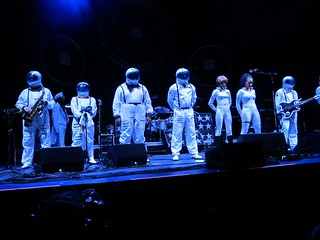
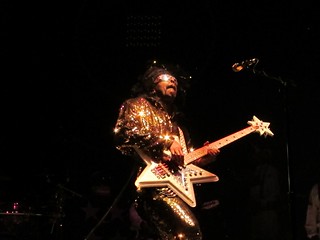
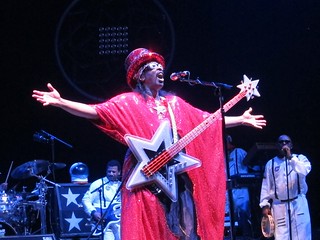
047 Bootsy Collins With his signature space bass, star-framed shades, and P-Funk Mothership Connection, Bootsy Collins has long celebrated a spacey motif in his performances. This show followed that tradition to a T. The band filed onto the stage in astronaut costumes and headgear. They quickly ditched the helmets, kicked off the funk, and  warmed up the crowd a little bit before Bootsy made his entrance.

003 Bootsy Collins
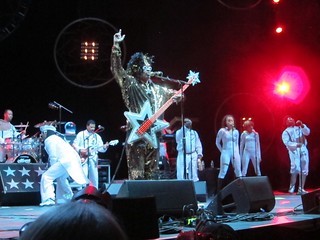
As always, the presentation was gaudy and beautiful. He strolled out in a sparkling gold suit with glitter and tinsel in his hair. His white bass was strung with red strings that stood out at a distance. Later, he'd change outfits into a shiny red top hat and flowing robe featuring a black "Casper the Holy Ghost". His final costume change was more of a reveal to pander to the local crowd: he doffed his robe to show off the Denver Broncos jersey (Peyton Manning, #18) he wore underneath.

017 Bootsy Collins
Covering a range of P-Funk and solo tracks, the show largely followed the standard formula of setting a solid groove, dressing it up with spectacle and crowd-friendly catchphrases, then letting Bootsy pump in the charisma and work the crowd. "Mothership Connection (Star Child)" was my personal favorite, but they hit so many of the classic tracks that everyone with a passing knowledge of the mythos was satisfied. Another fine moment came while Bootsy was off-stage, when the band covered "Them Changes", from Jimi Hendrix's Band of Gypsies. Before launching into it, they educated the crowd on drummer Buddy Miles, who wrote the tune.

028 Bootsy Collins
The stage was filled with personnel: a couple of horn players, drums, guitar, a hype man, four vocalists, a dancer, two keyboard players and a guy playing key-tar. The band also included a full-time bass player to cover the foundation funk while Bootsy used his space bass to play octave-dropped, distorted,  gut-shaking riffs that occasionally bordered on dubstep. Flashy enough under the lights, the bass later became part of the lightshow as it glowed and changed colors.

039 Bootsy Collins
Over the course of the evening, many claims were made attesting to the power of the funk, but Bootsy himself was the greatest testament. It's hard to believe the man is 62 years old. He looked and sounded completely vital onstage. While his crew was tightly choreographed and polished, he floated over the top with a relaxed vibe. Singers danced in formation, the hype man bounced from side to side, and Bootsy ruled over it all with smiles and banter. It was clear that he relished connecting with the audience and feeling our love. Late in the set, he showed how he could shrink a huge arena into an intimate personal space. He climbed over the rail and offered himself to the crowd, dispensing hugs and high-fives. The band called him back, but he still took his time to turn around and finish out the set.

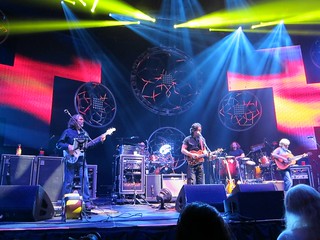
067 String Cheese IncidentOf course, the crowd was really here for the headliners. It seemed like a majority of the fans made the pilgrimage from far away. This was a special show on several levels. Aside from kicking off a New Year's Eve run, the band made it a celebration of 20 years of playing together. The set began auspiciously enough with their version of "Sgt. Pepper's Lonely Hearts Club Band"/"With a Little Help From My Friends". Aside from the audience, they also got some help from Karl Denson and Chris Littlefield on flute and trumpet. Despite some minor problems with Michael Kang's amp rig, the band had no problem sliding into the flow of intense improvisations punctuated with dreamy interludes.

101 String Cheese Incident
The show really hit its stride when Kang switched from 5-string electric mandolin to the fiddle late in "Little Hands". The tempo picked up and he pulled the whole band behind him as he sawed at the strings and wailed. This was also a great moment to appreciate the tight integration between percussionist Jason Hann and drummer Michael Travis. While Travis generally locked into the beat and left Hann spaces to fill, the two had the beat dancing between them here.

086 String Cheese Incident
Denson and Littlefield came back out for the last two songs of the set. Their tight, high-energy chops were a perfect addition for the jazzy funk of "Black and White". The highlight here was a little bit of head-cutting between Denson on sax and Kang on mando. The pair traded lead riffs, each challenging the other to wilder flourishes. This led into a soulful cover of Stevie Wonder's "I Wish". Denson sang the first verse and then let Kang take over.

102 String Cheese Incident
After a short breather for the audience to regroup and rehydrate, the second set carried on the sweet flow of genre-hopping jams. The crowd particularly enjoyed "Jellyfish"; the funky beat had us dancing and singing along with Bill Nershi's droll rap delivery. The power of SCI's tidal wash of jams made the set feel timeless. Where Bootsy took us all to his church of funk, this was more of a tribal ritual, where each person found their own focal points and surrendered to shifting currents.

064 String Cheese Incident
The fugue state finally broke when the set ended, leaving only the encore before the drive home. Even this was special, providing a historical context for the band. Nershi started out alone, playing "Down A River" and talking about the group's roots. He was then joined by Kang, Travis, and Keith Mosely for "Lester Had A Coconut", showing off the band's original configuration. Then keyboardist Kyle Hollingsworth came out for "Round The Wheel", soon to be joined by Hann to close out the show with the full band. It was a touching arrangement.

078 String Cheese Incident
My only regret for this show is that I would have loved to see Bootsy join in at some point during the main sets. But that's a small thing. Otherwise, the visuals and music provided a great peak experience.

More photos on my Flickr.