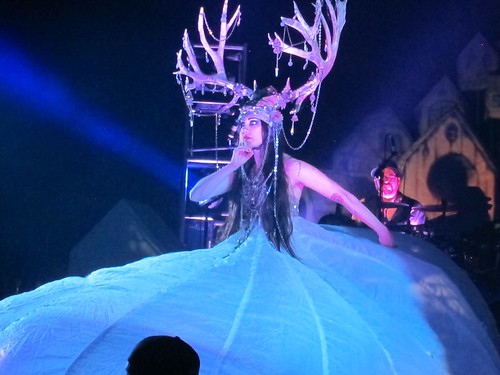
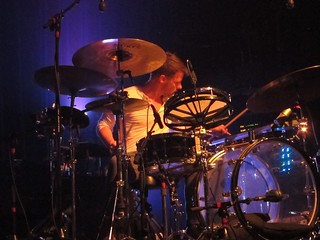
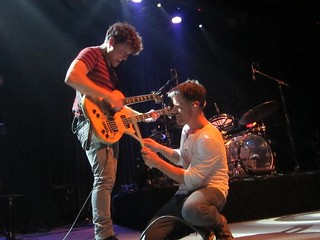
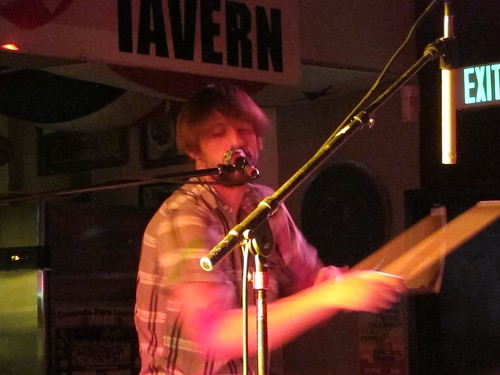
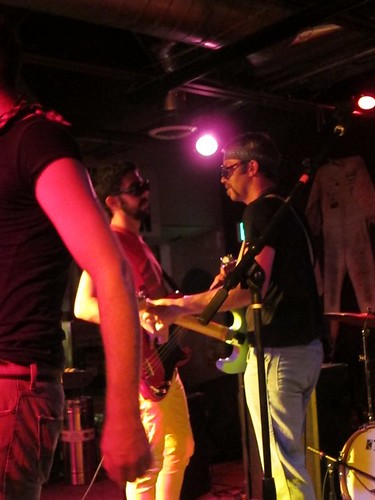
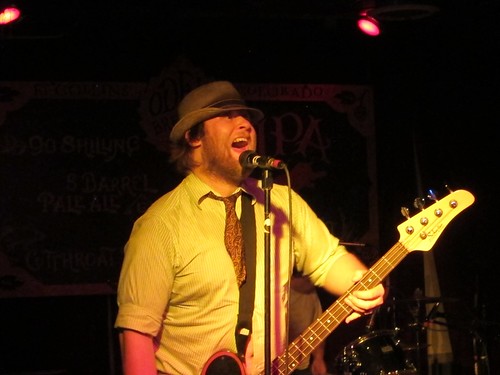
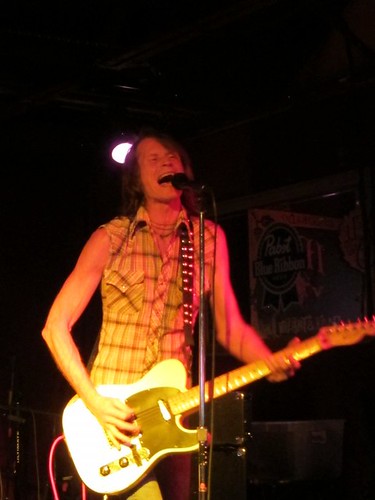
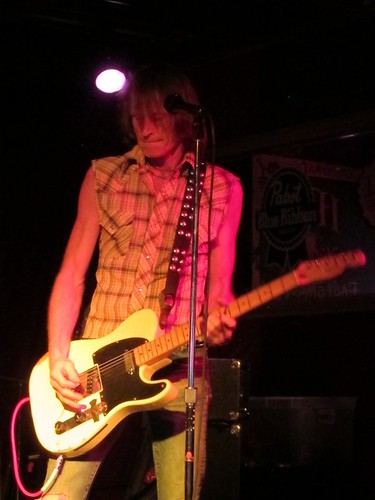
(Artwork care of Karen Ramsay (www.karenramsay.com), profile photo care of brianlackeyphotography.com)
Showing posts with label dance. Show all posts

Monday, March 16, 2015

Concert review - Beardyman with Shank Aaron and Sureshot

13 March 2015 (Beta Nightclub, Denver CO)

3.75/5.0

I've been to my share of nightclubs, but I'm much more a denizen of the bar show and concert hall. Unfortunately, DJ sets and electronic acts are always a bit out of their element at concert venues when they try to recreate the dance club/rave feel. It's hard to overcome the wrong geometry, the lack of a real dance floor, and a very different atmosphere.

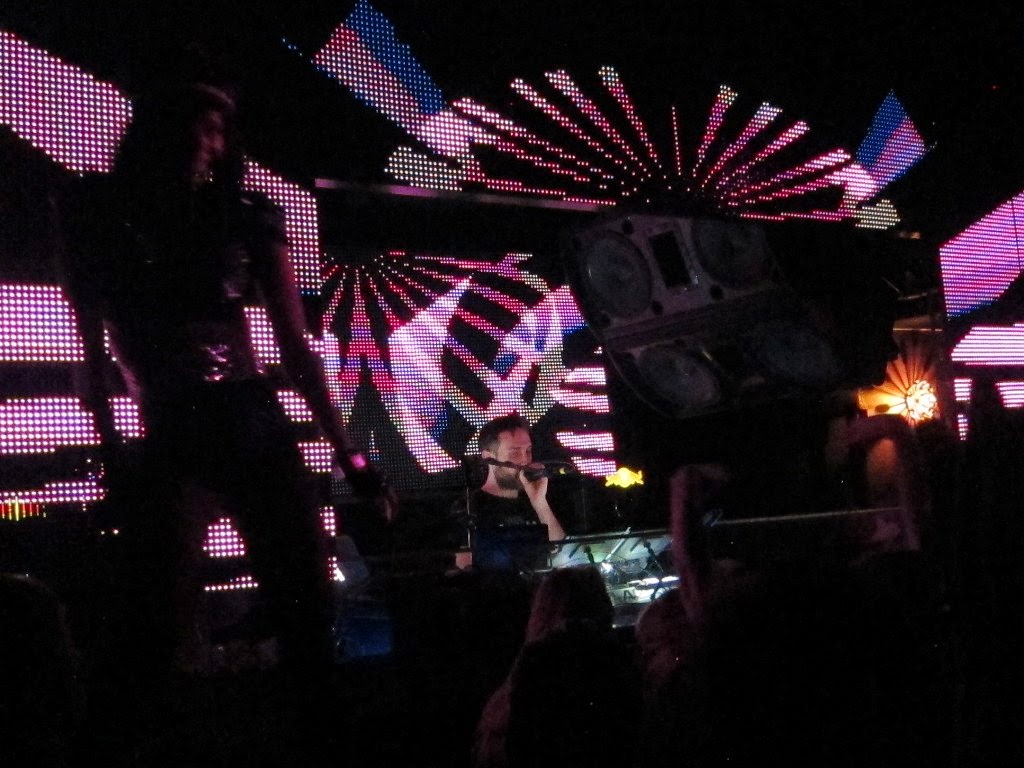
By contrast, catching Beardyman at Beta delivered the genuine dance club experience. They had the lighting setup, including lasers and a pixelated display around the DJ, not to mention a sound system capable of massaging internal organs with bass throb. While the show never caught the wild rave feel of a Beats Antique or Glitch Mob show, Beta was a decent venue. Unlike most of the clubs I've been to, the space was voluminous and could have accommodated a much larger crowd; the dance floor was fairly full, but the back and edges offered plenty of room to move around.


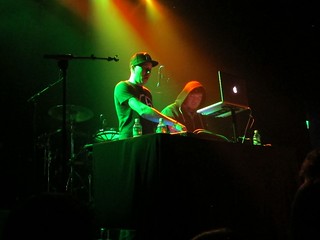
The first thing to remember is that this evening was all about the club vibe rather than a concert. So, there were no breaks or rests as one DJ melted into another. Sureshot led off with fairly standard set of electronic mood music, but he never even spoke to the crowd. The transition to Shank Aaron picked things up a bit, with a harder edge bass and a buddy on the mic, but the emphasis remained on driving the insistent beat and keeping people moving.

Soaking in the experience on the dance floor, it reminded me about the power of variable-interval reinforcement schedules. Okay, I lost a few of you there. This is what makes gambling, email, and Candy Crush Saga so addictive: a stable pattern interrupted with tiny rewards. The DJs provided this by constantly manipulating the sonic signature with grinding bass or free-fall washes, all without dropping the beat. Each novel twist -- is that the sound of industrial robot mating calls? -- triggered a new wash of dopamine and flush of satisfaction. In the club sensorium, where the volume dominated and the visuals provided pseudo-random shifts, the effect was electric. The only real way to react was to move and dance, and there was joy in that surrender.


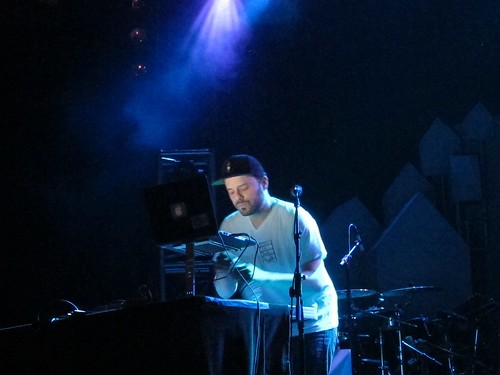
Beardyman slipped into the booth at the end of Shank Aaron's set and did his systems check while the final changes propagated through the mix. But once he took up the reins, the difference was huge as he demonstrated the difference between mere DJ and performer. It wasn't just how he layered his vocal loops to create an order of magnitude more complexity; it was his playful sense of improvisation and the amount of personality he injected. He warmed up by showing off some of his musical chops, then he got on the mic and riffed for a while on Denver, mentioning his last tour through here that ended early when he got sick. Then, apropos of nothing, he shot off on a tangent. He mentioned, "I probably shouldn't have taken that acid 30 minutes ago," which pulled its comic effect from the vocal mutation that added the requisite disconcerting echoes and pitch shifts. It was a cheap gag, but it worked to loosen up the crowd.
EXPLAIN

It was interesting to contrast this nightclub experience with his more concert-oriented shows. He never got quite as antic or creative because he kept the set in full service to the dance floor, but the performance element distinguished Beardyman from his more prosaic competition. It's not just that he was live looping the mix and tweaking vocal samples on the fly to create his grooves, it's how he toyed with the electronic dance structure and kept his audience off balance. If the normal dance club formula builds on short attention span twists on the beat, Beardyman upped the ante by whipsawing his set between inciting the crowd with intensely powerful rhythms and then shattering the mood with comic or surprising side trips. So, he broke up the heavy pounding beat with an introspective instrumental piano interlude that was disrupted yet again when it picked up a grinding dubstep bass. Later, a bouncy pop song was deconstructed and deformed into weirdness. But he never forgot his milieu, pushing the dancers into constant motion. He also handled these shifts organically as he flowed between them.

Throughout the night, he made it clear that all of his set was relatively improvised, sometimes with subtle moves, like lyrical riffing specific to Denver, but just as often by overtly bragging about it and explaining what he was doing in a sing-song dancehall style voice.  This looseness meant that he could build up some elaborate ideas, but then abandon them if they didn't connect as well. Having seen some of his other performances, there were some familiar bits, although they had their own flavor here. One of these, "Ghost Town" by The Specials, reworked  the uneasy darkness of the tune until it unwound into glitched out blocks of tone.

This show at Beta wasn't as polished or clever as that Seattle show linked earlier, but it was exactly what the venue called for. It was a full night of tribal dance rites powered by visceral bass and tight syncopation, and Beardyman's special touch made it something to talk about afterwards, trading memories of odd references and riffs.

(Note: Lighting and logistics made it hard to get any other usable photos) 

Tuesday, February 3, 2015

Recording review - Ghetto Youths International Presents: Set Up Shop Volume 2

Another diverse sampler from reggae's first family
3.75/5.0

Carrying on the family business is a long-standing tradition and the entertainment industry is no different. But even talent and the support of famous parents are no guarantee for success. Now put yourself in Julian Lennon's shoes or imagine the Marley offspring, trying to make a mark with the burden of a mythic, almost saintly father. They've each had to carry that weight and face down the unmeetable expectations. But where Julian Lennon has never completely exorcised his father's ghost, the Marleys have overcome the overblown hype and dismissive critics to prove that they had more going on than just their celebrity genetics. Eldest son Ziggy probably faced the harshest criticism, but his younger brothers have each taken their turns, too. With perseverance, they've gone on to earn Grammys and chart success while finding their own voices. In recent years, brothers Stephen, Julian, and Damian Marley have focused their attention on their label, Ghetto Youths International, where they've collected a strong lineup of performers. In 2013, they dropped Set Up Shop as an introduction to the label. This past December, they followed up with Set Up Shop Volume 2. Both compilations feature the Marley brothers and Stephen's son Jo Mersa, along with several other GYI artists like Wayne Marshall, Christopher Ellis, and Black-Am-I.
Like its predecessor, Volume. 2 highlights the diversity of the talent on the label, from dancehall toasting and rocksteady to moody ska and dub grooves. The good news is that reggae fans of all types will find something to love here, but the grab-bag nature of this kind of release naturally means that there’s no clear thread of continuity running through these songs. While that keeps this from achieving “album of the year” status, Set Up Shop Volume 2 easily accomplishes the goal of generating interest in GYI’s artists. Whether it’s the sweet harmonies and poppy rocksteady of “In The Ghetto” from Black-Am-I or the fine dub production on Jo Mersa’s “Rock and Swing”, there are moments of sonic purity that hit their mark perfectly and leave me wanting more.

Damian “Jr. Gong” Marley grabs a lot of attention with several tracks, including the lead single, “Is It Worth It? (Gunman World)”, which wraps its morally ambiguous subject in a Two-Tone ska moodiness. While that one features Damian’s solid lyrical flow, I enjoyed the opening tune, “Hard Work” a bit more. The intro blend of a creaking door and a thoughtful splash of music reminded me of Michael Jackson’s “Thriller”, but the production was what really grabbed my ear, first for how it eased into the chank rhythm, and then more for the sparse groove and electronic touches. Damian’s rolling, staccato delivery tips its hat at toasting deejays but also has a taste of East Coast hip hop flow. The heavy beat and drop out breaks are ready-made for the club scene, helped along by an infectious chorus that’s easy to join in on, “I’m putting in the hard work.

The following track, “The Living Breed”, is also strong, but it’s the outlier of the collection, with its Mexican influenced pop DNA. The backing loop vamps with a Latin beat accompanied by an acoustic guitar, relying more on emcee accents to make the reggae connection than the rhythm. Still, it’s smooth how the conscious lyrics of the chorus perform a clean Aikido flip from “the last of a dying breed” to “the first of this living breed.” This one also benefits from the procession of distinctive vocalists -- including Illustr8’s American tones -- as they hand off the leads smoothly,

The only tune that doesn't click is Wayne Marshall’s “On the Corner”, which takes its inspiration and structure from one line of REM’s “Losing My Religion”. The music works, but Marshall’s cautionary tale has too much of a preachy tone and too little subtlety. Fortunately, his other contribution, "Nah Give Up", is much better.

But regardless of whether every song finds a home in listeners' ears, Set Up Shop Volume 2 shows off the Marleys' skills at production, arrangement, and talent scouting. It also highlights the different strengths and styles that Stephen, Julian, and Damian each bring to the table, all while reflecting on the impact that Bob Marley's music and message still have on modern reggae. They carry on their father's ethos and stand on his shoulders, but they're definitely "the living breed" of modern reggae.

Thursday, January 15, 2015

What's cool - Rebekka Karijord, "Use My Body While It's Still Young"

Comfortably numb? Not necessarily...

Is it time to turn away from what we take for granted and challenge ourselves? The path of least resistance promises a smoother trip, but without stepping off that path, we'd never know what we're missing. I think about this as my high school aged son is an exchange student overseas, immersing himself in another culture and other assumptions. It also rears its head when I talk to my friends about the bands that excite them the most. Music can be like comfort food; many of us just want to soothe away the irritants of the day with familiar soundtracks. It's nice to know that that band you loved in high school never changes...well, they never change if you don't listen their later work or clean your palate with some fresh sounds. I have my comfort foods, but if I were still only eating the food I loved at 15, I'd never have tasted curry, harissa, or wasabi. And even though I never became a big fan of wasabi, I'm a better person for having tried it.

Norwegian born singer/songwriter Rebekka Karijord has never blipped on my radar before this, but I just came across her song, "Use My Body While It's Still Young" and it made a strong impression. The piece is the first single off her 2012 album, We Become Ourselves, which is due to see its American release on February 5, 2015 and I'm looking forward to hearing more. She describes the song as a "momento mori", a cautionary reflection on mortality, and the lyrics take us to a place that most of us would rather not think too much about:
Use my body while it’s still strong.
Wrap yourself in all of this warmth,
This aching love
Come use it while it’s alive
This aching love
Come use it while it’s alive
We’ll all be gone in hundred years
Those philosophical lines are paired with a dreamy electronic pop groove. The music takes a song that could be brooding and nihilistic and turns it to celebration. Just as Karijord's words recommend, the song surrenders to the joy of dance and movement. Sweet and sour, she savors her gifts even as she feels the passage of time.


The video complements this with a powerful collaboration with Siv Ander, a Swedish dancer in her 70s. The visual contrast is sharp, with loving closeups of Ander's body and her choreography evolving from stiff and static to richer physicality.

This is the perfect finish to a day: discovering fine music from an artist I've never heard of, seeing a video that moves me, and having it help me think about the choices we make from day to day, while we can. Let them be conscious ones.

Thursday, April 24, 2014

Concert review - Beats Antique with Blockhead and Itchy-O Marching Band

11 April 2014 (Fillmore Auditorium, Denver CO)

A Thousand Faces and a thousand stories. Beats Antique took to Kickstarter last year to raise money, not for their planned album, A Thousand Faces, but to create a world class show to tour their new album. Showmanship has always been key for this exotic electronic group. While their music is heavily produced and full of intriguing layers of sound from around the world, their shows are rituals of tribal dance fusion driven by insistent rhythms and spectacle.

077 Beats Antique Choreographer and belly dancer Zoe Jakes deserves a lot of the credit for shaping the band’s stage presence. When I first saw the group in 2011, I was entranced by her dancing, which not only provided a context for the tunes, but also inspired the audience to abandon themselves to the physicality of the music. Jakes and her partners, David Satori and Sidecar Tommy Cappel, balanced at a nexus of rave, cultural outreach and ritual. The Fillmore was several times larger than that 2011 concert venue, and the new show took full advantage, delivering an overwhelming spectacle that rivaled any big pop band production. The Kickstarter money was well-spent on video projection technology from Obscura Digital, top-notch lighting and, of course, alluring costumes and choreography.

003 Itchy-O The opening acts each found their own contact points with the Beats Antique experience. Denver’s Itchy-O Marching Band paraded around the outside of the venue with their chaotic electro-rhythmic blare before making their entrance through the main doors. Their bright and blinking uniforms couldn’t offset the dark menace of their masked faces.

In contrast, producer/DJ Blockhead (Tony Simon) didn’t try to compete visually. Instead, he kicked off his set with a spooky riff full of intensely layered percussion. The sound of spirits in the shadows and foreign scales suited Beats Antique’s sonic palette, but he went on to evolve long-form pieces, moving through dance, sexy R&B and jazz before returning to the stranger tones he started with. His sample selections—a well-placed and mutated bit of “The Lion Sleeps Tonight,” a jazzy take on “Sunny” against a moody soul groove—sprinkled tasty little surprises throughout his set.
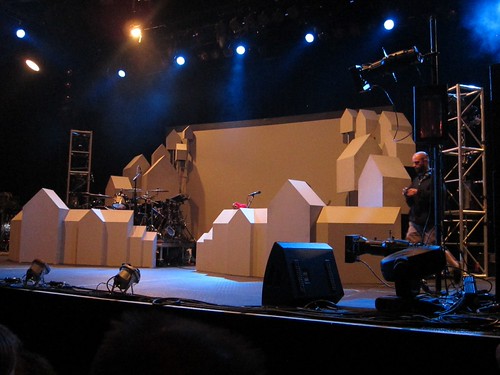
014 Beats Antique Before Beats Antique began their show, their stage was filled with boxy blocks that looked like a collection of white birdhouse blanks. Along with the backing scrim, these would become screens for the video projection. Cappel’s drum kit was behind and above one line of blocks while Satori’s collection of instruments was set behind the other. As the music started, these boxes became a small village with a large gnarled tree in the town square. The effect was strong, with Cappel and Satori embedded within the scene. The music was a blend of live instrumentation and pre-recorded parts. So, in addition to his other gear, Satori played producer, mixing parts into the song. As the tune built up energy, the projection turned psychedelic, flashing swirls of high contrast op-art over the stage, but still preserving the tree as a centerpiece.

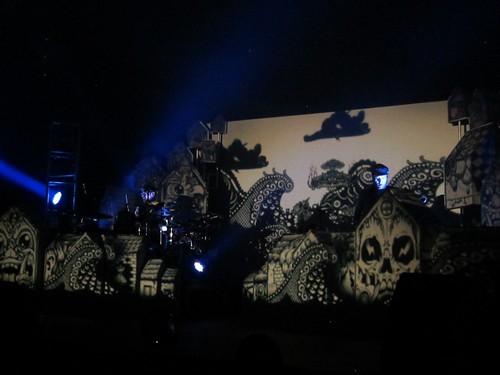
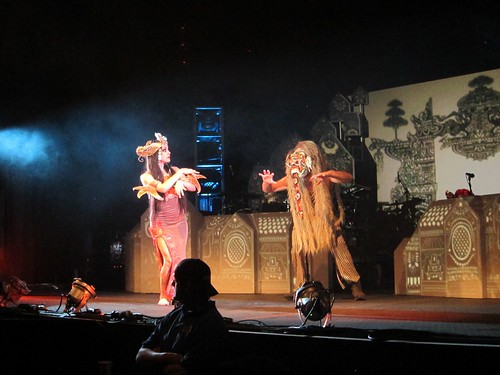
026 Beats Antique The imagery shifted for each song, becoming a Southeast Asian temple for Jakes’ first dance. Later, we’d appreciate the versatility of the set up as it transitioned through a mind-blowing collection of tableaux: retro Asian pen-and-ink animations, a game show set, a giant snake’s lair and a video game battlefield among others. The set designers did a fantastic job of delivering this variety without letting the technology become the focus. It was easy to forget the initial blocky appearance and become immersed in the show. Similarly, the set and live instrumentation distracted from the technical aspects of the backing tracks.

049 Beats Antique
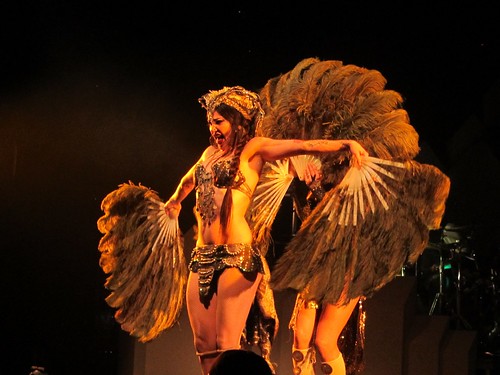
Jakes’ stage craft also played a strong part. Her mesmerizing movements created a focal point and storyline for the songs to hang on. Aside from belly dancing and modern interpretive dance, she used elements of Kabuki, Balinese dance and other cultural traditions. She was stylized and theatrical, but still drew on an earthy physicality. One of the strongest moments came during “Viper’s Den.” Her costume simulated snakeskin with a slinky sheath and cobra-like headpiece. After writhing around in sinuous seduction, she melted back into the set and another dancer enveloped her from behind, hiding her from view. Suddenly, the pair unfolded and revealed Jakes’ costume change. Her dress and headpiece were gone, and the two were decked out as fan dancers. Where her earlier expression had been wicked and intense, now she played the tease with broad bawdiness.

051 Beats Antique Even the campier tunes from A Thousand Faces played well. During the game show pastiche “Doors of Destiny,” a volunteer took his chances picking one of three doors to receive either “Eternal damnation, everlasting life or unlimited bandwidth and one year’s free technical support.” Of course, that didn’t go well, and he was attacked by a giant inflatable demon during the song’s glitch-step grinding climax. Later, Beats Antique performed their song “Beelzebub” with a pre-recorded Claymation by Les Claypool.

065 Beats Antique The overwhelming spectacle, exotic music and visceral bass punch contributed to the rave atmosphere. Dozens of Zoe acolytes danced their own steps, and every third person wore some kind of crazy outfit. The audience often competes with the stage at this kind of show, but glow sticks and LED displays merely added ambiance.

048 Beats Antique More photos on my Flickr.

Thursday, March 20, 2014

Recording review - The Glitch Mob, Love Death Immoratlity (2014)

Insistent rhythm, flow, and physicality

It all begins with an organic splash of guitar, wrapped in a light haze of feedback. Anticipation continues to build as the Glitch Mob launches into “Mind of a Beast”. A busy keyboard figure restlessly loops within cage bars made of simple, solid chords. The percussion comes in, tapping into a well of nervous energy. A dark grind of bass and start-stop beats propel the song forward, but it flags all too soon. Barely started, the track fades down and dissipates. Of course, this is merely setting the stage for a stunning resurrection. After a second of silence, the tune returns in full force. Wheeling electronic acid trails weave through a marching Goliath beat that splinters into glitchy reflections before falling back into sync. The motif is not particularly intricate, but the band imbues it with a monomaniacal focus and then puts it to the test. Ratcheting electronics shatter against the implacable wall of its confident intent. This is the Glitch Mob at their best: like a cinematic score or videogame theme, the music tells a story filled with action.

Their debut release, 2010’s Drink the Sea, excelled at combining this kind of narrative sense with phenomenal electronic chaos. “Mind of the Beast” provides an auspicious start for the band’s second full-length album and shows that they are still capable of grand gestures. It turns out, though, that Love Death Immortality is not trying to cover the same ground as Drink the Sea. Instead of exotic sonic locales and rich tidal arrangements, the Glitch Mob seems more interested in exploring the rhythmic drive of EDM. The net result is a very listenable album, but it’s not as groundbreaking as their earlier work.

Songs like “Skullclub” and “Fly By Night Only” set the standard. They settle into a tight danceable beat and then toss out a ton of hooks. Fortunately, though, the band still plays with the form enough to keep things interesting. “Skullclub” starts mellow with a short piano riff and ramps up the energy while layering in keyboards. A heavily processed vocal kicks in, “We are the wild ones,” and then the race is on. The zipper bass, sharp drum machine punches and stutter-cut vocal samples come together like a club-friendly remix. Catchy as hell, these tunes are geared for getting the crowd dancing when the Glitch Mob goes on tour.

Even if insistent rhythm is at the heart of the album, Love Death Immortality recognizes the need for dynamic shifts and delivers some very nice change ups. “Becoming Harmonious” luxuriously slides into a dreamy, hypnotic zone. Guest singer Metal Mother (Taara Tati) wordlessly vamps for a bit and then drops the lyrics with stark simplicity, “Becoming harmonious/ Sensory confluence/ See through me/ My only wish/ To animate experience.” The slow-burn sizzle is deeply pop, but the languorous tempo is a wonderful contrast to the surrounding tracks. The closing song, “Beauty of the Unhidden Heart”, has a similar pop character. This time the femme vocals are provided by the Oakland duo, Sister Crayon. The soothing electro-pop flow favors soft washes of strings and water drop ripples of harp, but it also accommodates an edgier synth solo and tight break beats.

Some fans may be disappointed that the Glitch Mob isn’t pushing Drink the Sea’s creative vision or scaling similar artistic peaks and it’s a fair criticism. But if their debut was intended to impress with flashy extremes, Love Death Immortality is more about flow and physicality. It may not make as many waves, but it delivers plenty of satisfying moments.

(This review first appeared on Spectrum Culture)

Saturday, February 22, 2014

Concert review - El Ten Eleven with Bronze Whale

Friday, 21 February 2014 (Fox Theatre, Boulder CO)

Having a favorite band is often like walking a tightrope. You want them to stay comfortably the same, but not stagnant. You want them to offer up surprises without reinventing themselves into something unrecognizable. The bands often feel that pressure from the fans and it shows in their performance, either by going through the motions with a predictable set or in their frustration as they confront the audience with their "new sound".

El Ten Eleven seems oblivious to the challenge. Over the years, their music has evolved, but they've maintained a creative edge without complacency or belligerence. Having seen the band several times and reviewing their albums and show, it's a challenge to talk about their performance without plagiarizing myself: the duo continues to amaze with a savant blend of technical ability, enthusiastic stage presence, and moving music. 

015 Bronze Whale Regardless of whether you think of El Ten Eleven as math-rock, post-rock, or its own intense flavor of instrumental music, it's hard to see a synergetic connection between their set and an electro-dance opening act. Austin's Bronze Whale offered little to help draw that connection. The two DJs were mostly absorbed by their MacBook and the collection of mixers and other toys they brought along. If the pair had sonically played off one another or created any sense of interaction, it would have registered as more of a performance. Instead, their heavily layered tracks sounded like most of the work had happened long before this evening and their role was to hang back and admire what they had already done. 

001 Bronze Whale
The remix grooves themselves weren't bad, especially if you like electronic dance music, but their only effort to connect with the audience was to step back occasionally and move to the beat. The crowd responded autonomically to the rhythm with nods and swaying, but a fair number of the people who danced were carefully ironic. Late in these set, one of the DJs finally spoke and greeted the audience, but still offered little of his own personality. 

023 El Ten Eleven
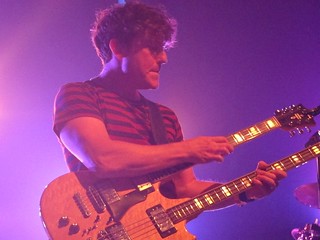
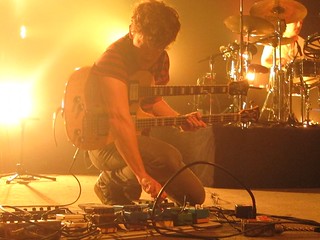
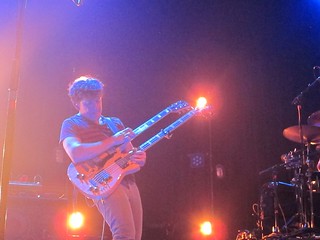
As I mentioned, everything I've written about an El Ten Eleven show could be copied verbatim here and it would capture the essence of the band's performance. Even though two years has passed, all of the high points remain the same: Kristian Dunn's enthusiastically physical stage presence, the layered complexity of the music, Dunn's dexterous manipulation of guitar, bass, effects, and loops, and Tim Fogarty's intuitive drum work. That continuity, while impressive, is only the surface. The band has continued to evolve and refine their show. They've tweaked arrangements and added some new tunes -- "Nove Scotia" from their recent EP For emily was in the setlist -- and they've improved their stage lighting.

057 El Ten Eleven
Lighting is often taken for granted; it's ignored when things go well and only noticed when there's a problem. In this case, though, the musical mood changes were accentuated by the combination of on-stage lighting trees and overhead spots along with a delicate hand at transitions. 

037 El Ten Eleven
This performance also emphasized the real-time, live nature of El Ten Eleven's stage show. The songs can be quite complex with simultaneous bass and guitar as well as on-the-fly knob twisting on the effects. While the studio versions are all polished, it can be very challenging for the band to pull it all together. Plenty of improvisational players are adept at rising to the occasion and transforming "mistakes" into magic, often without the audience knowing. El Ten Eleven shares that skill, but they don't mind letting us in on the secrets. At one point, as Dunn was adjusting the end points for a short loop of percussive bass growl, he twisted it into a jerky beat (Fogarty followed along on the drums). Dunn toyed with it for a moment, then smiled out to the crowd, "This is an accident, but I like it." 

050 El Ten Eleven
The setlist bounced around the band's catalog: aside from "Nova Scotia" and opening song "Transitions" from their last album, they also played early tunes like "Fanshawe". Their cover of Radiohead's "Paranoid Android" was particularly fun, sounding tighter and richer than the version they released on 2008's These Promises Are Being Videotaped. Dunn was every bit as dynamic as the musical selections. His boyish exuberance and flamboyant expressiveness contrasted nicely with Fogarty's tight focus. 

067 El Ten Eleven
After explaining the open secret of rock band "fake" encores, Dunn warned us that there were only two songs left. After finishing "My Only Swerving", they prepared to leave the stage, but couldn't resist giving us one last song. Despite some teasing from the audience the band closed with their standard finale, with Fogarty coming out from his kit to play Dunn's bass strings with his drumsticks while Dunn tossed in some guitar arpeggios. Every time I see this I smile.

078 El Ten Eleven
More photos on my Flickr.

Tuesday, December 24, 2013

Recording review - Arcade Fire, Reflektor (2013)

New directions with chill funk desperation and synth-pop beats

There’s a moment of cognitive dissonance when the chill funk rhythm of “Reflektor“ kicks in, like seeing a longtime friend with a radical new haircut or finding the short dress that your mother wore clubbing back in 1982. Arcade Fire luxuriates in an exotic, retro lagoon of danceable synth-pop and it’s hard to recognize them at first. The song draws on David Bowie’s early ‘80s catalog, both from Scary Monster s (and Super Creeps) and Let’s Dance, as well as recruiting him to provide guest vocals. Win Butler captures a stylized undercurrent of repressed desperation while Régine Chassagne plays the ethereal ice queen. The vocal pairing against the synth-driven beat evokes the era of bands like the Human League, but the couple’s interaction restores some familiar ground. The first half this this double album repeatedly toys with our perceptions, from the “Billie Jean” bass line on “We Exist” to the Gary Glitter drums on “Joan of Arc.” Along the way, the band appropriates bits of Talking Heads, Blondie and U2. In lesser hands, this would either descend into awkward parody or earnest pastiche (or maybe the other way around). Instead, Arcade Fire creates an irony-free zone around these songs and fleshes out the borrowed fashion with their own character. The focus on disco and dance-friendly beats has a couple of likely sources. Butler has credited the Haitian rhythms that he was immersed in during his visits there with Chassagne. Additionally, James Murphy (LCD Soundsystem) certainly brought both dance mix and post-punk influences with his production help.

The second half of Reflektor maintains continuity, but calls back to the thoughtful reflection the band is known for. The centerpiece for the whole album, “Awful Sound (Oh Eurydice)” and “It’s Never Over (Hey Orpheus)”, blends the band’s old and new approaches. While the first tune is oblique in its reference to the mythological couple, the music is exquisite. The moody Two Tone ska groove is backed with busy, syncopated percussion. Tightly reined in and wicked, the arrangement is taut with tension until it releases into an open, psychedelically charged lushness. The second track responds with nervous, bubbling energy as it follows Orpheus and Eurydice out of the underworld. A ratcheting bass and synth washes play against a Krautrock motorik beat, setting up the angelic breakdowns.

Arcade Fire foreshadowed this new direction on their last album, The Suburbs, with techno-beat sounds on "Half Life II (No Celebration)" and the sweet pop of "Sprawl II (Mountains Beyond Mountains)". But they hadn't fully committed yet. Now, they've shrugged off any doubts and they're taking their time to explore their new environs. At 75 minutes, 85 if you count the hidden track, Reflektor sprawls across the two CDs. There aren't any clunkers or obvious filler, but it begs for a leaner edit. On the other hand, maybe it takes that extra time for Arcade Fire to find themselves in the disco lights and driving rhythm.

Wednesday, October 16, 2013

Recording review - Berlin, Animal (2013)

Welcome the sexy beast into the electro-dance machine

Feel the fire/ Feel my love inside you/ It’s so right.” From the opening motorik drive and Terri Nunn’s seductive vocal, Berlin’s 1982 hit “Sex (I’m a…)” tapped into a host of repressed fantasies and helped sell New Wave flavored synthpop to the American masses. Now, 31 years later, the band is even more overt on the title track for Animal: “Looking up my little dress/ Does it make you want to take me now?” Instead of Krautrock influences, this intro is inspired by a Nine Inch Nails, synthed-out rock sound. The new album continues Berlin’s evolution—actually, it shows how Nunn has developed. The band fell apart after their commercial peak, Top Gun’s “Take My Breath Away”, and she resurrected the band name in 1998. This is the third album since then, with an eight year gap after the last one, 4Play (2005).

The band’s early hits like “Metro” and “No More Words” didn't hide their danceable roots. This latest incarnation of Berlin takes that a step further, embracing electronic dance music by appropriating throbbing bass grinds, glitchy breakdowns and escalating synth whines. “Animal” throws down its club-friendly gauntlet with all of this and more. The last track, “Animal (Remix)”, doubles down and takes the song and all of its raw sexual energy deeper into the machine. The album works so well because Nunn found the perfect resource for tapping into that electronic vein, producer John King (The Dust Brothers). He brings continuity to the album without robbing the tracks of individuality.

Regardless of the trappings of beeps and beats, it’s still easy to hear the soul of Berlin’s original sound. More than Nunn’s voice alone, it’s there in the structure of the songs, the New Wave melodies and provocative darkness. Take the catchy “Break the Chains” for example. It’s reminiscent of the band’s older material, but it’s been dressed up for contemporary tastes with some bubbly synth and a beat-heavy electropop groove. The lyrics alternately seduce and cajole: surrender to the physicality of the rhythm and break loose from the bondage of guilt and self-judgment.

Nunn doesn't shy away from the band’s more standard pop moments either. “It’s The Way” is a thoughtful love song that finds common ground with “Take My Breath Away”, showing that she still has sweet vocal tone and diva chops. A few songs later, on “Blame the World”, she pushes her voice into this power ballad inspired by her damaged relationship with her father. Her emotional delivery shows that she’s built on her earlier skills and, if anything, her singing has improved in the intervening decades. Near the end of the album, Nunn gets soulful on a paean to her single mother, “Mom”. The track starts out with a solid piano accompaniment along with some light synth comping. Subtle touches of electronica slip in and out, but never distract from the earnest love of the song.

In their heyday, Berlin stood out for a unique blend of sharp lyrics, challenging attitude and pop sensibility. Danceable rhythms found common ground with edgy writing, tempered by Nunn’s captivating persona and the band’s slick production. Ultimately, none of that has changed. EDM has superseded synthpop, but they’re drawing from the same well. Nunn’s expressive voice, which could shift from vulnerable innocence to wicked temptation, once carried the band. Animal shows that she’s still every bit the earnest child and sexy beast.

(This review first appeared on Spectrum Culture)

Tuesday, July 23, 2013

Concert review: New York Rifles with Pep*Squad and Tarantula Tango

Saturday, 20 July 2013 (Road 34, Ft. Collins CO)

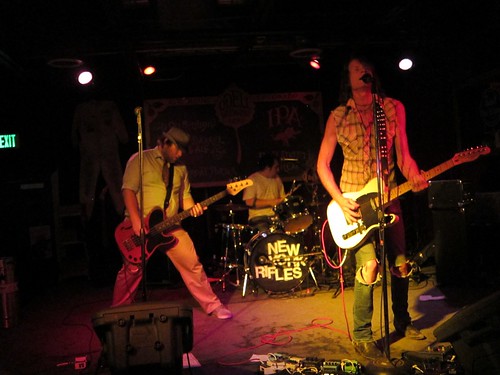
It's a small world. Jamie Gould, the bass player for New York Rifles, invited me to catch them at Road 34. It wasn't until we talked before the show that I found out this Portland band has a Ft. Collins connection. Drummer Nate James used to play with Sex Glove, a cool local band I haven't seen for four years (reviews).


This thrashy noise-punk group out of San Francisco coaxed a lot of volume and stage presence from a fairly stripped down setup and two musicians. Unlike a lot of duos, thy mixed it up, alternating the lineup between drums/bass and drums/keys. The band's Facebook profile talks about coming out of the basement party scene, which shows in the intimacy of their set.


Cade, the drummer, was the linchpin of the band's sound. His fills had a good sense of controlled flail, but stayed right on time, even as the arrangements grew chaotic. His partner, Caroline, switched between the bass and keyboards. The bass songs had a stronger punk vibe, while her keyboard playing often set out for more experimental and strange destinations.


By the time they got to their surf-party deconstruction ("Surf's Up"?), their sense of humor was in full gear and they were pushing boundaries. Kinky stream of consciousness interludes were punctuated by spasms of pounding noise rock, giving the tune a primitive performance art feel. To some extent, their set was geared towards seeing how harsh and random they could get while still having fun and nominally calling their act music. It was a small crowd of mostly fellow musicians, but Tarantula Tango held the stage well.


Pep*Squad set a low bar as they took the stage, "We're Pep*Squad and we're completely unprepared for this set." They immediately gave lie to this as they kicked into a smoking cover of The Rapture's "Echoes". Like a dimensional shift, the room immediately fell under their high-energy, danceable punk spell. This was limbic system fun at its finest: emotionally compelling and memorable.


They followed up with crazy medley of songs I never thought I'd hear together, starting off with U2's "With or Without You", passing through "Girls" by the Beastie Bous, and winding up with R.E.M.'s "It's the End of the World." There was no doubt in my mind that they felt fine.


Pep*Squad effortlessly bounced from new wave attitude to Krautrock cool and all the while, the beat kept the dance floor hot. I particularly liked their lead singer, Brett. He was charismatic with a vocal range that could drop from a post-punk yip down to a rough growl. The band may have been completely unprepared, but they pulled a party out of somewhere for their set.


Well before their show, I dropped by New York Rifles' Soundcloud page to get a taste. I liked their noisy, driving rock sound. Their lead singer, Scott Young, had a distinctive reedy voice with equal measures of AC/DC's Bon Scot and Jello Biafra (Dead Kennedys). If Pep*Squad was all fun and games, New York Rifles had more serious aims.


With a thick wall of distorted guitar, they tore into their set with punk psychedelic intensity. If I had ever wondered what Country Joe and the Fish might have sounded like as a hardcore band, now I had a decent idea. The trio cultivated a deep, dark sound, anchored by Gould's pounding gut-punch bass line. The drums did their part to kick up the aggro to support the wailing vocals. Even if Young never touched his guitar strings, it would have been a powerful rite of musical mayhem.


But he was all too happy to throw down doom-filled punk themes and howling feedback assaults, punctuated by sneering asides and hoarse hollers. His stage persona was hypnotic and dangerous as he threw himself into the music, singing wild-eyed. The band's  heavy, cathartic sound owed a big debt to countless hardcore bands, but New York Rifles stretched out from that base to incorporate a looser jam structure that fit well with their dynamic stage work.


The tight, punchy set was over all too soon, leaving just ringing ears and sweaty skin.

More photos on my Flickr.

Thursday, September 6, 2012

Recording review - Tom Tom Club, Downtown Rockers (2012)

After more than a decade, Tom Tom Club picks up where they left off

Tom Tom Club is inextricably tied to the Talking Heads. Where the Talking Heads had a skewed, outsider perspective on rock and roll, Tom Tom Club was deep inside, looking for the perfect pop groove. It's easy to imbue David Byrne with all of the oddball quirk and see the Talking Heads as largely his creative endeavor. But Tina Weymouth, Chris Frantz, and Jerry Harrison were equally steeped in the proto new wave artistic scene going on.

In large part, Tom Tom Club got its direction by avoiding the Talking Heads style. As a side project, it gave Weymouth and Frantz an outlet that didn't conflict with the core band. Tom Tom club's eclectic mix of hip hop, disco, and funk were a completely different direction. Blondie's occasional work in this sandbox may have been an inspiration, but Weymouth and Frantz embraced the sound earnestly. With songs like Genius of Love, Wordy Rappinghood, and The Man With The Four Way Hips, Tom Tom Club was innovative and still a little bit odd.

Now, after more than a decade, Tom Tom Club is back with a new EP, Downtown Rockers. Still mining the same dance beat/electro funk space, it's like a case of "let's get the band back together one last time." Except the energy makes it clear that they're really having fun building up the intricate, interlocking rhythms. It's like the band was vacuum packed for the last 15 or 20 years and just came out to play.

Downtown Rockers features six new songs along with instrumental versions and a special remix of the title track. Of all the tracks, Downtown Rockers is the only one overtly looking back. Name dropping a host of new wave icons (including the Talking Heads), the dirty, low-fi mix recalls the Clash, but the track bridges the bands new wave roots and dance beat sound. The stuttering organ line and vocal interjections offer a taste of the B-52s, but the song is anchored by a disco foundation.

Won't Give You Up works the electro funk angle and features Weymouth's diffident vocal style along with a solid funk bassline. You Make Me Rock and Roll has a dark, Talking Heads sound contrasted against a Stevie Wonder keyboard riff.

Kissin' Antonio is one of the stand out tracks. The Latin rhythm sets up a languid groove. Lyrically, there's nothing there. But the track creates a perfect late night feel of a smoke hazed club, an insistent beat, and the lazy, head-nodding sway.

The band come closest to the modern dance aesthetic on their cover of Love Tape by The Pinker Tones from Spain. Where the original has a kind of mod, retro charm, Tom Tom Club goes for the full electro pop treatment. The steady beat and decorative electronic fills place it firmly on the dance floor. I could envision a dub step remix to really modernize the sound.

Downtown Rockers' strength is that it avoids the common pitfalls of a old band finally releasing a new album: it's not a ridiculous reinvention, a tired rehash, or a crass money grab. Instead, it sounds like Frantz and Weymouth still have some viable musical ideas to share.

Tuesday, August 21, 2012

Recording review - Kinky, Sueño De La Maquina (2012)

Organic extends the mechanical: dreams of the machine with soul

Kinky's music comes from a remote borderland that doesn't even register arbitrary lines. The Mexican band's five members use live instruments to build on an electronic foundation. Their sound is a grab bag of electronica, rock and roll, Latin beats, and club-friendly mixes. Their predominantly Spanish lyrics regularly incorporate English phrases. But despite their mash-up aesthetic, Kinky isn't playing esoteric mind games, they're just channeling the sound they want.

The band recently released their fifth album, Sueño De La Maquina. Each track has a unique blend of elements, but the high energy jams offer a consistent mix of dance-happy grooves and interesting arrangements. The opening track Inmovil is a veritable smorgasbord all on its own. It starts with a moody synth-pop progression. The cool, laid back groove is relaxing and inviting. The vocals capture a sense of inevitability and acceptance.

Then...BOOM! Two minutes in, the track transforms into a dance club funk groove. The slinky bass riff twistss and throbs as subtle percussion fills crowd into the corners of the song. The chorus raises the stakes by kicking in a heady electro-pop vibe. After hitting the verse-chorus a couple of times, the band wraps up the song with a glitch heavy breakdown. This is a great introduction to the album; these transitions exemplify Kinky's genre hopping sound.

A couple of track later, they surprise me again on Negro Día. The track lays down a loop of grungy guitar noodle, then provides a heavy, programmed beat to hold it. The saw wave, zipper bass is wicked thick. The dreamy female chorus vocals have a hazy layer of echo. Mala Rodríguez's rap flow slides through the breakdown verse grooves. The track is a great mix of tension and release.

Kinky seems to delight in defying expectations. Their intense electronic base often sounds more organic as they rely less on looping than playing. They contrast that by processing their analog instruments sounds into something more machinelike, like Negro Día's guitar line.

My favorite track is Alma de Neón. The trippy groove of Despues Del After finishes and evaporates directly into the sinister grind of Alma de Neón, which is accented with a touch of Clash-like ska chank. The mainline of the track lays a ponderous club-beat electronica vibe. But the overall feel slides into something harder edged than electro pop: powerful electro-rock. Then the breakdown lays down a crazy quilt mix of glitch and Latin acoustic strings before diving back into the big beat.

I enjoy the mash-up aspect of Sueño De La Maquina, but the album's real strength is the balance of organic and mechanical. Kinky may dream of the machine, but it's a machine with soul.

Wednesday, August 8, 2012

August singles

Three completely different flavors of dance friendly music for your enjoyment.

The Wallflowers - Reboot the Mission (from Glad All Over, due October 2012)


It's been a long break between releases for Jakob Dylan's band, the Wallflowers. After big sales and heavy attention in the '90s, the band never seemed to match the popularity of their first two records.

The band is enthusiastic about the new songs, though. Reboot the Mission is the first single off their upcoming album, Glad All Over. The Wallflowers are showing a cool change in direction with this track. They partnered with Mick Jones, who brings a strong sense of his old band, Big Audio Dynamite. The ska tinged rock groove is plenty danceable. I hope the rest of the new album shows a similar kind of reinvention.

Drop by The Wallflowers' site to download your own copy.

Kinky - Despues Del After (from Sueño De La Maquina)


The steady funk bass groove is a wicked hook, baited with a counterpoint of guitar. Kinky's melding of electro-pop, funk, and hip hop on Despues Del After is infectiously fun. My Spanish is a little rusty, but the lyrical flow is ultra-smooth. The video is worth checking out, just to see the light suit guy work his popping moves.

Kinky is one of those bands that may have slipped your radar, but they've placed their songs in commercials, TV shows, and games for years. Their early track, Cornman was the first time I heard the band, but that was ten years ago. They're still going strong and creating compelling jams.

The Mynabirds - Disarm (from Generals)

The Mynabirds - Disarm from Saddle Creek on Vimeo.

Laura Burhenn and the Mynabirds have turned away from the sweet soulful grooves of What We Lose In The Fire We Gain In The Flood, which may disappoint some of their fans. On Generals, the Mynabirds are making a political statement and reaching for a completely different sonic palette. Disarm is a bouncy synth-pop romp. Between the dance beat and Burhenn's voice, I keep hearing ABBA, but there's a stronger lyrical foundation. The black and white video is artsy and nicely edited.

Generals is Burhenn's counterpoint to Richard Avendon's portrait of The Generals of the Daughters of the American Revolution. That indignation may slip out more on some of the other tracks, but Disarm is more of an earnest entreaty.

Wednesday, April 11, 2012

Cool art - Girl Walk // All Day (2012)

This is not a review, per se. Rather than analyze or interpret, I want to recommend a cool project I came across recently. Jacob Krupnick created Girl Walk // All Day as a feature length dance video. He funded the film through Kickstarter, whose audience supported the vision.

Anchored by Girl Talk's All Day (review here) as the soundtrack, the film builds a story around three very different dancers on a collision course. Anne Marsen (The Girl), Dai Omiya (The Gentleman), and John Doyle (The Creep) each bring their own style and expressive flavor.

The magic moment that hooked me was in the first section, during the ballet class. The Girl is late and not fitting in. Then the ambient sound and piano fade down, the black and white shifts to color and Oh No kicks in with the punch of Black Sabbath's War Pigs sample. That energy shift was incredible and Marsen's physicality sold it.


Check out the trailer and drop by their site to watch all of Girl Walk // All Day and donate.

Wednesday, October 12, 2011

CD review - Pink Skull, Psychic Welfare (2011)

Electro-pop grooves offer dance and dissonance

Julian Grefe and Justin Geller's Pink Skull follows a pattern of expansion with each of their album releases. Their last release, Endless Bummer added a band and they've added a couple more members for their latest album, Psychic Welfare.

The album is full of spacy, electronic grooves that toy with disco, techno, and house, but the foundation is a danceable electro-pop. Grefe adds his detached vocals to several of the songs, which is a shift from Pink Skull's earlier albums. When it clicks, like the distant, grey-eyed soul of Ayatollah, it's great. Overall, though, his voice left me longing for someone more dynamic to contrast with the steady beats.

There are several interesting songs scattered through the thirteen tracks, but several are shorter interludes. The shortest of these prove distracting, such as the free jazz sax of Two Bills. The longest interlude, the trancey Late Night Eggs, has some interesting ideas that deserve some longer attention.

Fitting with some of Psychic Welfare's themes of decay and ruin, the flow between the tracks doesn't aim for smoothness. On the other hand, the strong pop aesthetic on several of the songs adds its own contrast to the album's message. This leads to moments like Hot Bubblegum, which seems to parody disco, giving it a synth pop treatment. Verse lyrics seem to offer an assessment of society, but the chorus reduces it all to "Hot bubblegum, it's all over me."

The most listenable track is the blissful, tripping vibe of Mu. It takes a mild trance groove insto a stronger dance-space by merging in a synth pop bass line. This is the sort of direction that Late Night Eggs could have traveled. The steady beat and easy breaks all contribute to the smooth sound. Billy Dufala's embedded sax solo is a tasteful touch.

The single, Bee Nose (Put Yr Face On), begins with a dirty keyboard chord progression that sounds like King Crimson's early work.

Pink Skull - Bee Nose (Put Yr Face On) from RVNG Intl. on Vimeo.

Then, the electro-beat groove kicks in. This sets up a satisfying contrast between the lo-fi elements and the ringing synth lead line. By the end, the fidelity seems to decay, leading to a trippy ending.

Despite the dance beats, Psychic Welfare is more geared for home listening. On its own merits, it's a fairly decent album. The obvious improvement would have been a more coherent track flow. That might have hurt Pink Skull's artistic theme, but it would have given the album more head space.

Thursday, August 25, 2011

CD review - Rene Lopez, E.L.S. (2011)

Lopez moves from retro soul to a contemporary Latin sound

Rene Lopez' last album, People Are Just People (review here) served as a kind of homage to classic R&B and soul music. On his latest album, E.L.S., Lopez steps forward to claim his own voice. "Electric Latin Soul" is his new banner and the album largely lives up to that vision.

The title cut serves as Lopez' statement of purpose, marrying an electro-disco funk groove with Latin percussion beats. But it's the second track, I Flow, that really delivers on the Electric Latin sound. The vocals provide club braggadocio touting his rap skills as the backing track lays down the speedy beat the flow demands. The horns and rhythms make a compelling combination:
It took me twenty years to finally find my flow
Now that it's mine, I won't, I won't let go
Pickpocket man try to steal, steal my soul
I caught him red handed when my eyes were closed
(Here I go, here I go)
To the east (I flow), yeah it's big in Japan
To the west (I flow), in the California sand
To the north (I flow), in the Bronx, I was born
To the south (I flow), it's going on and on
The beat is club worthy, but the syncopation gives it life beyond the dance floor.

Despite the electro-dance elements, Lopez hasn't completely abandoned his earlier sound. The "soul" part of "Electric Latin Soul" gets a workout in tracks like Honey Got Some Love or Everything We Do. These tracks keep the clave rhythms and tight percussion, but still deliver a soulful message and vocal feel.

E.L.S. is packed with busier tracks than Lopez' previous work. As much as I enjoyed People Are Just People, the new album is exciting as Rene Lopez plays with sonic ideas. Not all of the experiments succeed (L2 the Boogaloo's electro Latin hip hop, for example), but Lopez commits to the exploration. He embraces his Puerto Rican roots while reaching for a more contemporary sound. Lopez is a talented multi-instrumentalist, so his next steps will indicate whether he plans bring the E.L.S. sound to maturity or mutate it further.

(The link above for I Flow is a live version. Follow this link to tweet about the album and get a copy of the album track)

Wednesday, June 22, 2011

June singles

More singles, more sounds!

Legoland Empire - Guard the Point


Guard the Point is the title track from a new 4 song EP from Legoland Empire. While the other tracks seem more experimental, this one caught my fancy. Its starts with a slight electronic sound, but quickly settles into a jazz fusion vibe. The loose collection of musicians from across the 'net channels a Jeff Beck style groove, albeit with fewer pyrotechnics. The organ work even reminds me a bit of Jan Hammer.

Like Beck, Legoland Empire builds their groove without descending into random noodling or cold technical braggadocio. Guard the Point is nice, atmospheric jam.

Listen/buy any of the tracks from Guard the Point on BandCamp.

Pursesnatchers - Wet Cement (A Pattern Language, due out July 19)

Pursesnatchers is centered around the husband and wife team of Doug Marvin (Dirty on Purpose) and Annie Hart (Au Revoir Simone). They've filled out their home recording sound with a full band. Next month, they'll be releasing their new album, A Pattern Language on Uninhabitable Mansions

The secret to Wet Cement's compelling sound is the blend of a tight musical foundation with the looser sound of low-fi guitar and casual vocals. The background echo trap of guitar both hazes out the corners of the track and coats the surface like a mid-range flannel treatment. And like well worn flannel, it's a comfortable sounding, low key song. In contrast, the other instruments provide a solid indie rock beat, a simple bass, and a clean keyboard line.

Download Wet Cement from Paste Magazine.

Ki: Theory - Holiday Heart


A big beat and a groovy indie keyboard line anchors Holiday Heart. It's a nicely executed pop song that builds up an impressive collection of layered details that gradually fill out the track to its edges. Ki: Theory's deft touch makes sure that these details mesh together with the basic groove without overwhelming the breathy flow of the song.

Ki:Theory (Joel Burleson) is known for his DJ and production work on remixes for Daft Punk and others. But he also records his own music, mixing electronic and indie rock elements. The single merges both his worlds, backing up Holiday Heart with a remix of UNKLE's Natural Selection.

CSS - Hits Me Like a Rock (from La Liberación, due Aug 22)


Brazil's CSS packs Hits Me Like a Rock with bouncy pop energy. The retro stylings of a disco beat and ABBA style pop bubble together with modern dance floor electro funk. That balance suits Hits Me Like a Rock for the club scene or pop radio. CSS's Brazilian roots show in the swing of the rhythm syncopation.

The beat and infectious bounce set this up to be a perfect track for remixing. Fortunately, the full single addresses this right out the gate with remixes by Dillon Francis and Mad Decent’s digital dance purveyors Depressed Buttons.

Trade your email address for a free download in the widget above.

Friday, May 27, 2011

CD review - My M.O., Bonfire (2011)

My M.O.'s music is like fusion cuisine: disparate traditions meld together to create a bridge between worlds. Like their music, the three women in the band come from different worlds: an Australian rapper, a Texas DJ, and a Jamaican guitarist. The combination on Bonfire is clearly pop oriented, but happy to borrow from electro, club beats, and rock.

The lead off track, Bonfire Man starts out with an indie pop feel. The sparse, contrasting guitar parts set a mood, but then the bass and the beat move it firmly into a club space. The vocal treatment adds its vote for the club. Despite all this, though, the shreds of distorted guitar and sweet keyboard riffs force the song into a middle ground. The net effect is an extremely catchy, dreamy pop gem. The segue into What I Want is nicely executed, taking a dreamy start that echoes a piece of Bonfire Man's lyric. This time the groove settles into electro pop crossed with modern pop.

My M.O. shows a lot of versatility: tight Electro funk on Paper Chase, trippy heavy bass groove on Rock Steady, a sort of electronic disco for Modus Operandi. Each track brings its own blend of dance oriented pop, but nothing obscures the continuity of My M.O.'s groove. Even the heavily glitched remix of Bonfire Man (Doctrations Remix) swirls solid percussion work with experimental headiness.

Aside from Bonfire Man, my favorite track is the R&B groove of Love Me Down (HNH Remix). The lead off harp riff, light dusting of electro, and world beat percussion come together in a delicate balance that perfectly supports the soulful singing.

Friday, April 29, 2011

CD review - Architecture in Helsinki, Moment Bends (2011)

Architecture in Helsinki continues to mature, moving further away from their more eclectic beginnings. On Moment Bends, the band throws themselves wholeheartedly into heavily dance oriented pop. The smooth mix of instruments include traditional pop guitar and bass, but electronic sounds dominate the tracks. The pop vibe is almost manic, but the lyrics occasionally add depth.

Between the disco dance beats and almost familiar riffs, the songs have a kind of retro veneer. Here's a bit of Katrina and the Waves, there's a touch of Bangles. It's not so overt as homage or rip off; it's more of a mindset.

There's a run of funk oriented songs in the middle of the album that provided my favorite bit of flow. That Beep, released earlier as a single, has a stripped down girly pop funk groove. This leads into a stiffer, sparse electro-funk groove on Denial Style, which sounds a bit like parts of Prince's Black Album. At first, Everything's Blue seems to break the mold, with an electronic intro cadenza. But then the funky, Michael Jackson inspired R&B pop kicks in.

Everything's Blue shows off Architecture in Helsinki's breadth of vision. The MJ style vocals of the initial verse fall away when the chorus slides into a short pop groove like Toto's Africa. The shift between these two sections is large but adeptly handled. The brief guitar pop bridge adds yet another flavor to this mix. The way these sections stream together is smooth and effortless.

The big single, Contact High, locks into the dance beat driven pop groove. The sparse electronic riffs and falsetto vocals create a fun feel for the verses. The catchy chorus bounces into indie pop. It's enjoyable fluff, but ultimately a bit sterile compared to some of the other tracks.

By contrast, W.O.W. ("Walking on water") offers beautiful pop perfection. I love the Kellie Sutherland's expressive vocals. With a touch of Enya layering, the R&B pop is simple and pretty. Sutherland's voice seems looser and richer than Cameron Bird's more heavily processed vocals.

Fans of the band's earliest work may grouse about the stripped down electro pop of Moment Bends, but it's an obvious refinement of the shimmery pop of songs like Do The Whirlwind (from 2005's In Case We Die). While Architecture in Helsinki has pared away much of their quirky instrumentation, the songs are catchy with some gems scattered about. Pick your favorite energy drink and groove along to the beat.

Monday, February 21, 2011

CD review - Art vs Science, Magic Fountain (2011)

Art vs Science has already made a great impact on the worldwide electronic scene. Their frantic energy reminds me of The Prodigy (Firestarter), but it's a younger, more modern sound. Where most hardcore club grinds would drag out and take their time to develop, Art vs Science caters to a pop song style attention span. The develop their songs quickly: a brief intro giving way to the monster hook.

Check out the title track for the Magic Fountain EP.


First, they set up the story:
In the beginning, there was a fountain, but it wasn't just any fountain
It was a fountain of lights, it was a fountain of truth
It was a fountain of dreams, it was a fountain of youth
It was a ....(magic, magic, magic...) MAGIC FOUNTAIN
The persistent bass grinds away tirelessly, driven by a manic beat. Like the video's conceit, this is a sound that demands physical response. Despite the electronic elements, the overall feel is organic and loose.

Not every song is so hyper. Friend in the Field sets up more of a rock/post-rock vibe, reflecting a pop version of Muse's sonic space. Even with a more moderate pace, Art vs Science still bring a compelling intensity.

The Magic Fountain EP came out last August, but my pre-release version of the US release (due out next month) appears to be a different collection, featuring a more varied track list with fewer remixes. In any case, Art vs Science will have a brief US tour around SXSW to promote the EP. The band has also promised a full length album (The Experiment) to come out later this month in the band's home, Australia. Given how Art vs Science crams 20 minutes of techno dance energy into each three or four minutes, I can't wait to get a listen to the new album.