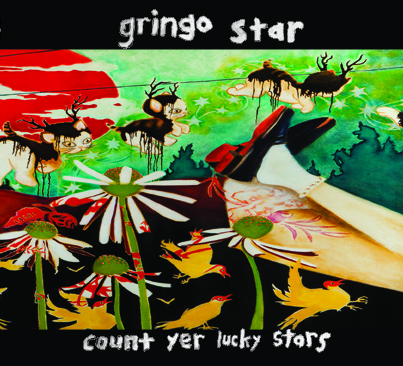
(Artwork care of Karen Ramsay (www.karenramsay.com), profile photo care of brianlackeyphotography.com)
Showing posts with label low-fi. Show all posts

Thursday, April 16, 2015

What's cool? White Reaper, "Make Me Wanna Die"

Breaking up never sounded so easy

White Reaper's secret super power comes from the the synth-pop keyboards that sneak in during the first break of "Make Me Wanna Die". Up until that moment, it's easy to pigeonhole them as another set of low--fi, power-pop garage rockers from somewhere in the U.K. The punk sneer and throbbing downstroke guitar are anchored by a dead simple beat and pulsing bass -- it all sounds fine, but when the Cars-style synth riff drops, the poppy bounce is completely unexpected. Another surprise is that despite singing with a slight British accent, Tony Esposito and the band are from Louisville, Kentucky. I'm guessing they spent a lot of time listening to the Sex Pistols and the Ramones, but they've found their own unique balance.


"Make Me Wanna Die" is a mixed up little gem, but in a fun way. It's a break up song, celebrating that moment right after the split is out in the open, when all you want to do is walk away and put it behind you. The relentless beat captures that discomfort and restless impatience, but the poppy keys say that they knew it was never going to work out anyway, and we should all just get over it.

White Reapers full length debut, White Reaper Does It Again, is due out in mid-July. That will be a treat.

Tuesday, August 20, 2013

Recording review - Bass Drum of Death, Bass Drum of Death (2013)

Originality from the heart of the garage

Bass Drum of Death makes its home deep in the heart of the garage. Listening to their self-titled second album, it’s easy to pick up a contact buzz of gasoline huffing and carbon monoxide, exacerbated by a case of tinnitus as workbenches rattle in sympathy with guitar feedback. Blown out speakers and concrete-echo vocals are lovingly captured with the lowest of fidelity. The band started out as a solo project for John Barrett, although drummer Len Clark came on board for the first album, GB City (2011). While they have mastered the simple, shouted vocal line, a relentless, jittery pace, and walls of blunted distortion, two things distinguish them from their retro, noise-loving peers. The first is their technical competence: starts and endings are cleanly executed, the snare work is impeccable and, despite the heavily compressed sound, they fit in some decent dynamic shifts. The second difference is that while they may use punk-infused garage rock as their jumping-off point, they’re willing to play with the style, branching out to color it with thrash pop, grunge and new wave.

Even when they start with a traditional foundation, like on “I Wanna Be Forgotten” and “Such a Bore”, they find interesting directions. “Such a Bore” is built around the tag from the classic, “Gloria”, but Bass Drum of Death binds the classic riff to a new melody. The tempo modulates throughout the tune, starting with the steady drive of the main section, then picking up speed during a meltdown lead before dragging back for a brief breakdown and then resetting. The genre is rife with sloppy bands that can’t keep time, but in this case, the precise coordination between the instruments demonstrates the band’s intention.

The most interesting tracks go further afield, finding unexpected influences. I particularly enjoy “Shattered Me”, which sounds like a muffled version of Team Spirit. They capture the same flavor of optimistic, retro thrash-pop, and the twinned guitar lead is spot-on. The lyrics are a bit tricky to discern, but offer some nice phrases, “You and me/ Perplexed and out of sleep/ I’m vexed and move into my own.” Another standout was “No Demons”, which borrows a taste of Nirvana grunge, twisting “Smells Like Teen Spirit” in on itself to create a disaffected jam, shot through with drained anxiety.

Bass Drum of Death is a progression from the band’s debut, adding bass guitar into the mix, but the name continues to be a bit of a bait-and-switch. Most of these songs could still use more bottom end; tom and snares dominate the drum parts. The exception is “Way Out”, which is the strongest track on the album. Despite matching the compression level of the rest of the album, the kick drum and bass guitar finally stand out, grounding the tune. It’s a relatively sophisticated piece, with separate sections that sound like lo-fi indie rock rather than simple garage rock. The heavy opening beat sets up a see-saw guitar riff which drops into a grinding rhythm. The vocals have a punk sneer, but off-kilter guitar fills add a thin layer of disorientation. The resulting blend offers some nice surprising turns.

The success of bands like Thee Oh Sees and Ty Segall has led to an inundation of follow-on acts. Bass Drum of Death’s originality is promising. Their biggest limitation is the ridiculous level of compression which mutes their energy. They shouldn't abandon the lo-fi, noisy elements of their sound, but a little more headroom would make their bass drum more lethal and give the songs more punch.

(This review first appeared on Spectrum Culture)

Tuesday, February 14, 2012

CD review - Royal Baths, Better Luck Next Life (2012)

Dark children of Velvet Underground offer lo-fi deathrock psychedelia

Better Luck Next Life is a soundtrack to a wicked rite, summoning spirits to stalk among us. In particular, the spirits of Lou Reed, John Cale, and the rest of Velvet Underground. Royal Baths' detuned, distorted sound is haunted by Lou Reed style vocals, a touch of Reed's droning guitar, and chaotic abandon.

This is no tribute band, though. Royal Baths may push their garage rock psychedelia into V.U. head space, but they always hold back from the Velvet Underground's total sonic surrender. This gives their songs a deeper self awareness and intent.

On Burned, they sound like throbbing, percolating darkness. The track starts with a sound somewhere between Syd Barrett era Pink Floyd and acid etched rock. During the bridge, the guitar vibrates like a fork in the fan blades, recalling European Son. At the same time, the singing balances two voices filled with detachment. As the relentless Bo Diddley beat spasms like a restless leg, the strange ecstatic rite builds. I love the intensity of the sound, as the guitars clash and flail.

Most of the tracks have a sonic immediacy, like Royal Baths is playing right in the room. This fits well with the retro feel of the album.

Better Luck Next Life
works hard to maintain its very dark vibe, occasionally even veering towards creepy. Where Velvet Underground flaunted their drug and S&M to shock listeners, Royal Baths is more direct, sometimes raising a kind of sociopathic evil in their transgressive lyrics. Even when the sound suggests a trippy ecstasy, the lyrics skew towards more sinister subjects.

Take Black Sheep: the song starts somewhere between Bauhaus and the music from Dr. Who before establishing a trippy, psychedelic verse. The vocals ping pong, splitting the lines:
I grew up rather well off -- raising hell
I gave up faking gratitude -- can't you tell?
My good friends seem to bore me -- don't ask me why
One by one, my lovers leave me --I never cry
The lyrics quickly grow more malevolent. But Royal Baths take it further. Eventually Black Sheep, along with a few other songs, push the deathrock themes too earnestly, drifting towards parody:
Bloody landscapes are my daydreams -- bodies fall
If I could touch the hem of Satan -- I would crawl
Despite loving the music, I think Royal Baths is trying too hard to shock, to the detriment of their songs.

Still, there are plenty of evocative tracks like Harder, Faster. The languid, swaying beat and the underwater Doors groove create a moody, late night feel. The repetitive bass line throbs like insomnia while the slide guitar sounds like the foggy swirl of voices in your head. The sexual focus of the lyrics matches the hypnotic haze of the music.

Royal Baths may be soaked in darkness and tension, but the jangle of guitars offer a cathartic release, as well.

Friday, October 28, 2011

October singles

It's time again to collect some music that caught my ear this month. Check out some funk, a couple of very different lo-fi retro songs, and some synth pop flavored rock. Pick your poison.

Greedy Cherry - No Excuse (from EP)


Bass player Michael Conrad recorded his EP under the band name Greedy Cherry. After graduating from the Berklee College of Music, he assembled a talented crew of musicians matched to each track of the project. Conrad took an experimental approach on the EP, jumping from style to style. The flow, especially on the first three tracks, is surprisingly coherent.

Lead off track No excuse was my favorite song from EP. The solid funk groove opens with a Temptations style bass line, but once it gets underway, it incorporates tasty guitar work and beautiful organ lines.

Funk often plays with a tight rhythm by slipping a little behind the beat, then catching up to create a kind of hang moment. Greedy Cherry extends this into a suspended hold. Check out the dub drop at 0:19. Everybody drops out except the keys for a full measure. As the organ holds a chord, the next 4 seconds float long enough to sound like a track glitch before slipping back in. It's all in the timing.


Bare Wires - Back on the Road (from Cheap Perfume)


I can't click through my inbox without tripping over yet another band strutting out their lo-fi, garage tone trying capture some retro cred. All too often, the band is just a muddy mess or, worse, they're somehow pretentiously sloppy. Yes, garage rock is lo-fi, reverbed, and twangy, but the real thing bottles lightning and can raise the hair on the back of your neck.

Oakland's Bare Wires understand this in their DNA. Not only do they hit that sweet fuzzy sonic spot, they get that live, all-at-once energy. Where their competition can sound right if the playback volume is high enough, Bare Wires sounds righteous at any volume.

Back on the Road starts out like the Animals with a dash of Who. The high tension beat and formal rhythm guitar evoke Roky Erickson - not when he's battling his demons, but when he's exultant. The hardest thing about listening is not picking up my guitar to play along.

Bare Wires just dropped their latest album, Cheap Perfume, on October 18 (Southpaw Records).

Mark Sultan - In Future Worlds (from the double release, Whatever/Whenever I Want)


Before you even watch the video, you owe it to yourself to read Mark Sultan's rant declaring war on rock 'n' roll. It's as heartfelt as any classic SubGenius rant, begging us to kill rock'n'roll to save it. This is how Sultan pulled me into his sphere. Reading about him, I figure he's some kind of snake-oil selling genius, but he's wormed his way into my brain.

In Future Worlds bridges garage psychedelia and doo-wop. Unlike Bare Wires, Sultan's version of the garage is anything but effortless. But the quirkiness is still compelling. The lyrics play with abstract imagery, and Sultan's voice shifts between intoned verses and the Del Shannon style chorus. Like the song itself, the video romps in joyful excess.

Continuing the complexity, Sultan has released two vinyl albums, What ever I Want and Whenever I Want, along with a compilation CD, Whatever/Whenever that pulls 7 tracks from each album.

The Gift - RGB (from Explode)


The Gift is a four piece band out of Portugal. They've made their mark back home, but now they're ready to grab some attention here in the States. Their latest album, Explode, released here last month and they had a quick cross country tour before heading down to Brazil.

RGB shows off their lush synth pop infused sound. The synthesizer riff and washes set the hook, but a solid rock beat kicks in to shift the feel from electronica to pop. The interlocking guitar lines and heavy drum work mesh smoothly with the synth underpinnings. Sónia Tavares' voice is strong, deep, and fluid.

Grab the free download and enjoy the Gift's polished sound.

Monday, October 10, 2011

CD review - Brian TV/Cold Coffee (2011)

A brain divided offers interesting musical perspectives

I covered Das Black Milk's Talk to Your Body last year, which featured an odd mix of post punk and lo-fi psychedelic sounds. Now two of the members have released a "split cassette" together with their respective side projects. Brian Emmert's Brian TV and Nathaniel Kane's Cold Coffee fit together like the two separated hemispheres of a brain. To some extent, they showcase their respective contributions to Das Black Milk's sound.

After listening to both of these EP length parts, it motivated me to pull out Talk to Your Body again, first for the context and then just for enjoyment.

The two projects are available on BandCamp (Brian TV/Cold Coffee)

Brian TV

Brian TV represents the right hemisphere of the project's musical brain. As such, it evokes a strong right brain response. On Automatic, the first track, I was instantly happy the moment the laid back beat kicked in. It spoke to some kind of subconscious escapist within me.

Automatic's groovy psychedelia sets up a carefree, lazy feel. The lyrics are simplistic a la Syd Barrett, but Brian TV is more musically structured. A chiming interlude rings in between the verses, emphasizing the heady vibe. This wasn't quite as produced as Tired Eyes from Das Black Milk, but it had a kind of simple purity.

This shows off Brian TV's musical approach, following an early psychedelic model. Emmert uses a pop foundation and then subverts it. Jiggly organ parts are paired with distorted guitars in a noisier version of Das Black Milk's typical sound.

Shifting mood, the next track shifts the mood. Chaingang Boogie has a stark arrangement of toms, bass, and a meandering organ line supporting a heavily reverbed vocal. It's not quite a Devo-style deconstruction, but it's close.

Back to psychedelia, Beverly Hills starts out as an uptempo garage psych rocker, but the breakdown bridge aspires to Pink Floyd trippiness -- check out the floaty organ and spacy lead. Then the beat reasserts itself into garage rock. The remaining tracks work the garage sound to perfection.

The beauty of garage psychedelia is that it's less polished than its rarified kin, allowing a deeper emotional response to the flow. Brian TV captures this beautifully.

Cold Coffee

In contrast, Cold Coffee appeals more to the left brain. The sounds are interesting and the tunes work at being artfully quirky. Kane's group emphasizes the other, new wave side of Das Black Milk's sound. It's like a lo-fi version of XTC crossed with Pere Ubu style experimentalism.

Opening track, Consolation Faces has some of XTC's early pop-oriented bounce with a twist, albeit with a mushier sound. The odd, angular melodic line in the chorus is a shout for attention, which is typical of Cold Coffee's songs.

Old Blood pushes the sound the furthest. A jerky beat, quirky singing, and chromatic lead noodling come together in something like Zappa's early Lumpy Gravy experiments or David Thomas' more outside work with Pere Ubu. This is anything but casual listening music, but the musical shifts are challenging and interesting.

Cold Coffee won't be everyone's cup of sushi, but it serves as shot of ginger to counter Brian TV's visceral trippiness. Follow the BandCamp links above and check out the music.

Friday, October 7, 2011

CD review - Gringo Star, Count Yer Lucky Stars (2011)

Thick layers of saturated sound are best at full volume

Context is key. After a cursory listen to Count Yer Lucky Stars, I mentally filed it away as lo-fi retro pop. It wasn't bad, but I didn't connect. I came back to it largely because I loved the band name, Gringo Star. This time, I kicked up the volume which made all the difference.

Count Yer Lucky Stars is designed for loud listening. At higher volume, the fully saturated tone resonates, drowning out any other voices competing for attention in your head. This exposes Gringo Star's psychedelic undertones. The hard stereo separation and lo-fi, garage band sound mesh perfectly with that intensity. Lo-fi doesn't mean sloppy; the band is tight as a drum head on their changes.

Count Yer Lucky Stars is chock full of retro elements, whether it's the reverb drenched tones of Mexican Coma, the the close harmonies on songs like Come Alive, or the doo-wop vibe of Jessica. But Gringo Star rises above retro obsession with their punchy attitude and complex sonic layers.

Title track, Count Yer Lucky Stars is rooted in a Yardbirds sound, even name checking For Your Love. Up tempo drums set up a rollicking two chord rhythm line, with guitars, keys, and bass. The double time pick up into the chorus sends the song hurtling at a frantic pace. It's a mod, mid-'60s rocker, but the solo kicks it loose into a headier space. The lo-fi mix and thick reverb reduce the backing parts to an ebb and flow between the two chords. Turn up the volume and details emerge from the mud, like the trippy Doors-style keyboards.

Shadow is another strong track. Elements of ska, retro pop harmonies, and garage sneer blend together in a swirling mass. The chorus is ushered in with muted guitar strums providing a rhythmic pick up. The bridge goes for an overtly psychedelic repetition. An archeologist could make a career out of excavating details from the layers of saturated sound. The last chorus fades down to set up the perfect contrast for the sparse power pop sound of the next track, You Want It.

Count Yer Lucky Stars has been ringing in my ears all day as a moderating influence for buzz kills like work, traffic, and chores. How lucky is that? Pick up the album when it releases on October 25. In the meantime, I'm looking forward to Gringo Star's show in Denver (10/20). I have no doubts that the band will deliver the songs with all the rattle and ring they need.

Listen to Count Yer Lucky Stars on AOL Spinner.

Thursday, August 18, 2011

CD review - Unknown Mortal Orchestra, Unknown Mortal Orchestra (2011)

Outsider pop? Sunshine psychedelia? Low-fi sonic explorations

Earlier this year, I caught Unknown Mortal Orchestra when they opened for Portugal. The Man (review here). I enjoyed their live sound, which expanded on rock song structures by adding some odd scales, giving them an experimental feel. The guitar and bass playing reminded me of Pavement.

Their self-titled debut album shows flashes of those sounds, but the overall effect is far richer. Fundamentally, UMO builds a low-fi, retro psychedelia that offers glimpses of '60s pop, garage rock, and some early Zappa/Mothers style riffage. But each track is its own musical destination. The one constant is UMO's low-fi production, which sounds exactly like an AM radio in a 1968 Plymouth Valiant. That's not the most useful comparison today, of course. Instead, imagine eavesdropping on a stranger listening to the music on their phone. It's none of your business, but something about the strains of sound acts as a siren call, drawing your ear in.

Cramming the songs into this limited bandwidth creates some odd resonances that jangle in the ear. The tracks are cheery and bouncy, creating a sunshine psychedelic effect. The opening song, Ffunny Ffrends starts off with a laid back beat Pavement guitar riff (intro) that slides into a super saturated sound. Ruban Nielson's falsetto vocals evoke T Rex's Marc Bolan. The track offers the first sense of UMO as outsider pop musicians. The heavy reverb and clipped vocals jostle together, noisy but still a compelling listen.

UMO shift away from the retro pop sound on Nerve Damage! Bookended with oddly effected, jazzy riffs, the main track is firmly grounded in garage/psychedelic rock that takes on tinge of Roky Erickson's 13th Floor Elevators. The quirky low-high vocal pairing is particularly interesting. The next song, Little Blu House, changes up the mix. It's sweet and trippy, with a Krautrock foundation groove. The sparse guitar loosely overlays the steady drive of the bass and drums, almost exorcising the thrash of Nerve Damage!

Contrasts like this fill Unknown Mortal Orchestra, which shows off how many heady flavors can be explored within UMO's constrained, low bandwidth sonic space. Retro ghosts of Yes, Zappa, and Syd Barrett dance with fractured shards of Beck and Stephen Malkmus. Serenely above it all, Unknown Mortal Orchestra calculates their next intriguing musical target.

Monday, July 11, 2011

CD review - Grooms, Prom (2011)

Low-fi, cathartic album explores life at 17

Life at 17 is fraught. It's full of beauty, pain, confusion, joy, and anger. Grooms channel this melange on Prom, their latest album. From the opening track , Tiger Trees, the band sets up their high stakes ambivalence. Pretty slide guitar and thoughtful fingerpicked repetition is juxtaposed with an 8-bit rhythm beat. The song is dreamy, yet full of drama. Clean, simple elements clash with low-fi distortion.

If Janis Ian's At Seventeen offers a detached acceptance coming at the brink of adulthood, Grooms are more fully engaged on their Sonic Youth inspired title track. Starting with a looped echo artifact and throbbing bass, Prom sets a scene:
Seventeen is the whole world
In my room, the Smiths and girls
Phantom friends, their shadow shakes
The secret hallway, on audio tape
And I want to be friends with you...
The deliberately paced vocal recitation has an undercurrent of Paul Westerberg angst. The solo is a mainline of uncontrolled noise that seems to represent a response to all the pressures of adolescence.

Real adolescents aren't cardboard cutouts of hormones, stubbornness, and frustration; they have insights, weigh philosophical alternatives, and can have a sense of truth. too. Prom's mix of noise, punk energy, interesting musical progressions, and dynamics reflect a band that can contradict itself and still maintain some consistency.

The noisy tension on Prom and on tracks like Imagining the Bodies are balanced by moments of charming reverie, like Psychics' low washes of feedback-like sound. A low-fi, dark aesthetic permeates Prom, but still reveals a thoughtfully constructed set of songs. Listeners can surrender themselves to the cathartic flow or they can detach and probably miss the whole point. Choose wisely.

Wednesday, April 27, 2011

CD review - Xray Eyeballs, Not Nothing (2011)

Xray Eyeballs are so garage that you can hear the lawnmower and gas can in the corner adding their own sympathetic vibrations. Their sludgy mix is thick with guitar fuzz and subway wall vocal echoes. Like Thee Oh Sees, Xray Eyeballs pound their way through low-fi garage rock. The standout difference is that they have an affinity for early '80s post punk riffs.

Front man O. J. San Felipe assembled the band out of fellow Golden Triangle bandmates, Carly Rabalais and Jay High, along with Rop Style and Allison Press. San Felipe has worked overtime on promotion, saturating the band's Brooklyn home with "Ghost Girl" design t-shirts and hyping a sexy/disturbing video for Not Nothing's lead off tune, Crystal.

Crystal starts out with a post punk groove that shoots straight to garage as soon as the guitar comes in, heavily tremoloed and echoed. The voodoo torture story line for the song (moral: don't snag any choice vinyl out of someone's hands at the record store) evokes the Cramps, although the underlying music is bouncier. In fact, despite the static infused sound, Xray Eyeballs sound fairly tight.

Things get more interesting on the second track, Nightwalkers, which leads off with a low-fi jangle steal of the main riff from Modern English's I Melt With You. Then, the guitar line from Egyptian Magician hits a similar 1982 vibe, albeit drenched in distortion. These post punk touches give the band the bulk of their character to stand out from other garage rock thrashers.

The singing is marginally clearer than fellow garage noisers like Thee Oh Sees, but the muddy, distant vocals is Not Nothing's weakest element. They're buried down too far in the mix, sometimes contributing little more than sneer. It's best to brush them away and focus on the pop beats, post punk riffs, and noisy guitar.

Wednesday, April 20, 2011

CD review - Secret Cities, Strange Hearts (2011)

The retro tinged low-fi crowd has its separate camps: purists reproducing a particular era, garage bands epitomizing DIY simplicity, countless acts using the sound to scratch an aesthetic itch. Secret Cities has pitched their tent out in the far edges. They're closest to the purists, with a lounge/easy listening vibe. They capture an innocence perfectly in tune with their '60s feel. The sound is hazy and muted, like a lint wrapped cheap phono cartridge or a '66 Plymouth Valiant's AM radio

That blanket of fog makes listening to Strange Hearts almost like the memory of music rather than a direct experience. Despite the simple arrangements and easy listening feel, the production values give it a trippy feel even though this is not quite 'normal' psychedelia. It's also worth noting that the songwriting is very good and occasionally clever.

The opening track, Always Friends, nails the '60s pop song. The melody and reverbed drums are era-perfect. The balance of the uptempo beat and melancholy singing reflects so many songs from that time. On the first listen, the lyrics drift by, regretfully dealing with breakup and loss. It wasn't until a later listen that the subversiveness of the lyrics slipped through, taking a more modern attitude: "But I feel much better to know it was bad for you, too."

No Pressure folds girl group high harmonies into a proto-ska sound. It's a thick schmear of nostalgia, but so satisfying. Like the rest of the album, the parts balance just so. The flow from No Pressure into the lazy beat of Pebbles is effortless. This is another track with pleasantly surprising lyrics:
Pebbles, it's time to go home now.
The drag race is over.
You smashed up your car. And now
The dream is over.
There will be no wedding.
I begged you to stay home
Now look what you've done.
The story setup shows more depth than a casual listen might suggest.

Each track pushes today a little further away. Strange Hearts defines an alternate reality where Secret Cities should have influenced a slew of other bands 45 years ago. Serve up Grasshoppers all around to sink into this sweet time warp.

Monday, January 10, 2011

CD review - Foxes In Fiction, Alberto (2010)

Warren Hildebrand uses the Foxes In Fiction name for his solo recording work. Looking at the surface of his story -- solitary home recording studio, the loss of his brother, a breakdown -- the expectation might be for some kind of cathartic noise fest or self indulgent emo venting. Nothing could be further from the truth.

The underlying music on Alberto has a clear pop sensibility, but it's filtered through a hazy layer of echo and tint. The layers of low fi sound and ethereal vocals feed through a thick reverbing fog, creating a patina of nostalgic longing. Underneath this treatment, the music's retro simplicity glimmers like a frosty exhalation on a winter night. The pop song foundations are generally cheerful, with no sense of irony. It's a refreshing listen.

The single, School Night, sounds familiar (download it from Pitchfork). Other indie acts have played with similar elements. Foxes In Fiction's take is rich, though. The slowly unfolding rhythm and thick sound build the kind of sonic fog that each listener can fill with their own images. The layered vocals meld into the wash of sound that permeates the track. There are elements of David Gilmour hiding in here as well.

My favorite track is To Josef, In Texas, which has beautiful ripples of sound and hazy sparkles of guitar. It's hopeful and happy as it builds on a simple repetitive groove. At some level, it's like an optimistic counterpoint to the Velvet Underground's Heroin. It's too short, though, like laying in your warm bed on a cold morning. Another couple of minutes and I'll get up, I promise.

Pour yourself a glass of freshly squeezed lemonade and add a couple mint leaves to the glass. Bask in Alberto's rich haze.

Wednesday, September 22, 2010

CD review - Darlings, Warma (2010)

Warma begins with a short squeal of feedback and an immediate power pop march beat. Darlings set up an upbeat mood as they grind through Don't Be So Hard On Yourself. The bouncy lilt of the vocals contrast with the lyrics:
Cinnamon Girl (you got one thing on your mind)
I could watch you for hours
I could show you how to die, but I like you
Die, I could still show you
It's not quite as dark as it reads. The song comes across as supportive. I'm not sure what it's supposed to mean, but it works.

The Warma EP is a mere six tracks of garage punk heaven. The songs are thrashy and low-fi, with just the right touch of dirty distortion. Darlings make the music something special with their cheery, almost naive approach. What sells it is the vocal mix, a sense of Cracker with Nico. Peter Rynsky's vocal hits that sneery David Lowery sound, while Maura Lynch's voice has a lower tone. The two together evoke the harmonies of the Velvet Underground and Nico even if the mood is more optimistic.

My favorite track is Born Heavy, with its speedy tempo and angular guitar riff verse. The deadpan ironic delivery on the verses ("Put on my first tee shirt, dyed my hair black, let it grow down to the ground") balances the retro '60s sound (Herman's Hermits I'm Into Something Good) of the chorus.

So far, Darlings have released one song off the EP, Big Girl, which has more of an early Liz Phair sound.
Darlings - Big Girl (on PopMatters)


Give Darlings a listen. The cathartic wash of garage rock will satisfy. I'd recommend a simple American pale ale to complement the music.

Wednesday, April 14, 2010

CD review - The Depreciation Guild, Spirit Youth (2010)

Spirit Youth (due out May 18, Kanine Records) has a Phil Spector quality - it's thickly layered, reaching for that Wall of Sound. The vocals are breathy and processed, with all the instrumental parts compressed and stacked into the same sonic space, giving it a distant feel. While Spector focused on a sweet early rock and R&B vibe, the Depreciation Guild are more inspired by an '80s British post-punk, synth pop sound. Synth washes, keyboard fills, and shimmery guitars accumulate into a solid mass of detail that can become a little overwhelming.

Blue Lily leads off with tightly coordinated guitars layered together. The complex film of instruments add depth to a languorous pop vibe. While the basic idea is not so far from Depeche Mode or the like, the time shifts and beat changes at the bridge throw a prog rock curve that keeps it interesting.

The progressive rock feel gets stronger in the second half of the album. Tracks like Trace or White Moth have more interesting changes that merge a prog rock sound with a low-fi shoegazer pop. It's like My Bloody Valentine meets And You Will Know Us By the Trail of Dead, albeit with a flattened intensity. That anti-depressant sense comes from the squashed sonic space and distant vocals.

I'll offer a round of vodka and lemonade while you listen.