
Fringe music from the Middle Kingdom
3.75/5.0

 From skewed savants like Roky Erickson and Syd Barrett to modern mystics like Jim James and Wayne Coyne, psychedelic artists thrive out in the borderlands where the rules are flexibly vague and no one expects explanations. Beijing's Chui Wan has set up their own camp out in the fringes and, listening to their latest self-titled release, they've been raiding the ruins and scavenging from a host of influences to create their unique blend of experimental, new wave neo-psychedelia. Call it crypto-psych, where bits of avant garde Pere Ubu coexist with the Velvet Underground and Beatlesque musing drifts past Gothic new wave moodiness. Like steampunk fashion, it’s intriguing to encounter familiar things in unusual settings, but this album digs deeper than mere aesthetics. Psychedelic music is often invested in capturing a mood and Chui Wan’s music seems to reflect the uneasiness of change in their native country.
At its most positive, that nervous energy can be tied to opportunity and the most upbeat track, “Vision”, seems intent on grasping the chance even as it continually mutates and slips away. The tight rhythm and jungle beat drums are fixtures, along with the guitar pushing simple melodies to the forefront, but the song evolves in several directions. Initially, despite the guitar, it has an electronic feel that reminds me of the programmed rhythm on the.Clash’s "Overpowered By Funk". By the time the vocals come in, the tone has shifted into a Bauhaus cum Krautrock groove. Chameleon-like, the focal riffs come and go in waves, until the piece transcends the relentless reinvention to reveal that the true answer can be found in the hypnotically syncopated drum jam. It seems to say that, faced with constant change, the best thing to do is move with it. It would be easy to imagine a 20 minute extended version rattling the walls in a dark, trippy basement club, but the four minutes on Chui Wan is merely a tease.
After this restless drive of “Vision”, the band shifts gears for “On the Other Ocean”. If the former was strongly directed, the latter offers fun house reflections of a hallucinogenic expedition. The jangling new age start suggests a spacy milieu somewhere between Star Trek and music from the “Hearts of Space”. Once the vocals come in, the context becomes more overtly psychedelic but retains the unanchored feel. Chiming melodic harmonies suggest a more traditional Chinese influence, but the detuned and watery, off-kilter vibe adds a spacious decadence. If this is the start of a journey, it’s hard to tell what it might be in search of. Ultimately, the track slips into an even looser jazz interlude before faltering and melting into a puddle. That ending isn't a disappointment, though. Rather, it’s just a natural waking from the dream.
The rest of the tracks on Chui Wan find still stranger worlds to visit, from the off-balanced Pere Ubu carnival of “Seven Chances” to the nervous new wave tension of “Only” or the Velvet Underground folk-psych pop of “Silence” (think of Nico singing, “I’ll Be Your Mirror”). The weirdest is the hot mess that closes out the album, “Beijing is Sinking”. The metal flake guitar intro gives way to an odd poppish bounce. Imagine bits of Pink Floyd's "San Tropez", John Lennon's "Number 9 Dream ", and maybe a touch of OK Go coming together in a mulligatawny stew. Some three minutes in, there’s a solo section that develops a nice meandering riff. Enjoy it while it lasts, because, all too soon, it’s overwhelmed by chaotic guitar and transitions into an extended psychedelic outro that’s longer than the initial structured interval.
But the stylistic mashups and nomadic song development are hardly detrimental to Chui Wan’s mission. Out where they play, landmarks shift -- Beijing is still sinking, after all -- and the point is to step beyond the maps.
Here's a taste from the album:
3.75/5.0
From skewed savants like Roky Erickson and Syd Barrett to modern mystics like Jim James and Wayne Coyne, psychedelic artists thrive out in the borderlands where the rules are flexibly vague and no one expects explanations. Beijing's Chui Wan has set up their own camp out in the fringes and, listening to their latest self-titled release, they've been raiding the ruins and scavenging from a host of influences to create their unique blend of experimental, new wave neo-psychedelia. Call it crypto-psych, where bits of avant garde Pere Ubu coexist with the Velvet Underground and Beatlesque musing drifts past Gothic new wave moodiness. Like steampunk fashion, it’s intriguing to encounter familiar things in unusual settings, but this album digs deeper than mere aesthetics. Psychedelic music is often invested in capturing a mood and Chui Wan’s music seems to reflect the uneasiness of change in their native country.At its most positive, that nervous energy can be tied to opportunity and the most upbeat track, “Vision”, seems intent on grasping the chance even as it continually mutates and slips away. The tight rhythm and jungle beat drums are fixtures, along with the guitar pushing simple melodies to the forefront, but the song evolves in several directions. Initially, despite the guitar, it has an electronic feel that reminds me of the programmed rhythm on the.Clash’s "Overpowered By Funk". By the time the vocals come in, the tone has shifted into a Bauhaus cum Krautrock groove. Chameleon-like, the focal riffs come and go in waves, until the piece transcends the relentless reinvention to reveal that the true answer can be found in the hypnotically syncopated drum jam. It seems to say that, faced with constant change, the best thing to do is move with it. It would be easy to imagine a 20 minute extended version rattling the walls in a dark, trippy basement club, but the four minutes on Chui Wan is merely a tease.
After this restless drive of “Vision”, the band shifts gears for “On the Other Ocean”. If the former was strongly directed, the latter offers fun house reflections of a hallucinogenic expedition. The jangling new age start suggests a spacy milieu somewhere between Star Trek and music from the “Hearts of Space”. Once the vocals come in, the context becomes more overtly psychedelic but retains the unanchored feel. Chiming melodic harmonies suggest a more traditional Chinese influence, but the detuned and watery, off-kilter vibe adds a spacious decadence. If this is the start of a journey, it’s hard to tell what it might be in search of. Ultimately, the track slips into an even looser jazz interlude before faltering and melting into a puddle. That ending isn't a disappointment, though. Rather, it’s just a natural waking from the dream.
The rest of the tracks on Chui Wan find still stranger worlds to visit, from the off-balanced Pere Ubu carnival of “Seven Chances” to the nervous new wave tension of “Only” or the Velvet Underground folk-psych pop of “Silence” (think of Nico singing, “I’ll Be Your Mirror”). The weirdest is the hot mess that closes out the album, “Beijing is Sinking”. The metal flake guitar intro gives way to an odd poppish bounce. Imagine bits of Pink Floyd's "San Tropez", John Lennon's "Number 9 Dream ", and maybe a touch of OK Go coming together in a mulligatawny stew. Some three minutes in, there’s a solo section that develops a nice meandering riff. Enjoy it while it lasts, because, all too soon, it’s overwhelmed by chaotic guitar and transitions into an extended psychedelic outro that’s longer than the initial structured interval.
But the stylistic mashups and nomadic song development are hardly detrimental to Chui Wan’s mission. Out where they play, landmarks shift -- Beijing is still sinking, after all -- and the point is to step beyond the maps.
Here's a taste from the album:


 Surrounded by inorganic synthesizer tones, it's good to be reminded of not just analog sounds, but traditional instruments as well. Woodwind music is rooted in the raw physicality of breath. Strings, on the other hand, can sing with the expressiveness of an unchained voice that transcends mere respiration and can also slant into otherworldly realms. On Never Were the Way She Was saxophonist
 The Last Fret is not so much an album as it is a sonic art installation dedicated to memory. That makes it more concerned with evoking particular moods than trying to fit into conventional songwriting structures.


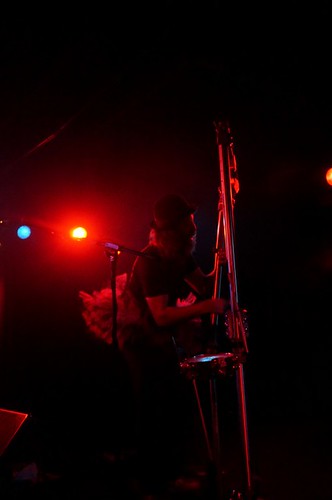
 Some visitors are conscientious, happy to drop by and help with the chores, but they’d never overstay their welcome or be too forward. Others are more domineering, taking over the house and disrupting everything. On Hold It In, Buzz Osborne and Dale Crover of the
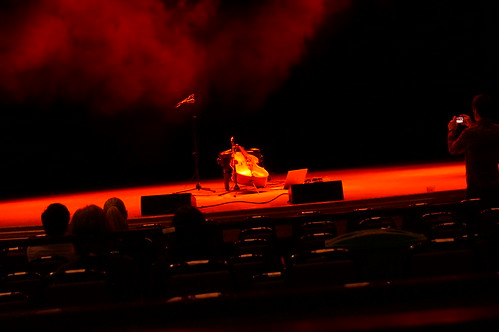

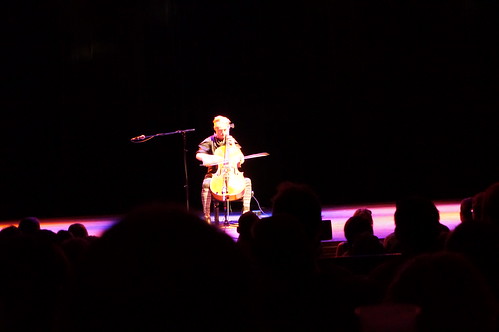
 Anyone who knows
 It may have seemed like a good idea at the time, but it was just another case of a record label casting around for the Next Big Thing.
 Although Key Lime Pie continued Camper Van Beethoven’s move towards a more controlled sound and it’s their only album without Segel, I’ve always liked it better than Our Beloved Revolutionary Sweetheart. It has a stronger set of songs, especially the one-two punch of “Opening Theme” into “Jack Ruby” that contrasts two perspectives. The first tune is a stately instrumental, relying largely on the violin for moody ambiance. Although Lowery can sneer and effortlessly generate quirky imagery, this kind of melting pot of stylistic influences is what has always attracted me. The hypnotically snaking melody suggests a different era and culture. “Jack Ruby”, on the other hand, opens with a discordant run of acoustic guitar that pushes the piece off balance. Like Sweetheart, this reissue features the same clarity, making it easier to distinguish that what I had originally heard as an echo is actually a second, out of phase guitar. If “Opening Theme” has a well-mannered Old World folk feel, Lowery makes this a modern folk song with his raw recounting of Jack Ruby and the murder of Lee Harvey Oswald. The new mix also brings the electric guitar fills even further to the front. Other great tracks on the album include the off-kilter “The Light from a Cake” and “

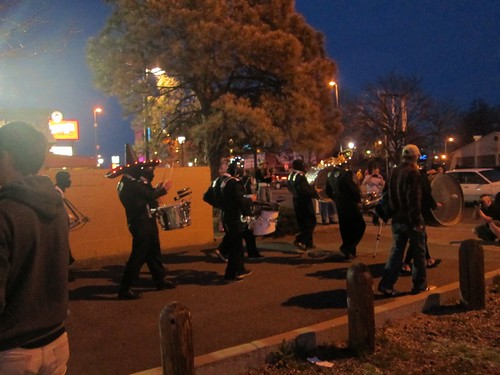




 Sometimes, it seems like hip hop has become a kind of musical cilantro or bacon. It’s the hipster ingredient to add to any tired or bland project to give it a spark of relevance. Mashed up the other way, pairing a rap delivery with an unexpected backing track (Classical! Country!), the juxtaposition usually serves as an ironic in-joke. It’s not really even clever anymore, and I’ve gotten tired of strained cross-breeding that tries to pass itself off as creativity. Which brings us to
 Can a 50-year-old man write anything relevant about Miley Cyrus’ musical and cultural significance? Well, if he has a teenage daughter, he might have enough of a clue to get his bearings. But otherwise he’s stuck with an outsider’s perspective.

 Can you get too much of a bad thing? A bass beat rumble and detuned guitar strums set the foreboding mood at the very start of Through a Pre-Memory. Joined by an artificial snare and strangely reverberating voices, the ironically named “Muse” is like a gateway into schizophrenic darkness. The dissonant chord progression climbs a couple of steps in an irregular repetition, but, like Sisyphus, always slips back to its starting point. Within the first two minutes, the bleak, defeatist feeling is almost overwhelming and it’s daunting to realize that the track still has another 19 minutes to run. The sonic palette extends to include additional ghostly intrusions: short, insectile squiggles of electronic static like a bad patch cable and jarring echoes of noise that might have their roots in an abused guitar. At 5:22, Alan Dubin from the doom metal band, Khanate, makes his first appearance. Hosting us on our haunted house tour, he roughly shouts a few lines from the writings of Russian poet Anna Akhmatova. The experimental experience transitions into a new ethereal realm, dominated by squeals, squonks and otherworldly echoes. Eventually, at 12:23, Dubin returns to assault us with a rawly screamed accusation that begins, “When/ At night/ I wait for her.” His feral ranting is matched by a metal guitar grind. At this point, it’s so disturbing that it’s easy to look back fondly on the welcoming embrace of the song’s beginning.
 Terry Riley’s landmark 1964 composition, In C, is often credited with spawning the minimalist movement. It inspired Steven Reich and, by extension, Philip Glass, but it rippled out to affect more mainstream music as well; Pete Townshend titled his synth-driven “Baba O’Riley” as a tip of the hat to its influence. Riley’s piece broke ground by tying musical serialism to an indeterminate process. Indeterminacy dated back to experimental work by Charles Ives and later musicians like John Cage, but Riley’s approach was easier for audiences to grasp and appreciate. Rather than using a traditional score, the piece is defined by a set of 53 melodic fragments and an open-ended process for performance. It calls for an arbitrary number of musicians to play each of the phrases in order, repeating them at will and staying within two or three patterns of the group. Performers have the discretion for how they play the pieces: in unison with others, offset by some amount or dropping out altogether. It’s an interesting dynamic because the process inherently relies on chance and individual judgment, but the building blocks were carefully constructed and ordered to provide a rich set of connecting points.
 Brothers and sisters, would you willingly throw away your crutches? The hip-hop band Whiskey Blanket has built a unique sound around their quirky mix of beatboxing, orchestral instruments, and atypical backing music.And it was just that gimmicky blend that initially hooked me to the group. Their newest album, From the Dead of Dark, shows off the band's self-confidence as they blithely discard two of those three elements: no rapid-fire beatbox rhythms and a complete absence of street-classical mashup grooves. With well-founded faith, they rely on their solid raps and musical vision to carry the album. Their last project,