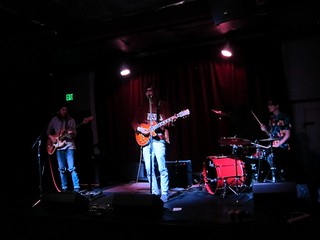
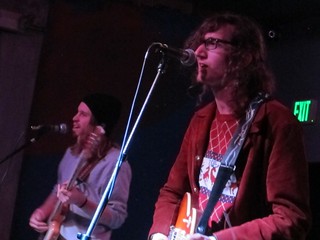
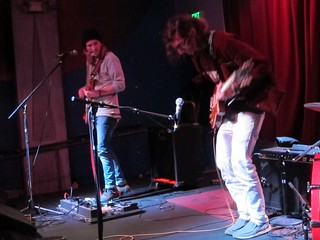
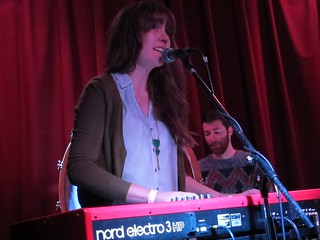
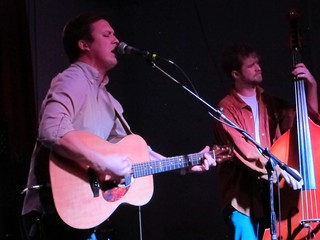
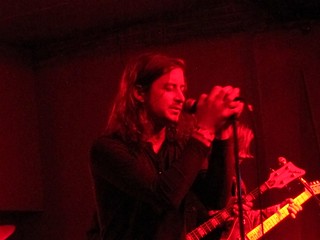
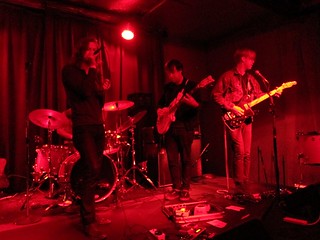
(Artwork care of Karen Ramsay (www.karenramsay.com), profile photo care of brianlackeyphotography.com)
Showing posts with label trippy. Show all posts

Tuesday, December 2, 2014

Recording review - Ought, More Than Any Other Day (2014)

Art punk intensity and choreographed primitivism

Ought was formed in the politically charged crucible of Montreal's "Maple Spring" with genetic material borrowed from David Byrne, David Thomas (Pere Ubu), and Gordon Gano (Violent Femmes). Exposed to the clashing drone of the Velvet Underground and new wave synthpop radiation, their sound solidified into a quirky, experimental space with a driving edge. More Than Any Other Day delivers their psychedelically intense art punk as a wake up call to the world.

They toss out a direct challenge with the jarring notes that open the first track, "Pleasant Heart". Those give way to clashing guitars that fill the bandwidth with contrasting splashes. Like  Byrne, Thomas, and Gano, Tim Beeler's voice defines his band's personality. Unpolished, utterly unguarded, and only loosely controlled, it quavers as he skirts the edge of melody. The initial tension remains constant as the piece evolves, and the uneasiness leaves the groove completely unsettled. The angular guitars and tripping rhythm get more involved, but the nervous vocals offer a new focal point. Eventually, the dense layering picks up enough complexity that there no hope of balance. Suddenly a chasm opens up, leaving a small void of breakdown before the linked loops are triggered all over again. It feels like a tribal rite crossed with some flavor of primal therapy as Beeler locks into repetition, "Say what and how we are." The song then staggers to a halt, leaving a reedy collection of droning keyboards, arrhythmic pings, and lazy bass tones that provide a chaotic interlude. This free jazz floating barely holds together as music and, glancing at the remaining time for the track, it's hard to guess where it might lead. Ought surprises us by bringing back the looping, rhythmic jumble from earlier, but now it's even more insistent. The chanting, "Say what and how we are," returns and is finally allowed to bring the song to a conclusion.

After that sprawling six minutes of overload, the hesitant beginning of "Today, More Than Any Other Day" feels like a respite, a gift from the band. This song is what first attracted me to this album, and it's even stronger in context. The random, detuned notes that melt and fall from the guitar provide an oasis of calm after the chaotic thrash of "Pleasant Heart". When the drag beat and diffident bass come in, they impose a loose and disjointed order that slowly coalesces into a moody, twanged groove, where the bass notes define the structure. The tempo slowly increases and Beeler dreamily repeats, "We're sinking deeper, we feel like..." The song begins to accelerate, though, and Beeler's repetition becomes unhinged as the guitar strum flails like Velvet Underground's "European Son". The song is halfway through, rest time is over, and the track finally finds its raison d'être as a manic affirmation. The flow from the initial amorphous noodling to the rapid-fire, slightly deranged title sloganeering is incredibly engaging. The track has the patience to grant ample time to the free form start, but then it carries out the culmination of its vision with a beautiful economy. Of course, the increasingly frantic pace can only lead to breakdown and the band eventually delivers on this as the song cartwheels to a stop.

The rest of the tracks on More Than Any Other Day go on to expand on these opening tunes, from the Television new wave chop of "The Weather Song" to the tamped down Talking Heads anxiety of "Around Again". The music always manages find the fulcrum point between stream of consciousness primitivism and neat choreography, while the lyrics often come from somewhere out in left field, whether it's the stark Zen koan anchoring  "Around Again" ("Why is it you can't stand in the sun, but you could stick your head into a bucket of water and breathe in deep?") or the frustrated confusion of "Gemini" ("I retain the right to have an end in sight/ I retain the right to be absolutely mystified"). The album holds together though, because they transcend their artful influences and find their own perspective. Plenty of other bands in their position fall prey to the temptations of distraction, nihilism, and stilted experimentalism, but Ought remains grounded and connected even as they deliver the unexpected.

Thursday, October 23, 2014

Recording review - Mazes, Wooden Aquarium (2014)

Energetic buzz and saturated colo(u)rs

Just as LSD differs from peyote, psychedelic bands each offer their own kind of trip. Syd Barrett’s earnest naïveté is worlds away from Thee Oh Sees’ sweaty swirl of garage echo and grind, and neither has much in common with the exotic sound of Dengue Fever’s Khmer-flavored surf. On Wooden Aquarium, Mazes goes for an upbeat, energetic buzz. More ecstatic dance than disoriented drifting, they keep the rhythm tight, but they never let their motorik focus become oppressive. The band’s post-punk drive infuses most of these tunes with a nervous energy, but it’s a sweet, anticipatory feeling.

Wooden Aquariums sets the pace early on with the paired opening tracks, “Astigmatism” and “Salford.” A brief, distracted guitar riff tosses out a chain of notes before dissolving into an insistent groove piloted by a steady-handed drummer and a nodding, hypnotic bass line. The guitar locks into place and Jack Cooper’s lyrical flow catches the mood, with a rolling cadence and ornate phrasing: “Oh, I want to see but I don’t know why/ But my optic nerve would lie/ It fades and blurs at the edges.” “Astigmatism” streams forward, zipping through a delightful back-masked guitar solo before reaching its finish line and stumbling to a halt. But there’s no real respite as “Salford” rises from the ashes and resurrects the first song’s rhythm line. This time around, out of sync vocals push the feeling into a spacier direction. The loose singing and clockwork beat play off each other and culminate in a thrashy punk ending, implying that détente has ended and it’s time to come to blows.

Mazes takes that cheery, altered-perception vibe and finds different forms of expression to get there again and again. They branch out from the initial restless-leg new wave beat to explore Supertramp-inspired pop-psych ( “Explode Into Colo(u)rs”), sunlight dappled trails (“It Is What It Is”), and detached but fraught alt-rock (“Universal Me”). The change-ups keep Wooden Aquarium from devolving into a navel gazing exercise. Instead, the experience turns outward, embracing a world of experience where colors are super-saturated and vivid.

Even through rose-colored glasses, a few tunes shine a little brighter. “Vapour Trails” offers a particularly nice mix. The calculated pace of the verses, accented by angular guitar grind, suggests Stephen Malkmus and the Jicks. This alternates with the looser bloom of the chorus, creating a balance between pensive thought and renewed resolution. The song is hardly sparse, but it has an innate simplicity, each part fulfilling its purpose without excess baggage or production trickery. Too often, heady groups get caught up in a “more is more” aesthetic, erecting rococo layers of detail to bedazzle the listener. Mazes rejects that formula, trusting that a mere pair of dependent guitar lines can create a sufficiently rich context. They avoid the sin of self-indulgence, refusing to surrender to fears that their tunes aren’t shiny enough.

If there’s a downside to this album, it’s that Mazes have assembled a motley mix of inspirations. Krautrock rubs elbows with Pavement and Guided By Voices, but even if the influences seem a bit obvious, the full impact carries the project. It comes back to the album’s pervasive upbeat feel. Each listen sets up the same openness and sense of conscious acceptance. The irony is that Mazes has every right to sound introspective on this record. Their recording sessions in upstate New York were snowed in, leaving them pretty well isolated as they pieced it together. Instead of succumbing to cabin fever, they launched out with a firm sense of direction.

(This review first appeared on Spectrum Culture)

Thursday, March 6, 2014

Recording review - Sleepy Sun, Maui Tears (2014)

Concept album? Only beguiling distortion and balanced jams

Too many neo-psychedelic bands mistake freeform anarchy for true psychedelia, thinking that a confused and disoriented listener is functionally equivalent to one who’s been transported. Others assume that they can alchemically transform formulaic progressions into gold if they wrap them in enough distortion and echo. On Maui Tears, Sleepy Sun rises above their lesser peers, delivering a phenomenal album that invites hours of quality replay time. Pick your favorite headphones or, better yet, let it shine out through a good set of mains and share it with your neighbors. The songs are built upon interesting structures, offering plenty of depth to support open-ended jams that never become untethered or trapped in their own bubble. The band has also honed their dynamic sense over the last couple of years to accommodate cathartic growls and ringing highs, but also open spaces with nuanced details. The individual songs offer plenty of opportunities for sonic indulgence, but the pacing and variety across the tracks make this a wonderful collection. The musical feel is consistent even if the tunes vary quite a bit, which uncovers another wise decision—Sleepy Sun also avoids a third trap common to the genre: relying on a simple unifying theme. Concept albums are cool, but the risk of cliché or pomposity is daunting.

The album opens with “The Lane”, a tune that the band has had in their live set for a while now. Jangling guitars channel exultant sunshine and show off the core of Sleepy Sun’s sound. Matt Holliman and Evan Reiss harmonize their two guitars, blending melodic lines into a shifting current of warm fuzz and overdriven tubes. The two parts lock into formation and then split apart before finding common ground again. Underneath, the bass takes on a skeletal hint of rhythm guitar to round out the aural spectrum. The Velvet Underground influence is there in the droning undertones, but Sleepy Sun favors a sweeter balance. The echoing juxtaposition of competing parts is filtered through a distorted shimmer and then stuffed into a thoroughly saturated mix. Frontman Bret Constantino’s vocals contribute to the VU comparison, sunk deep within the mix and draped with slapback echo like Nico’s parts. Distant and buried, it can be hard to wrench the lyrics free, but when they come through, the imagery is heady. On the thoughtful bridge, Constantino sings, “In a pool of roses, we could swim/ It’s only a grand illusion of our earthly whim, a glimpse.” Glimpses are enough to beguile.

The second track demonstrates the power of contrasts. After “The Lane” crashes down, “Words” rises immediately. This time, the twin guitars are clean and acoustic, each one fingerpicking its own chord voicings to build the gentle interlocked structure. The stereo separation splits the two, making it easy to distinguish them. A slab of electric guitar surfs in with the vocal, crackling with buzzing overtones, but, despite the crunch, the acoustics are still clear and strong. The combination leaves the song open for interpretations: a delicate surface can’t quite hide the grind of doubt and conflict. Or maybe the structure is what keeps the negativity in check. Either way, the complexity offers enough distortion to connect to the earlier track but this song finds its own direction.

Part of the album’s appeal also lies in the band’s development. This slacker psychedelia phase has bloomed since singer Rachel Fannan left the band in 2010. Fannan contributed a folk-rock flavor and her voice could be haunted or playfully innocent. Losing her forced Constantino’s personality to the surface: a raw need for a grand gesture, swaddled in oblivion-seeking waves of sound. Where 2012’s Spine Hits (review) set the foundation for the band’s evolution, Maui Tears solidifies the aesthetic while expanding their palette and control. Songs like “11:32” may start with a chaotic snarl of feedback, full of thunder and whine, but they harness that energy with a solid, mid-tempo drumbeat that powers a guitar riff that’s as unswerving as a fixated three-year-old. The verses punch like Jack White sitting in with a no-name garage-psych outfit. The music swirls before dipping into the mellow bridge, redolent with melting whammy bar detune. The spacy interlude celebrates a moment of hang time before falling back into the drive. It’s a tribute to the band’s collective vision that they can pull off these shifts without losing coherence or momentum.

The album closes with a climactic opus. The title track runs well over 10 minutes and channels Pink Floyd’s “Careful with That Axe, Eugene” along with fragments of early King Crimson, Led Zeppelin and Porcupine Tree. From the simple bass line at the start, accompanied by light stickwork rhythm, to the acid-burned guitar jam in the middle, it’s a long, meandering trek along the fringes of a questionable head-trip that culminates in a tribal rite finish, mediated by hallucinogens. Complete with flute solo. It’s the perfect bit of excess to wrap up the album and inspire yet another round with the demons.

(This review first appeared on Spectrum Culture)

Tuesday, January 7, 2014

Recording review - Beats Antique, A Thousand Faces - Act 1 (2013)

Every taste offers another intriguing melange

Beats Antique may let their guest artists step up front and show their faces, but the exotic blend of Gypsy flavored electronica reveals the band behind the mask. The songs may vary quite a bit, but there's an open minded aesthetic and familiar sonic predilections that will satisfy long-time fans. That established audience is the target for A Thousand Faces - Act 1. The self-released album spawned a Kickstarter project to create an innovative stage production that would show off the new music and their fans quickly responded to support the vision. It's hardly news for a band to turn to crowd-funding, but many of their supporters may not directly benefit from the show if they live off the tour route. Beats Antique overcame that challenge because their fan base appreciates their cross-disciplinary artistic vision and can buy into the thrill of patronage.

Like their other releases, A Thousand Faces is as influenced by Zoe Jakes' choreography as it is by musicians David Satori and Sidecar Tommy Cappel. The sinuous and exotic "Kismet" is inseparable from Jakes' dancing. Sarod player Alam Khan begins the song with sly glances and calculated deliberation. The song quickly picks up an Arabic belly dancing tonality. As the tune feints forward and then retreats, it's easy to imagine the accompanying dance that weaves along with the spidery creep of the rhythm. "The Approach" also reflects a strong physicality. The Latin horns follow along behind a stalking beat. Like a ritual march or parade, the piece has a heightened theatricality, but it's powered by an aura of nervous excitement. The first half plays larger than life, but it slides into a sparser section full of bass menace. Squiggling electronica weaves around a slide banjo riff for a short interlude before the track returns to the opening pursuit.This has all of the elements that make Beats Antique great. A cultural stew of influences come together, expressed through acoustic and electronic instruments with a rhythm that demands movement and engagement.

A Thousand Faces has its stranger facets as well. "Doors of Destiny" is tossed out as a surrealistically comic interlude. The game show conceit is amusing, but the wonderful Eastern European Gypsy vamp lets it stand up to repeated listening. About two minutes in ("You chose door number two" *meow*), the tune melts down and turns into a dark, dubsteppy roller-coaster. Whooping highs inevitably give way to stripped gear lows. I only wish this musical interlude was longer. The other oddball is the Les Claypools collaboration, "Beezlebub". Claypool's distinctively glitchy bass style is blended with bass grinds and bubbles. The piece captures his off-beat funk and quirky vocals but fits them into the Beats Antique sonic universe, almost as if they're remixing Primus.

The songs evoke a host of different moods and flavors: Balinese-tinged anticipation on "Charon's Crossing", momentous electro-pop with "You The Starry Eyed", and a cinematic turn featuring a sly alien presence on "Viper's Den". Despite all the costume changes, though, it's unequivocally a Beats Antique project and among their finest.


Sunday, November 24, 2013

Concert review - Sleepy Sun, with Glowing House and déCollage

22 November (Moe's Original Bar B Que, Englewood CO)

I will never understand how a venue selects their lineups for a given night. They have a particular national act coming in, maybe with a fellow touring band, and they need to pick the local opening band(s) to fill out the bill. Looking at the list for last night, the best thing I can say is that the band's were in alphabetical order. The first local band, déCollage, fit reasonably well with the headliner, but the middle act, Glowing House, didn't deserve their awkward juxtaposition. Their new folk earnestness was a weird side trip for the evening's entertainment. Partnered with the right set of acts, their set would have been perfect...


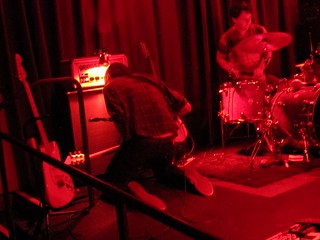
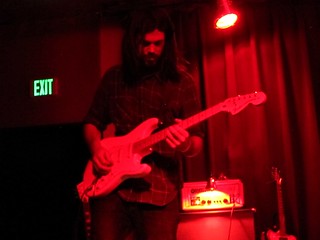
003 déCollageOpening act déCollage took the power trio into realms of artsy, modern psychedelia. The sound was thick with reverb and somewhat muddled for the room, but it was a harbinger for Sleepy Sun's upcoming noise ritual. The vocals were quirky enough on their own, but frontman Reed Fuchs strained them through a hall of echoes.

008 déCollage
The sounds wound their way along a surrealistic path, wandering from deconstructed acid blues to experiments in bizarre, looking-glass pop. Despite the loose flow of the set, the arrangements were remarkably well-planned and executed. Like most power trio's, the bass had the added responsibility to cover the ground between bass and rhythm guitar. Melodically busy, the bass stayed anchored in the groove,  tied directly to the drums. If the bass , provided the sonic glue, the other two carried their weight just as well. The drums supported the sharp time signature shifts and punches while the guitar walked a thin line between chaos and order.

021 déCollage
The next to last piece was the most interesting as it delivered the set's wild climax. Starting with a strange loop of baby's laughter, the heavily syncopated tribal beat held down the song while the synth-sounding guitar screeched for freedom. Earlier, the audience had swayed along in lazy surrender to déCollage siren song; now, they writhed along with the insistent drive of the music. déCollage left the stage in perfect form: with a happy crowd wanting more.

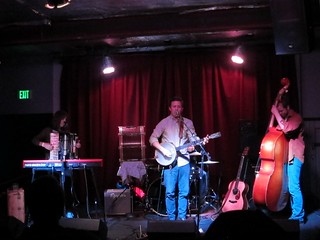
055 Glowing HouseI'd love to catch Denver's Glowing House in their natural habitat. Their dark, moody folk sound belonged in a warmer, more intimate venue. Steve Varney acted as the focal point, switching between guitar and banjo. He clearly invested himself in the songs, often delivering them in more of a singer/songwriter style. His wife, Jess Parsons provided strong support on keys and accordion. The band's real strength were the vocal arrangements. Varney took many of the leads with earnest power, but Parsons' bruised vulnerability gave many of the pieces their emotional center. That male-female mix is a staple in folk music, but their harmonies and personalities really made it click.

038 Glowing House
The set rolled along from rootsy country through bluegrassy twang to proclamatory folk. The songs in this last category evoked a bit of Mumford & Sons, with drummer pounding a second bass drum while the stand up bass player dead-panned his way through the changes with a theatrical flair. It was a polished performance that showed a lot of planning and practice.

044 Glowing House
Since the crowd was packed with their loyal fans, Glowing House basked in the respectful attention, but it was clear that this wasn't their venue. They lacked the fire or charisma to work the audience like the other two bands. Their band persona was more geared towards a more subtle emotional depth than flash, making them the odd group out.

078 Sleepy SunI missed Sleepy Sun when they passed through Denver last month supporting City and Colour for two nights at the Ogden, but I was happy that they made a final loop back through town to close out their current tour. It has clearly been a long slog; leader Bret Constantino seemed a bit weary when he told us that this was their next to last show for this run.

068 Sleepy Sun
All the touring has paid off with polished arrangements that flow into perfect alignment while still retaining the cathartic chaos that defines their sound. The solos all feel expressively spontaneous as Matt Holliman wrenched the howling notes from his guitar, but the set list as a whole seemed to run like dominoes, with each song transition clicking into place effortlessly.

087 Sleepy Sun
The band has undergone quite a few changes in recent years. Two albums ago on Fever (review), the group was centered on the yin-yang dynamic of Constantino and singer Rachel Fannen. Last year, touring behind Spine Hits (review), Sleepy Sun shifted more towards alt-psychedelic intensity after Fannen left. Now, on the eve of a new album due early next year, the band has taken back full ownership of the Fever songs and started looking forward. This show split its attention between material from Fever, their first album Embrace, and a couple of new tunes. Oddly enough, only one track from Spine Hits, "Martyr's Mantra", made the list this time.

067 Sleepy Sun
Regardless, all of the songs tapped into a similar heavy sound: Led Zeppelin haze, poetic intensity like the Doors, and raw Velvet Underground madness, tempered by a hedonistic Jane's Addiction thrash. Sleepy Sun launched their sonic assault and the audience soaked up every swirling, feedback-infused decibel. It was a beautiful orgy of noisy intensity. Throbbing grinds of doom kicked out broken-mirror reflections. Whale songs turned into ghostly moans. Ringmaster Constantino presided over the whole circus of acid-washed echoes like a reincarnated Lizard King.  In short, the structured cacophony erased a week of work and daily concerns like a hurricane cleansing the coast.

More photos on my Flickr.

Tuesday, October 1, 2013

Recording review - Boogarins, As Plantas Que Curam (2013)

Sunny psychedelic pop owes a debt to 1960s Tropicáli

I like to imagine pockets in the world where time stands still or even regresses occasionally. Places surrounded by mountain fog and wrapped in their own echoes.  That's the kind of place in Brazil that I picture for Boogarins. The band seems caught in a warp where 1960s Tropicália is vibrant and it's okay to be earnest and awkward as long as the music can wrap around your mind and provide a cocoon. With a lighter tone than their countrymen Os Mutantes, the band fills As Plantas Que Curam with a sunny psychedelia that is one step removed from Beatlesque exploration.

The opening track, "Lucifernandis", tosses out a brief teaser of studio pre-taping before jumping into the insistent guitar riff and rolling drum beat. The guitar twists in on itself with a lightly fuzzed trail and the subtly echoed vocals begin chanting through the opening verse. The joyous sound reminds me of Roky Erickson, but with much sweeter singing. The chorus turns up the sunshine with a harmonized melody that has passed through several hands since its origins on Magical Mystery Tour. It's not so much that the song is derivative, but more that Boogarins have a talent for creating songs that sound instantly recognizable. Throughout As Plantas Que Curam, I felt more like I was returning to an old favorite, rather than meeting a mysterious stranger.

The second track, "Erre", shifts the roots from Lennon and McCartney to Pink Floyd circa The Piper at the Gates of Dawn. The production has the same hollow quality on the opening guitars and a familiar sounding, hypnotic bass line. The singing even suggest Syd Barrett's phrasing. It's a rich, spacy ride, spurred on by persistent flanged cymbal work that fills the track with a constant rattle that dazes and bewilders. While I don't speak Portuguese, the vocals feel like I'm getting advice from an older brother. The guitar solo wanders in, as if by accident and leads the song to resolution.

Along with these retro flourishes, Boogarins evoke some more modern comparisons. Songs like "Despreocupor" and "Hoje APrendi de Verdade" are filled with groovy good cheer rooted in a naivaté that suggests artists like Devendra Banhart and Robert Pollard (Guided By Voices). The latter track captures a taste of Jimi Hendrix guitar tone, but eschews fireworks for a solid supportive role. The vocals eddy around in a mind-twisting whirlpool. It's disorienting, but there's no chance of a bad trip because we're safe among friends.

The moodiest moment on As Plantas Que Curam comes on "Eu Vou", a mostly acapella tune thick with resonant echoes. The song is ornamented with delicate swells and bubbles popping for a touch of backing music, but they remain understated behind the vocal and its reverberations. The title translates as "I go" or "I will go", which fits the lonely feel of the piece. But, in keeping with the general optimism of the album, the isolation is not crippling; there's a core of resilience in the singer's voice to take comfort from.

Boogarins have made a beautiful album, full of life-affirming psychedelic pop. Sometimes, a foreign language can add an exotic element, but As Plantas Que Curam defuses that with its friendly manner and relaxing vibe. Exotica can be intriguing, but this time, it's nice to surrender myself to such inviting musical surroundings.

Thursday, November 15, 2012

Recording review - Akron, Voyage of Exploration (2012)

Akron's exotica suggests an alien art walk


Voyage of Exploration presents a fine collection of retro lounge/space music that imagines a much cooler future than our paltry dimension can offer. Like The Traditionalists, a branch of Secret Chiefs 3, Akron shares a love of classic exotica like Les Baxter, Martin Denny and Esquivel!. On the one hand, his sound is utterly 1964 retro, but it also has a timeless quality. These songs mix and match elements from Denny’s exotica, Joe Meek’s production on songs like Telstar, Ennio Morricone’s film scores and early Pink Floyd psychedelia to reveal the inherent stylistic connections they share.
The album opens with a spacy sound that overlays throbbing organic machinery with bits of grinding, tinkling glass. This motif returns repeatedly throughout Voyage of Exploration, like it’s the background sound of some bizarre museum where each song is a holographic display to be entered and explored.

The first installation in this alien art walk is the focused instrumental progression of "Picabu". This retro-hip lounge groove has a tightly syncopated foundation with a simple, repeating guitar line. Washes of synth flutter through like electro-magnetic curtains blowing in the wind. After an accent break of rhythmic breathing, echoplex artifacts hint at Denny’s wildlife sounds in the background. Then the song fades back into the motif as we move towards the next display.

Stepping ahead to "Tricorder", the song begins with a tribal percussion beat. The music initially sounds like an Italian soundtrack, perhaps a Spaghetti Western. But the electronic melody in the left channel wobbles and bubbles like an overheated liquid energy, giving the song a science fiction vibe. It eventually melts down into a strange, open cavern, where odd snippets of sound conjure the sense of small creatures lurking in the shadows. These sonic pictures are perhaps very personal, but Akron’s songs are very evocative that way. Each tonal component seems to represent some element of a greater story.

Another great example of this programmatic style of music comes later on "Memory Hole". The track features a pastiche of various fragments from Pink Floyd’s Piper at the Gates of Dawn crossed with experimental Krautrock. The steady bass line at the start suggests a purpose or organizing principle. Burbling electronic tones zip by and create a sense of space along with a steady percussive tap. A steady staccato guitar strum provides a subconscious murmur as a keyboard line seems to be searching for something. Suddenly, a jarring electronic interference breaks the concentration. The bass and percussion reassert themselves, but now, they’ve internalized the distortion into the original principle.

Moments later, the distortion is traded out for yet another sound. Each new context for the bass line feels like an experimental repositioning of base idea. All along, the Krautrock repetition creates a hypnotic focus. Eventually, the bass line theme is abandoned as an ambient, swaying section takes over. Organic creaking suggests sails and ropes as a new meandering keyboard line wanders like a distraction from the earlier focus. But the original theme reasserts itself to finish the song.

Finally, as the stately, nostalgic "Funeral For Euclid" drifts out of focus, we find ourselves at the end of our tour. Linger in the museum atrium a moment and savor the sensations before returning to the mundane world. The exhibits in Voyage of Exploration will wait here for your next visit.

(This review first appeared on Spectrum Culture.)

Saturday, April 9, 2011

Concert review - Beats Antiques, with the Tailor and Inspired Flight

8 April 2011 (Boulder Theater, Boulder CO)
Beats Antique drew a unique demographic along with crowd you'd expect in the electronic music scene. A host of exotically dressed women wafted through the house, swirling and dancing in preparation and homage. They were answering the siren call of dancer/producer Zoe Jakes, whose belly dancing and choreography is an integral part of every performance.

The opening acts, THE TAILOR and Inspired Flight, each fit with a facet of Beats Antique's sensibility, making for a fine show. It was also my 12 year old son's first concert. With a shout out from the stage from Inspired Flight (thanks, Gabe), the warm support of the crowd, and some incredible music, he had perhaps the best first concert ever. His response: "Epic!"

The tour was sponsored by the Sustainable Living Roadshow.

Inspired Flight
Like Beats Antiques, Inspired Flight served up a rich mix of live and prerecorded music. Their sound ranged from the DJ feel of straight mixes and mashups to more in-the-moment band music adorned with samples and beats. Their ability to shift the mood of a song from simple band accented mixes to full on jamming was impressive.

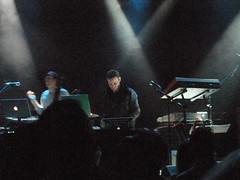
Inspired Flight exploited a huge sonic palette, with laptops, guitar, keyboards, various synths, kalimba, melodica and vocals. This gave them the tools to skip across genres. Laid back electronica, heavier club beats, and occasional grind covered the electronic side, but they also built some great indie jam grooves and hip hop tracks. Overall, they leaned towards a relaxed and moody vibe.

The laid back ambiance made for a swaying fluid set. One of my favorite moments started out with electronic percussion with keys that crossed a club sound with introspective ska. This built into a fluid mix of keys, samples, and organic parts. Gabe Lehner's (Chavez) laid out a tasteful Santana-esque guitar solo taking it to a climax.

Lehner was the most charismatic of the group as he danced around and stayed visually interesting. Whether he was lip synching to the rap samples or pumping his arm to the beat, he channeled his internal reaction to the music to the stage, building a connection with the audience. His guitar drove much of the band based grooves in the set, but oftentimes, he just used the guitar to contribute textures or fills to the mixes. His electronic parts were supportive, too.

By contrast, Eric Poline (OpenOptics) stayed seriously intent on his playing and didn't interact with the house as much. He jumped effortlessly from scratching to mixing to keyboards. His focus seemed to provide the foundation for the band's grooves. His kalimba fills also extended the electronic melodies in a unique way.

Singer Ashley Mazanec sat in on a few songs to fill out the sound. Her vocal style ranged from soulful to torch to dark pop, depending on what the song called for. Throughout, her voice was strong and expressive, standing up well to lead, but also meshing well with Gabe Lehner's voice. Their vocal swaps and harmonies were a pleasant surprise that really enhanced the set.

Aside from the ska based song I mentioned, my favorite track set a trippy loop that riffed off the Beatles' Happiness Is A Warm Gun. A simple ambient loop meshed nicely with the glitched vocal sample. I look forward to catching this San Diego band again sometime. I picked up their CD, We All Want to Fly, which should prove to be a good listen.

THE TAILOR
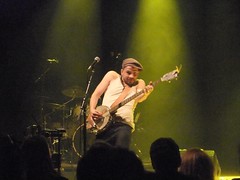
Opening acts are often a grab bag, sometimes showing nothing in common with the headliner. When THE TAILOR took the stage with his banjo, I figured it was another case of strange bedfellows. Like most people, I associate banjo with bluegrass, Deliverance, and "pickin' and grinnin'". Sure, Béla Fleck has pushed the instrument into jazz and classical, but that would also be an odd fit. of course, Beats Antique often uses a banjo as their lead melodic instrument and that proved to be linkage here.

THE TAILOR is a solo performer, Tarran Gabriel. From the beginning of his set, he focused on a bluesy context for his banjo playing. Later, he moved into more retro jazz and gypsy grooves. He used looped bass and rhythm tracks to support his occasionally processed banjo. The music was dark and evocative. The opening song was rooted in Delta blues, painting images of eerie bayous and voodoo rituals.

Gabriel's dreamily chanted vocals, interspersed with ghostly wails and moans set that mood. The sparse, reflective picking over a simple beat built an inevitable tension that added to the haunted feel. Later, he'd show off his other vocal skills: a capella vocal percussion and horn riffs, a breathy falsetto, and a bluesy growl.

Unlike many solo players, THE TAILOR maintained an intense stage presence. He was incredibly expressive as he twisted his body or sinuously gyrated to the music. His movements foreshadowed the belly dancing we'd see in Beats Antique's set. His stage persona was sometime weird and creepy as a giggle would slip out, but that was all part of a captivating performance.

Aside from the bluesy music, Gabriel also had a strong Tom Waits sound, both in his darkly ruminative songs and his appreciation for older retro music. Jazzy numbers mixed with some more gypsy melodies. At one point, he captured the feel of Tom Waits' Underground from Swordfishtrombones. The other surprise was learning that a bowed banjo can sound surprisingly like a violin.

THE TAILOR's set was a mood shift from the electronic jams of Inspired Flight and the world-tronica grooves of Beats Antique, but it just added to the exotica of the night. He thanked us for bearing with him and his strange music, but it was our pleasure.

Thanks also to THE TAILOR for sharing a copy of his CD, The Salt, which I may cover later.

Beats Antiques
In the studio, Beats Antique weaves as hypnotic blend of glitchy electronica and Mideastern harmonies. On stage, however, the choreography adds a performance art dimension that transforms the music into a trans-global ritual. The crowd swirled in anticipation before the set and once the band came out, everyone was on their feet dancing.

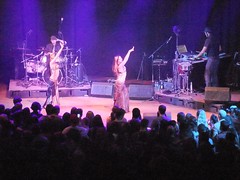
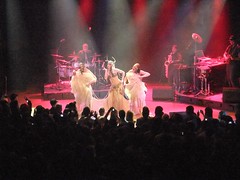
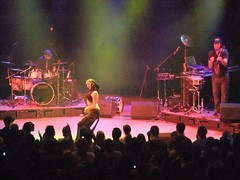
In the opening song, the band set the tone for the set. Zoe Jakes was seductive, dancing as she exultantly pounding her bass drum. She'd run to the edge of the stage, freeze, and hold a pose as beat of the song paused. Then the moment would pass and she'd play again with abandon.

Guest dancers filled out the choreography. During one song (I think it was Revival), a single dancer in white came out with someone hidden behind her. She danced as ostrich feather fans at her back throbbed with the music. Then she unfolded into three tightly coordinated dancers. The way the three moved expanded on and interpreted the music. The three women provided a strong and moving visualization of the song that captured its headiness.

But the influence went both ways as the music sometimes meandered and reflected the dance: the melody might move forward, then double back, turning on itself before opening again.The link between visual and audio was forged so tightly that they were inseparable.

Musically, Beats Antique blurred the lines with prerecorded elements meshing with live playing. Fitting the name, they played drum and percussion driven songs. Disparate live parts like banjo, violin, clarinet, and baritone sax all added their spice at one time or another. Keyboard washes and loops provided the harmonic framework and heavy bass grooves abounded.

Gypsy violin or klezmer colored clarinet might set the mood for a given piece, but the physicality of the beat and grind was ever present. David Satori's banjo playing was transcendent. His simple resonant tone daintily stepped over the changes, but then, with a little flange and echo, the banjo would take on a exotic sitar drone.

They hit a number of familiar tracks from Blind Threshold as well as 2008's Collide. There Ya Go was snaky and exotic with a richer electronic backing than I remembered. The music and show ended all too soon. As we walked out into the cool air, we carried the afterglow of Beats Antique's spicy stew of trippy, wired in world music. I'll have to agree with my son, "Epic!"

More photos on my Flickr.

Friday, December 3, 2010

CD review - Pas Chic Chic, 12" (2010)

Sometimes, I'm a psychedelic junkie. My habit is so well established that I've lost some of my sensitivity to classic head music like early Pink Floyd or Tangerine Dream. The Valleys Stoner recently gave me a taste, but didn't really send me far enough into inner space, but Canadian band Pas Chic Chic's latest EP, 12", hit me hard.

Pas Chic Chic is the latest permutation of musicians from a rich Montreal music scene, including members from Godspeed You! Black Emperor, Set Fire to Flames, and Fly Pan Am. I've enjoyed Godspeed You! Black Emperor before, but Pas Chic Chic has a different feel, less progressive and moody.

12" is only a couple of songs, but it's still a good 26 minutes of fun. The first track, Allez Vous Faire Influencer is old school Krautrock, in the vein of NEU! or Can with touches of Brian Eno. About halfway through, there's a section reminiscent of Gary Numan's In Cars. The steady beat and electronic sound move the song forward as the melody wraps on itself. It's repetitive like a mantra, but the sound shifts and builds.

The second song is actually a two and a half minute ambient interlude and then a longer piece, Premier Souffle. This was what I needed. A low electronic drone note builds and modulates. After plenty of time to appreciate that, a retro organ sound comes in. There are hazy tatters of almost-feedback at the edges of this sonic soundscape. It grows into something a bit like Pink Floyd's Saucerful of Secrets, somewhere between Let There Be More Light and Set the Controls For the Heart of the Sun. There's still an underlying electronic flavor to the groove that keeps it surprising. Like any good trip music, the song evolves over time offering new facets at every turn.

12" motivated me to hunt down Pas Chic Chic's earlier work, specifically their 2007 album Au Contraire. This had some psychedelic moments, some pretty songs, as well as some experimental noise. It was well worth purchasing for my collection, but it doesn't quite have the grandeur of 12".

I'm looking forward to what Pas Chic Chic comes up with next. Sip a Belgian Quadrupel (from Koningshoeven), drop the lights, and put on the headphones.

Friday, September 24, 2010

CD review - Jack Jeffery, Passage to Agadir (2010)

Jack Jeffery promises a lot for his debut CD, Passage to Agadir. His press release name checks Pink Floyd, the Beatles, the Velvet Underground, and Brian Eno among others before describing the album as "sequenced to transport the listener on a trip through ambient, psychedelic, electronic, acoustic, and folk rock soundscapes". Song by song, Jeffery delivers on some of the influences he names and he dishes up some well crafted songs.

On the other hand, because he covers so much music ground, Passage to Agadir doesn't flow so smoothly. The genre hopping track list juxtaposes the Kraftwerk electronic tribute of Auf Wiedersehen! against the Pink Floyd homage, Interstellar Echoes on the Dark Side, which is jarring. Cutting a few of these out (Whiskey Burns, Where's the Ambient Jam?, Acoustic Mojo, Auf Wiedersehen!, and Build It Up) would have made this a tighter album. Those are good songs, but they weaken the impact of Passage to Agadir.

The most pleasant surprise on the album was Interstellar Echoes on the Dark Side. As a huge Pink Floyd fan, I was nervous that it would either be a painful mashup or a mediocre facsimile. While there are elements of One of These Days and Welcome to the Machine scattered about, Interstellar Echoes stood on its own. Jeffery took the pieces (ringing washes of synth, a wail of guitar, and a solid groove) and gave it more of a sequenced, electronic vibe. This modernized the feel. The song evolves like a cyborg, organic touches on electron bones, before a surprising return to the start.

Acoustic Mojo has a blues based jam on a heavily flanged out acoustic guitar. The ringing chords at the end promise an interesting change of mood that isn't resolved. This feels like a sketch rather than a fully realized song, but the tease at the end adds an intriguing complexity. It's refreshing.

The trippy Mind Horizon is out there on YouTube, but the several others are on Jeffery's MySpace page, including another favorite track, the subtle psychedelia of You've Lost Tomorrow.

Passage to Agadir is available at the usual online spots (iTunes, Amazon, and CD Baby. On the whole, I'd recommend a Kasteel Brune (strong Belgian dark beer) while you listen.

Friday, June 18, 2010

CD review - Cloudland Canyon, Fin Eaves (2010)

Like a Polaroid picture slowly developing, Cloudland Canyon's Fin Eaves coalesces grudgingly from a white (noise) palette. It starts off in a thickly shimmering haze. A fog of sound, where shapes begin to emerge, then recede, only half recognized. The tracks slowly become more song-like, taking on some of the outlines of more structured music, but even that fades back down.

No One Else Around begins hesitantly, then becomes a dreamy wall of guitar and vocal echo. There's a pop underpinning. It's like standing outside the club smoking a cigarette, ears ringing from the big indie/prog rock band still playing inside. Or maybe a bit like forcing yourself to stay awake after taking an Ambien, as your surroundings become more dreamlike and incomprehensible.

Pinklike sounds a bit like the David Bowie/Brian Eno work on Low (Warszawa, maybe), but it's really truer to the older krautrock band, Can. Atmospheric noise and simple, repetitive chords abound. Electronic elements contribute a crystalline under-texture until, about 2/3 through, the song seems to complete and shift to a slightly cleaner electronica groove. Then the two parts meld together to wrap it up.

This is drifty music, where one songs melts into another. The vocals are all sleeptalking sound, wordless and hard to pin down, buried in the mix. Cloudland Canyon has created a Rorschach album: each song means whatever a listener wants and reveals some hidden truth. Sip some absinthe and take the test. Fin Eaves is due out on July 29.