(Artwork care of Karen Ramsay (www.karenramsay.com), profile photo care of brianlackeyphotography.com)
Showing posts with label noise. Show all posts

Tuesday, January 13, 2015

Recording review - California X, Nights in the Dark (2014)

Sensitive and evocative, wrapped in cathartic waves of thunder
4.0/5.0 

California X protects their soft chewy center with bristling, metal shard guitars and rolling waves of thunder. Most of the songs on their latest offering, Nights in the Dark, are wrapped in barbed wire brambles of distortion that still let their vulnerability shine through. It's a standard formula that hordes of emo bands have followed, but to their credit, frontman Lemmy Gurtowski and his crew never get depressed enough to slip into whiny self-indulgence. Even better, this latest release is a major step forward in defining the band's sound. On their eponymous debut, California X drew comparisons to their more famous Amherst big brother, Dinosaur Jr. They've still got the thick tarry fuzz, but the songs never descend into the apathetic catharsis that J Mascis is so adept at. Instead, California X stretches out and adds some low-fi post-rock reminiscent of bands like Trail of Dead, as well as some nicely honed metal chops.

The echoing rumbles of ragged guitar kicking off the title song give the album a good start, but the band really hits their stride with the fourth track, "Hadley, MA". The preceding tune, "Ayla's Song", breaks the flow of cotton-wrapped, raging amps with an evocative fingerstyle acoustic guitar, That piece ends abruptly with a brief bro comment, "Cool", and then "Hadley, MA" brings back the throbbing distorted tones, but the transition flows naturally because the the melodic riff ties back to the previous song's tonal center and phrasing even as the production contrasts so strongly. The slow grinding rhythm creates a fraught emotional space, but the arrangement is flexible and allows for some strong dynamic shifts. In particular, the drop-back for the vocals on the verses lets them stand out cleanly and emphasizes the growing intensity of the chorus. It's easy to sink into this song and be buffeted by the noise.

This in turn sets up the dual tracks of "Blackrazor", with part one offering a post-rock flavored slow-core metal grind. Like an implacable fate, the song rolls out darkly with occasional rhythmic stutters. The massive crush of bass and guitar chords lays the foundation for a fluttering lead guitar that strains against the boundaries of the song, like Robin Trower jamming over Black Sabbath. Moving on to part two, California X sets up a faster metal punch that immediately suggests Motörhead with choppy guitar, pounding drums, and righteous bass drive. Thankfully, the vocals never attempt Lemmy's growl (Kilmister, that is), but the head banging energy is perfect. Running almost seven minutes, this part gives the band plenty of room to drag out the jam, with tight harmonized leads that show off their technical chops. While California X doesn't really position themselves as metalheads, these tracks extend their range while maintaining a consistently loud and cathartic sound.

It's easy to find minor gripes with Nights in the Dark: the unbalanced tone and muted highs wear a little thin and a couple more songs would be nice. But it's a strong sophomore effort that clearly refutes critics who heard too much Dinosaur Jr. in their debut release. Savor the noise and find your way to the center.

Tuesday, November 25, 2014

Recording review - Thurston Moore, The Best Day (2014)

Meditative drones and thrashing dissonance - a return to electric form

In the beginning was not the word, but a drone: a tone to form the backdrop for all the sounds that followed. Some of those later voices may vie for attention, assert their individuality against the cosmic hum, but eventually they surrender and rejoin its embrace. The Best Day is a celebration of that drone and the rich textures that surround it. While Sonic Youth long used feedback and resonance to build cathartic walls of ecstatic noise, Thurston Moore distills that approach here to create a set of sonic meditations.

Amid the rich jangle of alternate tunings and ringing dissonance, it would be easy to imagine this as a new Sonic Youth album, to pretend that the band was back together. The Best Day breaks from Moore’s last couple of solo records where he explored cleaner acoustic guitar tones, and this project is certainly closer to Sonic Youth’s 2009 finale, The Eternal, than Moore’s Demolished Thoughts (2011). Even so, Moore isn’t trying to recreate the past or falling into old habits. More than just missing Kim Gordon’s distinctive voice and bass work, this music has a different intent. Where Sonic Youth harnessed chaos and cleansing discord for its own sake, Moore captures an idée fixe spawned from static and nervous energy and nurtures it until it transcends its roots. Just as the Velvet Underground painstakingly created their own musical language to convey their experiences —a burning itch, a seductive languor, or a glimpse of oblivion—Moore uses his guitar to search for the patterns that express his current mental space, with ideas like the acceptance of outside forces and the release of expectations. Sonic Youth fans have already trained themselves to surrender to the swirl, and they’ll find plenty to enjoy here, but The Best Day is ultimately more coherent and less nihilistic than the band’s classic material.

The first track, “Speak to the Wild”, invokes the album’s meditative mood with opening harmonic chimes that invite us to center ourselves. Then the song launches into the rhythmic two-cycle flow of the verse: strumming broken by brief pauses, the guitars providing the focusing breath. Moore’s terse lines have a Zen clarity (“Remove your rings/ And meet us near the fire/ Extinguish things/ Of earthly desire”) immediately followed by cryptic allusion (“The King has come to meet the band”). The guitars are arranged as foreground and background voices that are locked into near unison and the piece has plenty of open space to let them ring. The solo break is restrained, starting with simple phrases against a buzzing drone, and then it slides into a staccato meandering riff before locking into a crystalline Robert Fripp-style section. The intensity builds but finally collapses into a variation on the chimes from the start. Instead of signaling the end, the song kicks off all over again to remind us that time is a cycle and everything repeats.

As The Best Day develops, Moore varies the sonic palette, but the album maintains a taut drive that never allows for complacency. They aren’t all as meditative as the first couple of songs; the title track, for instance, leaps between a thrashy deconstruction of jug band music and a motorik, upbeat alt-rocker. But the shift in tone still isolates a clearly identified mood to settle into. While most of these tunes take their time to fully soak into the listener’s consciousness, there is one tight little morsel that doesn’t even reach three minutes. “Detonation” would have fit well on The Eternal, with sloganeering lyrics and a snappy new wave edge. The contrast between the jabbing verses and the accelerating instrumental spiral creates a strange sense of disconnection for such a short tune. While this fun bit of fluff easily fits into Moore’s oeuvre, it feels a bit out of place in this context. If nothing else, though, it provides a counterbalance that shows how well the rest of the album holds together.

If “Detonation” is the shallowest point, the peak is the seven-minute instrumental, “Grace Lake”. First, a fluttering sprinkle of notes proves that Moore’s acoustic experiments were worthwhile as they suggest the glint of sunlight on the lake surface. In counterpoint, a purposeful motif arises, giving the song direction. The band effortlessly navigates through a series of changes, accreting momentum and meaning along the way. Finally, they break through a barrier, moving the track into full-on psychedelia. The bass throbs, fractured delay-box echoes gurgle, and a guitar hangs on a single, modulating tone. As it swells into feedback whine and everything else slips away, it’s like we’re at the beginning of everything. This is Moore’s love song to the everlasting drone. Then the spell breaks and we’re back on the lake, but the memory of that tone lurks at the edges, like background radiation.

(This review first appeared on Spectrum Culture)

Tuesday, December 4, 2012

Recording review - Godspeed You! Black Emperor, Allelujah! Don't Bend! Ascend! (2012)

 Cleansing noise, organic chaos, and feedback drones herald a fine return

Godspeed You! Black Emperor slipped into indefinite hiatus back in 2003. Fans were heartened when they reunited in 2010 to curate and perform for All Tomorrow's Parties' Nightmare Before Christmas festival, but it's taken another couple of years to get a new album from the band. Allelujah! Don't Bend! Ascend! will certainly please their fan base, although some might mutter about the paucity of new new material. The album clocks in at a respectable 53 minutes on four tracks, but the two long tracks are older songs. "Mladic" and "We Drift Like Worried Fire", formerly known as "Albanian" and "Gamelan" respectively, each run 20 minutes and contrast with the two shorter pieces, both in style and breadth.

"Mladic" opens with a tape loop ("'With his arms outstretched', 'with his arms outstretched'...") and swells of guitar. Sustained guitar, ornamented with violins in bagpipe drag, defines the ground floor of what will grow into a chaotic tower of ragged sonic textures. The noise swirls around, creating an eye of calm to cocoon all within the ringing headphone space. It promises, "submit to the fuzz-laden power and be cleansed." The circle tightens around a single note, with overtones creeping in and away. That tonal center modulates, tuning into a deeper frequency of the universe. The pocket is buffeted by springy pokes of guitar, but remains strong...

That's just the first three minutes. The track carries on to ride through tempo changes, percussive syncopation, and even something resembling a song. Along the way, the sonic tour visits the motor at the center of the world, imagines dimensions where Lou Reed's Metal Machine Music sits at the top of the pop charts, and samples an Eastern European alternative radio station featuring Dick Dale's live performance in Hell. This beautifully evocative chaos is exactly what  Godspeed You! Black Emperor built their reputation on.

"We Drift Like Worried Fire" presents another face. Here, the music acts as score backing a dream. Creaking timbers and drifting tones suggest a rudderless ship in the fog. When we find ourselves delivered onto a crystalline shore, faced with a maze of interlocking guitar lines, there's no choice but to move forward into the indie psyche groove. The paced melodic bass line under the choppy guitars and drums suggest a My Morning Jacket jam, full of transcendent hope. And when a darker tune rises into the cracks of the song and takes over, the creepy tension is still held at a distance by a trick of dream logic.

These epic journeys position the shorter tracks as mere interludes, where six and a half minutes seems like a short form for the band. Both "Their Helicopters Sing" and "Strung Like Lights at Thee Printemps Erable" are structured around gentler drones. "Strung Like Lights" offers some feedback-driven angst, but even that dissolves. These songs never coalesce like their larger siblings, but each explores an interesting set of textures. Recorded with smaller line-up and sparser instrumentation, they feel incomplete; their soft focused ambiance acts as a digestif for the longer pieces. 

Less overtly political than earlier releases, Allelujah! Don't Bend! Ascend! relies on subtle clues in the liner notes and song titles to allude to their causes. Whether you're familiar with the Maple Spring protests or not, embrace the noisy catharsis and appreciate that Godspeed You! Black Emperor is back.

Tuesday, September 18, 2012

Recording review - Spiritualized, Sweet Heart Sweet Light (2012)

Confused ambivalence, but Spiritualized still brings the noise

Spiritualized took their time getting Sweet Heart Sweet Light out the door. Of course, two years of recording and almost a year of chemotherapy hazed mixing could slow down anyone's momentum. Jason Pierce (AKA J. Spaceman) is now in better health, but the illness and his treatment had an impact on the new album.

Sweet Heart Sweet Light is a bit confused, unsure of whether it wants to be ironic or sincere, harsh or treacly. It hasn't decided whether their musical touchstones should be esteemed or dismissed. This ambivalence is not new for Spiritualized, but this album brings it front and center. Despite this, there are still some constants: a low-fi, compressed production that recalls the late night FM radio of my youth, Pierce's eager embrace of glorious noise, and the belief that regular repetition can drive a message home.

Skipping the pastoral welcome of Intro and it's promise of comfort, the album gets underway with Hey Jane (graphic official video here). The bouncy beat and Pierce's naive vocals capture a young David Bowie, reworking Jean Genie. Halfway through the track, the song hits a meltdown ending. The chaos fades but the song resurrects into a sunshine psychedelia, packed with hypnotic repetition and a relentless bass beat. The tempo creeps higher and Pierce's vocals come in, alluding to the earlier lyrics. But now there's a threat, "Hey Jane, when you gonna die?" This heavy bait and switch makes it harder to trust a surface read on the other tracks.

So, later, when Freedom's sweet harmonies and country folk arrangement offers a respite from the thick, heavy sound of Headin' For the Top, there's a sense that the Neil Young mask could slip at any time.

By the same token, when Spiritualized gets saccharine sweet on Too Late or mines a gospel vein on Life is a Problem, it feels like another chance to dash everyone's expectations and undercut the band's reputation for noise.

Sweet Heart Sweet Light does deliver plenty of the discordance that Spiritualized is known for. I Am What I Am is a perfect example. The warning feedback whine heralds chunky strum and a dark, heavy bassline. The song's bluster has a threatening tone, like Bad to the Bone for the experimental set, but the lyrics are cloaked in metaphor
I am the heart that calls you home
I'm the grave that marks your stone
Misunderstood, d'ya understand?
I'm the sea holds back the land
I'm the mishap and coincidence that came out as you planned
I am what I am
The sassy backup vocals on the chorus set up a call and response. But the noise rises against Pierce's calm delivery. Piano stabs, steel wool scour, and a distorted buzz like a rattlesnake -- these sounds fall into place like a gathering horde behind their leader. A saxophone channels Ornette Coleman short circuit squeals. It's a delicious tension as Pierce remains unfazed, untouched by the chaos.

This contrast is what I love most about Spiritualized. For a moment, it banishes the schmaltzy strings and other retro pop trappings to capture the essence of the band's roots.

Thursday, March 8, 2012

CD review - Pinkunoizu, Free Time! (2012)

Exploratory variation and sonic experimentation create a rich series of musical worlds

2011's PEEP EP (review here) was a first taste of Pinkunoizu's musical subconscious. Now the European experimentalists have followed up with a full length debut album, Free Time! Where PEEP EP followed a twisted dream logic path, Free Time! drifts through clouds of experimental loops, dream pop, rhythmic ambience, and indie rock. Pinkunoizu's musical soul is dedicated to an exploratory variation, so these songs bounce around quite a bit. But they maintain a trippy, noise pop coherence.

Two tracks from PEEP EP turn up again, Time Is Like a Melody and Everything is Broken or Stolen. The meandering synth sounds of the latter are a welcome taste of Pink Floyd's More cast against hypnotic poly rhythms.

But the new tracks offer their own intrigue. Myriad Pyramid toys with creaky ambient sounds before settling into a groove like Radiohead covering Bowie's The Man Who Sold the World. Death is Not a Lover mutates from a soft, moody beginning to juxtapose folky Americana against a trippy background chaos. Then it collapses into a staccato chant before evolving into jangling new wave groove. Each track plays like a grab-bag of disparate parts that somehow always form a greater whole.

The peak is The Abyss. The percussive start is dark and trippy, but was sharp chops of guitar are looped in, the vibe resolves into something more dream poppy. The bass line and climbing fill guitar hint at Pink Floyd's Sisyphus. The layered parts play like loops, full of details that rise and fall in the mix as the song unfolds. As the song drifts forward, each twist and turn seems unplanned but inevitable. The groove builds intensity and supports some Jerry Garcia style guitar noodling. At every moment the music makes perfect sense, but it's not a linear development of ideas.

This is Pinkunoizu's blueprint for Free Time! Musical moments blend into one another in a collection of happy accidents. Detailed loops indicate planned out production, but the tracks evolve and flow like improvisation.

Further listening
The first single, Parabolic Delusions, is both the most accessible and least interesting track on Free Time! It's lyrically quirky, but the cheery pop shows less complexity than te rest of the album.

Friday, November 25, 2011

CD review - The Golden Awesome, Autumn (2011)

Yin-yang between noise rock and dream pop

Why do I find such bliss in noisy abandon? There's something about a thick blur of grinding sound that drowns out my daily concerns. It's cathartic, even as fuzzed out guitars seem to echo some of the static I repress in my brain.

Regardless of how I made this association -- was it that first golden moment when I was transfixed by the Velvet Underground's Heroin? -- it hints at the psychoactive nature of music.

On Autumn, The Golden Awesome are just that: awesome. I'm cossetted and comforted in a hazy blanket of noise. Ragged guitars weave a psychedelic tapestry, mediated by distant, close-harmony vocals. The yin-yang between the singing and the music permeates Autumn. Floating above the fray, the dreamy sweetness of the vocals complements the sonic flail with a soothing contrast.

I included A Thousand Nights and One Night in my September singles post. All of that is true for Autumn as a whole. The songs vary in tempo and feel, but the shifting balance pervades the tracks, providing a subtle power that mere noise rock or dream pop would lack.

One of my favorite tracks is Where To Begin. It melds Pink Floyd's Fearless with the Beatles' Blue Jay Way. The repeated Escher-like melody climbs briefly before resolving back where it began. I love the sense of moving forward while staying centered.

Autumn was released on November 15 on M'Lady's Records.

Monday, October 24, 2011

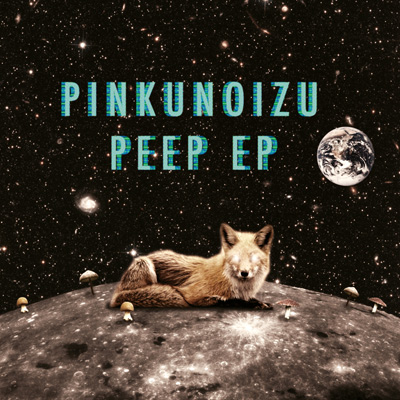
CD review - Pinkunoizu, Peep (2011)

More dreamlike than dreamy...how did I get here?

Pinkunoizu's EP, Peep, is not so much dreamy as dreamlike. The band manages to create and capture the sense of a free ranging subconsciousness throughout the course of the EP. Like any night's dreamscapes, Peep doesn't start out that strangely.

The fade-in intro of Time Is Like a Melody suggests a thousand other dreamy pop bands. The drifting vibe blends bubbling synths, washes, and a simple guitar strum. As the song finds its structure, this is where other dream pop bands would settle into the groove. But Pinkunoizu takes it further. Swirling around, they build a rich rhythmic complexity as the tune circles. Jarring shards of guitar are just as welcome as water drop kalimba tones.

These looping layers jumble together. When the song fades down into an a capella finish, the vocal stratas maintain the interwoven rhythms of the main song. A little outside the box for dream pop, Time Is a Melody serves as the first step down into dreamland.

The second track, Everything is Broken or Stolen, takes us further afield. It establishes a poly-rythmic groove as initial passing sounds give way to a meandering synth melody. There's a great moment where the trippy music drops out briefly to accent the beginning of the detached and disconnected vocal.

Soon, though, the song falls back into an instrumental exploration that starts collecting unrelated sounds over the main groove. After a number of twists, a new set of repetitive vocals comes in. It seems unclear how we've arrived here, but, as in a dream, we accept it. The theme mutates and is slowly overtaken by the earlier meandering keyboard line. Eventually, the track settles back into polyrythm before collapsing into a strange clockwork finish.

Now that we're deeply anchored in sleep, Pinkunoizu lays out the strangest track. Dairy Queen's ominous start -- a tone and a tolling beat -- sets up a feeling of powerlessness. Sounding like parts of The Wall, the song moves forward. But it opens up and shifts into a more reflective mood before dissolving into surrealism.

This is where Peep crosses into the seemingly random logic of dreamspace. Like the slow unwinding of the subconscious, the flow is not so clear. One moment slides into the next, but cause and effect seem suspended. This surrealistic meltdown proceeds until, out of the void, an element emerges.

The classic Irish folk song, Red is the Rose, provides a touchstone for this dream to latch onto like a lifeline. The melody becomes an organizing motif as the track becomes more song-like. As the psychedelic jam extends the theme, it's hard to remember just how we got here.

The end of the song is a confused awakening, The tatters of the last 22 and a half minutes slip through the fingers and any summary is elusive.

Sunday, October 16, 2011

Concert review - Cymbals Eat Guitars with Hooray For Earth, A Mouthful of Thunder

15 October 2011 (Hi-Dive, Denver CO)

Cymbals Eat Guitars played the Hi-Dive a year and a half ago. At the time, I was amazed by their stage energy compared their album, Why There Are Mountains. Now they're making the rounds again after their latest release, Lenses Alien. Their touring support act, Hooray For Earth was a good fit with CEG's live sound. Local openers, A Mouthful of Thunder had a more mainstream indie rock sound, but they certainly did their part to warm up the crowd.

A Mouthful of Thunder
A Mouthful of Thunder's indie rock set led off with an earnest, poppy sound. Stephen Till worked hard to show how invested he is in his lyrics, keeping his focus turned inward. The band was tight, sticking together through all song shifts. In particular, their dynamic changes were a treat as they could create a stripped down sound to fit the earnest mood of the vocals; then they could slowly build that up into a thick, more aggressive vibe.

The bass player's harmony vocals filled out the vocal range and balanced well with some of Till's plaintive singing. I wish I knew his name, because he brought a great attitude to the stage. While all of the guys were very competent musicians, the bass player's spontaneous smiles and engagement injected some much needed personality to the act.

Till did a fine job of singing, often bringing a dreamy quality to the songs. I also liked their guitar player. He had a stiff, awkward stage presence, looking a bit like Clark Kent, but his solos and fills were precise and interesting.

The most interesting song of the set was centered on percussion. The guitar player took over the keys and the keyboard player switched to a standing tom. He and the drummer set up a call and response that anchored the song. Trading rhythmic lines and paradiddles, their foundation supported a folky indie rock groove with moody keys and then propelled the song into a more intense space.

Hooray For Earth
Kicking off with a synth driven electro pop sound, Hooray for Earth quickly added enough grind to sabotage any thoughts of dreamy bounce. Instead, the sound thickened with heavy overtones that bordered on mind control.

Just like the synth pop start that seemed like a feint, the group's appearance was deceiving, too. A typical indie rock line up: guitar and drums and one guy pulling double duty on bass and keys. But the sound was anything but typical. First of all, the guitar was much more synth-like, using an octaver, harmonizer, and sampling to build brain burrowing synth textures. The vocals are also heavily processed with the harmonizer. Together, they show a lot of Adrian Belew influence, especially some of the heavier King Crimson work.

This was tempered by Peter Gabriel style world-beat drumming. Emphasizing the kick drum over toms or snare, the beats melded with the ringing musical noise to create a hypnotic trance effect. With synth melting into looped guitar feedback or octaved guitar adding its own bass, Hooray for Earth had a surprisingly huge sound for a mere three piece band.

Despite the volume that treated my ear plugs with contempt, the effect of all this loud noise was not a cacophony. Instead, it channeled a cathartic intensity like an effective rolfing session. At the end of the set, I was drained, but satisfied.

Cymbals Eat Guitars
Cymbals Eat Guitars started off the set with Indiana from Why There Are Mountains. Where the album version builds an anticipatory cloud of sound to launch the dreamy vocal start, the live version developed more slowly. A scattering of opening guitar notes was overcome by a wave of discordant keyboard angst. Swells of sound rose and fell for a good minute and a half before Joe D'Agostino started the vocals, letting the mood fully permeate. The texture of sound and longing in those first words touched me just like Trail of Dead.

They followed this up with an emotionally raw version of Plainclothes. D'Agostino's face locked tight as he forced the vocals out. Where Hooray for Earth built a thick wall of sound, CEG laid out a shimmery curtain of sparkling elements. Subtle tones resonated and echoed, acting as a conduit to transfer the band's intensity to the audience.

It was easy to focus on D'Agostino as he twisted and spastically jerked, then held himself tight to squeeze out more lyrics. But the rest of the band each contribute their necessary elements, whether it's Matt Whipple's melodic bass work, Brian Hamilton's noise manipulation behind the keys, or Matthew Miller's tight dynamic control on drums. D'Agostino and his songs are the centerpiece, but they wouldn't work without the well organized work of the the others.

As noisy and overwhelming that CEG's sound could get, it was always a controlled chaos. Mission critical to the songs and the mood, the band would demonstrate this when they dropped the dynamics to give focus to a particular section or lyric. That intensity is like splicing high tension wires. After a full hour's set, Cymbals Eat Guitars left the stage, drained but triumphant.


More photos on my Flickr.

Monday, November 1, 2010

CD review - Women, Public Strain (2010)

Simple retro elements that hearken back to Syd Barrett collide with experimental noise. On Public Strain, each side carries the same artistic weight for Women. It's full of songs that speak with a direct simplicity while reveling in chaotic noise along the edges. Except, like an M.C. Escher drawing, the foreground and background switch and then the edges become the main focus.

Many critics have compared Women to the Velvet Underground and the Zombies. Sure, their embrace of noise elements seems reminiscent of John Cale and Lou Reed, but the early days of Barrett's Pink Floyd are also there. Flickers of David Bowie's Space Oddity come to mind as well. The combination, though, is most like a soft-focused Robyn Hitchcock.

The songs are emotionally evocative and setting the right mood is the key. Throughout the course of Public Strain, the bass and drums stay anchored in a traditional sound while the guitars are more fickle. One moment, they're providing a simple strum accompaniment; next, they're droning detuned squeals and whines. Behind all of the music, the distant strains of heavily echoed vocals settle like cobwebs.

The opening track, Can't You See, starts of with modulated noise and feedback. The noise is the foreground, while the bass line and reverbed vocals set the tonality in the background. Gradually, the music rises to compete with the noise before sinking back down.

The moods shift from track to track, like the noise. Women are effective at pulling together into musical sense when it suits them, whether it's progressive or retro psychedelia. Still, the chaos is never far, creeping in like tunnel vision.

One of the defining moments is the noise punk of Drag Open, which recalls Sonic Youth. The bass and drums are driving and the experimental guitar work give the song a flaking edge of desperation. The anxiety builds, then dissipates into a more thoughtful end section. The disconnect creates its own worrying tension.

The low fi, melting pot of order and chaos make Public Strain a thoroughly engaging album. It demands a bit of attention, but Women trade fair value for your time. Watch the once clear liquid cloud as you pour the absinthe over the sugar cube...

Friday, July 2, 2010

CD review - A.R.E. Weapons, Darker Blue (2010)

Darker Blue has a manic punk energy. The opening song is already underway when the track begins, starting in mid-beat. A.R.E. Weapons, nominally known as an art-noise band, infuse Darker Blue with a punk style simplicity and a Gothic new wave sound. Some songs sound like the Ramones or the Cramps, but just as often, they'll pull in enough bass and synthesize to raise comparisons to Bauhaus or Joy Division.

A.R.E. Weapons want you to pay attention to their lyrics. They favor narratives and character sketches. Whether it's the quirky cockroach encounter of Subway or the threatening ode of Jeffrey Lee, they try to create a compelling reason for the song. A few songs break this mold, but they're exceptions.

That opener, Jeffrey Lee, presents their driving Gothic wave sound. The music starts with a drum machine driving beat that sounds a bit like a speedy version of the Doors' L.A. Woman crossed with Bauhaus' Bela Lugosi's Dead. The slide guitar hangs in the background, trippy and ecstatic. The lyrics seem to allude to Gun Club's Jeffrey Lee Pierce, but the song transcends any real person to reach towards mythology.

Confusion is the Sign (available on their MySpace page) is my favorite track. It's a Velvet Underground tribute, with elements of Heroin, European Son, and Sister Ray. They captured Lou Reed's droning rhythm guitar with John Cale-style chaotic noise around the edges. This could almost be an outtake from The Velvet Underground and Nico, but A.R.E. Weapons add their own elements of synthesizer sounds and horn samples. The horn sounds add a rich thickening to the sound and create a cool outro for the song.

Street Justice is a modern urban fable. It feels like Combat Rock era Clash with more of an emphasis on synthesizer. It tells a story about a subway vigilante, a bit reminiscent of the Bernard Goetz shooting. The ethics are similarly ambiguous as the victims are criminals, but John was looking for his opportunity:
It turns out that this was not the first time
But see, self defense it ain't no crime
And it turned out that John just loved to defend himself.

It was a fact - he kept his body trained
It was a fact - he was a little bit insane
It was a fact - they just don't really want to go mess with him
A.R.E. Weapons have rough NYC edge that calls for a taste of something sweet to contrast -- maybe Bacardi and Coke. In the meantime, give Darker Blue a listen.

Monday, October 26, 2009

CD review - Steven Wilson, Insurgentes (2008)

Steven Wilson is the founder and lead guitarist of the progressive rock band, Porcupine Tree. He's also been an influential producer, working with bands like the prog-metal Opeth. His work on either side of the recording gear has such a consistent aural approach, it's no real surprise that Insurgentes sounds a lot like a Porcupine Tree project. Still, the album shows a wider range than that. The songs run the gamut from dreamy to intense guitar rock in a psychedelic vein. Despite this range, it all flows together very well tonally.

Insurgentes has been released in a multitude of versions, based on what the package includes. So, some have an extra disc of outtakes, some came with a DVD-A (with various mixes and some video), and the deluxe edition includes a hardcover book. There's even a vinyl edition. So, if you're interested in this, it's worth figuring out how much of this good thing you want.

The first single from the album is Harmony Korine. It starts with an echoed, flanged guitar playing a repeated picking pattern. Then, the bass comes in like a typical Porcupine Tree song. A slide guitar wafts over the top, giving it a dreamy/trippy start. The vocals have a mix that's similar to the guitar sound. If it were a little slower, it would be a bit like Pink Floyd's Us and Them. The chorus picks up the tempo and adds a lot of energy, which drops back down when returning to the verse. This is a good choice as a single; it captures some of the album's feel as a whole.

What Harmony Korine is missing, is the harder edge of songs like No Twilight Within the Courts of the Sun. That song starts out with an edgy, syncopated bass line and slashes of guitar riff. The guitar is distorted, angry, and dangerous in contrast to the jazzy feel of the bass and drums. Sonic layers slowly accrue, with guitar covering the bass line and the second guitar building into a screaming wail of electric, distorted thrash. It just keeps getting bigger and deeper. Then, suddenly at 3:50, it strips back to bass and drums as the vocals come in for a tinge of MC 900 Ft. Jesus. Still, A couple of verses in, it rocks out again with shouted lyrics. Near the end, it collapses into a slightly atonal piano riff, but the Gothic thrash makes one final appearance. This song has such cool complexity, that I've listened to it several times in a row.

The rest of the album dips in and out of soundtrack oriented music, with a patina of Gothic noise. There are plenty of sounds reminiscent of Massive Attack and Joy Division scattered throughout as well.

Listening to the second disc of "outtakes", most of these would not have been sorely missed. The doleful tension of The 78 or the Alan Parsons Project sound of Collecting Space would have worked on the main album, but they weren't really necessary.

This is a great album for fans of Porcupine Tree or prog rock in general. Pour an Odell Double Pilsner while you listen; the body and assertive hops will fit well with Insurgentes.

Wednesday, October 21, 2009

Concert review - Mumiy Troll, Future of the Left, Trail of Dead

20 October 2009 (Bluebird Theater, Denver CO) Evidently, when Denver's Bluebird Theater says showtime is 8pm, they don't mean that the doors open at 8pm or that the real showtime is 8:30. No, the first band will be rocking out at 8pm sharpish. As a result. I missed Mumiy Troll's first couple of songs, which was a disappointment. Still, it was a full evening of music.
Mumiy Troll
I've reviewed Mumiy Troll's Comrade Ambassador, I've interviewed front man Ilya Lagutenko, and I've been listening to their new English EP, Paradise Ahead. So, I had high expectations for this show.

As I mentioned, I missed the start of the show. This was frustrating and annoying, but there wasn't any time to dwell on this, because the set was underway. The boys rocked the house, putting on a great show. The audience was packed with expatriate Russians who were hyped to catch the band and sing along.

With sweat flying, Ilya's face was incredibly expressive. YouTube videos give a sense that he's a great showman, but seeing him live was much more impressive. He worked the crowd, building things up. The other guys were very focused on attacking the songs, but guitarist Yuri Tsaler did sing a bit and showed that he could also lead a song.

They played some familiar songs from Comrade Ambassador as well as some older material. These were not "cover the album" arrangements -- there were some great jams. They ended their short set with Sleep Rock'n'Roll, which is normally a thoughtful groove.


This version started out sleeping, but woke up with a vengeance. The arrangement was split into a progression of sections, starting out reflective and laid back. Yuri played a David Gilmour inspired lead here that fit perfectly. Then, as it built into a relentless rock thrash, Ilya added a punchy rhythm guitar and the band followed suit. Drummer Oleg Pungin played rapid fire machine gun shots on the kick drum. It was a great end for the set, I just wanted more.

Hopefully, Mumiy Troll will be back as a headliner next time.

Future of the Left

Next up was Future of the Left, a 3 piece noise punk band from Wales. Their performance was pretty raw in contrast to their online music, which is much cleaner and focused. In either case, their sound is dense and driving. The key feature was the highly distorted bass that took on the role of rhythm guitar. The drums were simple and heavy. The guitar (or sometimes keyboard) usually contributed accenting shards of noise. Although, on one song, the keys reminded me of Peter Gabriel's Games Without Frontiers.


Future of the Left put on a fairly good show. Bass player Kelson Mathias affected a spastic rhythmic motion that conveyed tension and fit the punk aesthetic. The shouted lyrics were hard to understand, scraping a passing grade from the John Lydon school of vocals. The patter between songs was a little more interesting, with great offhand lines like, "It's a shame when anyone who isn't Margaret Thatcher dies."

At the end of their set, Kelson jumped down and jammed in the mosh pit. Then he handed off his bass to someone in the audience to go off exploring in the crowd. So, the show was good, but the music was too raw and abrasive for me.

And You Will Know Us By The Trail Of Dead
I wasn't very familiar with Trail of Dead before this show. I had always though they were some kind of hard rock band. Reading up now, they've been described as "art rock", but I'd call it progressive rock. Sometimes, they dose their songs with a bit of psychedelia, but it's a focused buzz. This show convinced me I need give them a closer listen. I'll be following up with a review of their latest CD.


The most unique aspect of their show was the elastic organization of roles. Sometimes, a drummer switched to guitar or lead vocals. They had two drummers, each with a separate kit, which gave them room to trade off roles without wasting a lot of time. Often, the drums played in unison, but they still diverged enough to keep things interesting. The effect was almost orchestral, where complexity was revealed through the dual drum parts. This was heady music, with a lot going on.

Many of their songs relied on sonic shifts to keep the audience engaged: a harder rock song might break into a more spacey reverie (1:50) or a thoughtful moodiness would erupt into waves of sound. It was quite reminiscent of My Morning Jacket or the Flaming Lips; though, when they rocked out, there was more of a Jane's Addiction vibe.


The encore included both new and old songs. They started with one of the new songs, then played To Russia, My Homeland, and wrapped up with their first song from back in 1995. As the song thrashed into its final spasms, one of the drum kits was upended and, individually, they drifted off the stage, leaving the remainder to drag things out. At one point, Kelson from FotL came out and contributed to the final mayhem. Ears ringing, it was time to head home.

This show would keep the bar busy, with a host of orders: vodka shots, with a lager chaser, then maybe a touch of absinthe for the Trail.

More pictures on my Flickr.

Sunday, July 19, 2009

CD review - Sonic Youth, The Eternal

Sonic Youth has always had their influences: Velvet Underground, Robert Fripp, and Patti Smith are a few. But they've always taken these sounds and transposed them into an edgier thrash that forms the band's basic sound. On The Eternal, they raise these idols and also a nod to Pink Floyd and Wilco's noisier sound. Typical of their albums, the full effect rolls between psychedelic thrash and dark punk drive. Fundamental to their sound is the tight meshing of the guitars into satisfying noise. The two or three guitars each contribute a fraction of differing beats, phrasing, and tones. And it all comes together into a complex, cathartic, insistent drive. This transcends all of the technique used to produce it (prepared instruments, odd contrasting tunings, etc).

The vocals add the right level of distance and angst, with Kim Gordon sounding like Patti Smith and Debora Iyall (Romeo Void) and Thurston Moore reaching for Lou Reed and Robyn Hitchcock. Some of the lead up hype talked about black metal, but I just hear their typical progressive punk art-noise. The disc is full of great tracks, but a couple are amazing.

Anti-Orgasm starts with a grungy jam, but throws in some dive bombing guitar noise. The sloganeering vocals are not that interesting, but the intense head trip guitars build the song into a frenzy and then into aftermath, where is settles into fragments anchored by the bass. At this point, Sonic Youth is playing a kind of Set The Controls for the Heart of the Sun (Pink Floyd) jam with echoed noise swelling behind it. This moodiness balances the over the top noise of the frenzy section. This is some wonderful head candy.

Antenna starts with an echo box feedback artifact that simulates radio interference. This sets the mood. This song has a definite Wilco sound, but the chorus lifts directly from King Crimson's Court of the Crimson King. This shifts into more of a free jam structured noise. Once again, the sound is trippy with one guitar contributing noise, another plays some simple arpeggios, and the third plays a moody lead that is eventually heavily abused.

The disc closes out with the epic Massage the History. At almost 10 minutes long, it goes through a number of sections. The intro is a sort of folk rock jam with David Gilmour slide work. Kim Gordon's distant vocals come in a breathy voice that slides into a forced falsetto to add a kind of vulnerability. Once the singing starts, things build into more of a progressive rock sound. The song evolves through several sections before eventually losing energy and recapping to the intro piece and some more vocal angst. This is the perfect closer for the album. Some may think that it drags things out or loses energy, but it complemented the shift of moods that The Eternal runs through.

There are plenty of other good songs, from the Robert Fripp infused Malibu Gas Station to Poison Arrow's Velvet Underground riffs. All told, this is a single malt scotch kind of disc: smoky, a little harsh to the beginner, but rewarding to those who make the effort.