(Artwork care of Karen Ramsay (www.karenramsay.com), profile photo care of brianlackeyphotography.com)

Sunday, September 11, 2011

Concert review - Roger Clyne and the Peacemakers, Lydia Loveless, Stud Mushroom

9 September 2011 (Aggie Theatre, Ft. Collins CO)

Another strong show by Roger Clyne. Young openers, Stud Mushroom, made a good splash

It was an interesting line up Friday night. A young local band, Stud Mushroom, zipped through a ska flavored take on classic rock with some modern twists. Then country artist Lydia Loveless and her band came out and played their country rock set. Finally, Roger Clyne and Peacemakers brought their southwestern rock that bridges country, alt rock, and Americana. One of these bands was a less obvious fit for the night.

On the surface, you'd expect the local band to be the odd man out, but Stud Mushroom's enthusiasm fit well with the Peacemaker's life affirming message. Instead, Clyne's tour mate Lydia Loveless was the mismatch. All of the acts featured solid musical talent, but for stage presence and energy, Stud Mushroom and the Peacemakers were aligned.

Stud Mushroom
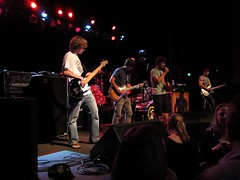
When I walked in and heard Stud Mushroom, I wasn't sure I was in the right club. The fresh-faced teens kicked off some shimmery indie pop that sounded great, but seemed an odd pairing with Roger Clyne's rootsier songs. It turns out that those first couple of tunes had been misleading. Most of their songs were hard rocking and funky with a heavy penchant for ska beats. That's still a stretch from the Peacemakers, but the band's positive energy outweighed any stylistic differences.
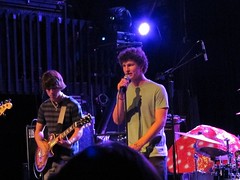
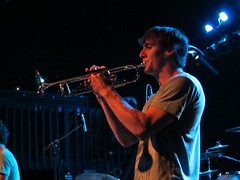
Stud Mushroom was having the time of their lives. They bounced from song to song and their joy reflected into the crowd. Guitarist Adam Petty stole the show, between his phenomenal playing and enthusiastic stage presence. From the sparkly indie pop start through riffing through Hendrix tunes, he had a good range of guitar sounds and a tasteful ear for fills. He sealed the deal during the couple of songs he played trumpet on. Dancing a bit, he was slightly self-conscious and mugged to the audience, but he couldn't contain himself. That provided a great spark for audience connection, which is where the band meshed perfectly with the Peacemakers style.
Petty stood out, but the rest of the band held their own technically. Drummer Jonah Green in particular was impressive. His fills powered the songs, with a lot of subtle syncopation that kept the rhythm section interesting and engaging. Good drumming takes a lot of focus. Drummers who can stay in time can still blow their job by getting too complex. When the fills threaten the sense of the basic beat, the song becomes a lost cause. It was great to hear a drummer that can develop rhythmic complexity without overwhelming the groove.
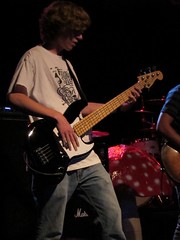
The other players were all great, too. This showed in the versatile arrangements that nailed their breaks, offered dynamics, and sailed through rhythmic changes. Despite their youthful appearance, Stud Mushroom played like a mature group of musicians with years of experience together.

A couple of the more interesting moments were a ska flavored take on Voodoo Child (Slight Return) and a cover of Project Hero's mashup of Immigrant Song and Bulls on Parade (Rage Against the Machine). Both songs had their surprises as the band poured themselves into interpreting the tunes.

Stud Mushroom's only weakness was needing a more dynamic stage presence to expand on that audience connection. Lead singer Austin Gloss should put some energy into building his stage persona to match his singing skills. That's a minor gripe though for a band that nailed their set.

(additional photos of Stud Mushroom from Brian Miller)

Lydia Loveless

Lydia Loveless started out her set with a classic country sound. With a strong voice sounding of Loretta Lynn, she and her tight backing band had my feet tapping. The guitar player and drummer shared a connection, reading each other's signals, and the standup bass player was dynamic, whipping his head to the beat. Loveless also contributed guitar, providing a good foundation rhythm to hold the songs together.
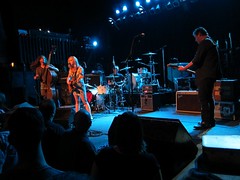
That first song, like several in the set were well-written and nicely arranged. Within a couple of songs, though, she lost that momentum. The moment might have been the break between the second and third songs. After a fifteen second pause, Loveless started strumming her guitar, but doesn't quite start the song. After another briefer pause, she finally spoke up. She thanked Roger Clyne for having them on the tour, but her voice was detached and disconnected. Combined with the moodier rock of the third song, it started building a wall between Loveless and the audience.
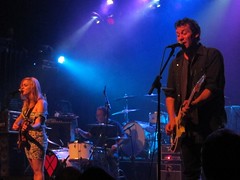
Lydia Loveless' bio talks about her roots in the Columbus, Ohio punk scene and maybe that's where her diffidence came from. Or maybe she was just nervous. Either way, she sounded like she was going through the motions and didn't really want to be there. A singer/songwriter like Loveless needs to make that linkage with the audience, because without it, it robs the songs of their spark.

Songs like Steve Earle (an amusing send up about him stalking her) and Crazy seemed well written. They could have contributed to a great set. The mix of straight country and country rock is great niche. Unfortunately, her performance dissuaded me from getting her album. Hopefully, Loveless will learn a bit from Clyne on this tour and grow as a performer.

Roger Clyne
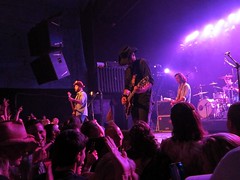
Roger Clyne is one of the most dependable performers I know. I try to catch him whenever he's in town, to get another taste of the emotional sacrament he offers. Clyne's connection with his audience keeps getting deeper. With the crowd singing along with every number, he presides over his shows as much as performing.
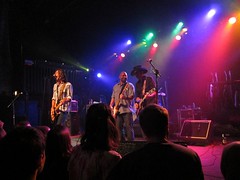
Aside from the good vibrations, I love the yin and yang of the shows: the pace is always comfortable, feeling loose and unstructured, yet the band flows together as coordinated as a school of fish. Similarly, the emotional rawness of some of the songs, like Green and Dumb or Marie add depth to the thrashy joy of songs like I Do.
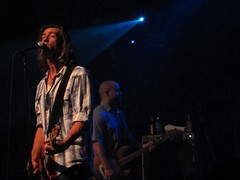
The setlist flowed in a way that proved the band's genius, whether planned or intuitive. The high energy bounce of Banditos was channeled into the intensity of Marie. After that, a brief check in with the audience created the space for the mood to turn more thoughtful with Your Name on a Grain of Rice.
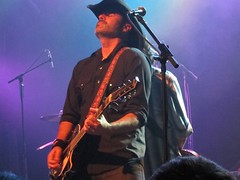
It goes without saying that the rest of the Peacemakers contributed their share, both musically and psychically: Jim Dalton's constant grin as he effortlessly added the perfect guitar fills, PH Naffah's rock solid presence behind the drums, and Nick Scropos' energetic bass work all created the mood. While Roger Clyne is a wonderful solo entertainer, the Peacemakers give him the space to stretch out and take the songs further.
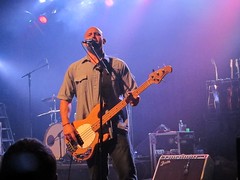
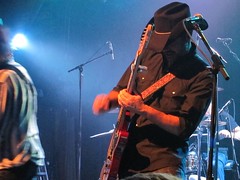
Throughout the set and eventual encore, Clyne accepted the love of the crowd, shared his gratitude, and reminded us all that we were a community. The encore closed with a solo acoustic version of Mekong, offering the perfect summation of the show: "Thank you for your time and here's to life".


More photos on my Flickr.

Thursday, September 8, 2011

CD review, Little Red, Midnight Remember (2010/2011)

Lush, dreamy and summery, crossing Roxy Music with the Beach Boys

Melbourne's Little Red released Midnight Remember last year in Australia, where it did fairly well on the charts. A streamlined version is releasing late next month in North America on True Panther records. They've remastered the Australian release, stripped out 4 tracks, and added one new one. I can't speak to the missing tracks, but the American release manages to strike a coherent mood while varying the sound of the individual songs.

Picture a hot, lazy summer afternoon. Napping in the shade, you feel a slight breeze. Maybe you even hear the clink of ice slowly melting in your drink. Eyes lightly shut, all is right in the world. Midnight Remember would serve as the perfect soundtrack.

Beach Boys harmonies fill out the vocals on almost every song, contributing to that sunny sound. At the same time, most of the songs have a distant, dream pop vibe that provides the space to appreciate that mood. There are plenty of sonic comparisons: the lush arrangements and rich vocals recall Roxy Music, while the emotional honesty evokes Vampire Weekend or a dozen similar bands.

Individual songs also stand out this way. Follow You There, starts out with a minimalist guitar and a simple solo voice. But the track builds and reaches for an epic, early U2-style arena sound. It's an uplifting moment that really succeeds because of Little Red's ability to manage the dynamics. By contrast, Chelsworth uses a harmonica and piano line to evoke Darkness-era Springsteen. At the same time, both of these songs combine the influences with more modern indie-rock elements to avoid sounding like a pastiche.

The big single is Rock It, a dance happy number locked into a bass line, a beat, and piano comping. Part The Hustle by Van McCoy, the retro disco vibe is catchy. A brief, seven second electronic bridge is the only modern touch. It's not bad, but it's not the most interesting song on Midnight Remember.

For my money, I'd pick All Mine for that honor. It also features a touch of Springsteen (a down tempo Tenth Avenue Freezeout), but the simple intro builds into something lush and rewarding. The longing in the vocal, "I tell myself it takes time but I keep waiting, I keep waiting" is palpable. The subtle swell of electric guitars just before they enter in force during the second chorus is perfect. Retro and timeless all at once, the music projects emotional need while still fitting into the lazy summer of the rest of the album.

Monday, September 5, 2011

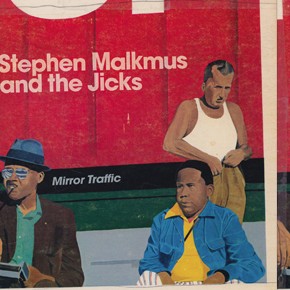
CD review - Stephen Malkmus and the Jicks, Mirror Traffic (2011)

With less to prove, Stephen Malkmus takes a simpler tack

In many ways, Stephen Malkmus has used his backing band, the Jicks, to get the taste of Pavement out of his mouth. Over several releases, the Jicks have honed a complex, carefully constructed sound. Their music is quirky with interesting tempo changes and odd phrasing that contrasts sharply with Pavement's simpler focus.

While Mirror Traffic doesn't fully slide back into Pavement, Malkmus finally seems comfortable enough to let the music be simpler and more relaxed. Perhaps he's grown, but I'm sure that Beck's production influenced this change of heart. With a stronger focus on clear melodic lines and a toned down edginess, Mirror Traffic is the Jick's most accessible album to date. But plenty remains familiar, especially Malkmus' voice: the pauses, the almost autistic phrasing, and occasional falsetto.

Tracks like Spazz remain close to the Jicks' earlier material. It's a busy rocker, with some rhythmic change ups. The driving beat and guitar/vocal coordination cover familiar ground. Then the song breaks into a more outside sounding bridge, building on repetition, before abruptly returning to the main groove.

In contrast, Tune Grief could easily be a Pavement track, although it's got higher energy than Pavement could muster in their final work. Evoking late '70s rock (Cheap Trick, maybe) and a slight punk edge, it's a great indie rock driver: don't think too much, just feel the beat and the attitude. It's nice to hear an upbeat Stephen Malkmus thrashing in the moment.

They're not all hard rocking, though. The Jicks pull in some folky vibe with songs like No One Is (As I Are Be), Share the Red, and the dreamy Fall Away. The stripped down, blues groove on No One Is (As I Are Be) is restrained, but full of classic Malkmus perspective:
Unfortunate that none of us will get away spared
From the never-ending nightlife that we shared
I cannot even do one sit-up, sit-ups are so Bourgeoisie
I'm busy hanging out and spending your money
What does it mean?
Even horn accents and some pretty piano work just polish the tune rather complicate it. I'm not sure how intentional it was, but the horn lines close out the song with a call and response that echo The Hokey Pokey. Maybe that's what it's all about. This track also shows the heaviest influence of Beck's production.

The first single offered from Mirror Traffic is the radio-unfriendly Senator ("I know what the Senator wants, what the Senator wants is a blow job"). It's punchy, start and stop rock. The setup in the verse and chorus are strong and catchy, but the song sacrifices its focus in the middle section. The lyrics switch to a reflection of finding gigs and getting high. I still don't get the connection.

Packed with 15 songs, Mirror Traffic shows plenty of facets of good tunes and different sounds. Overall, the album may be poppier than earlier Jicks releases, but it shows that Stephen Malkmus can relax and not lose his wit or his voice.

Friday, September 2, 2011

CD review - Rusty Pacemaker, Blackness and White Light (2010)

Outsider metal flavored with doom and gloom

The world is full of interesting people. Take today's artist, Rusty Pacemaker. Despite his American sounding name, he's firmly rooted in Austria. Declaring himself a self-defined musician, his path to releasing Blackness and White Light included teaching himself to play guitar and bass, creating a home studio, and starting his own record label. While he acknowledges his love of bands like Black Sabbath and Viking Metal pioneer, Quorthon (Bathory), Pacemaker makes clear that his musical path has been focused on giving voice to his own songs.

Blackness and White Light's songs show off some of those influences, especially Black Sabbath. But the mix of classic metal, doom metal, and progressive rock elements come together in an original sound. Pacemaker is joined by a phenomenal drummer, Franz Löchinger. Many of the songs shift tempos and rhythms and, most of the time, Löchinger's playing sells it. Revolution's intro is much better for the busy syncopation contrasting against the guitar grind.

The percussion on the title song shows is another great example. The groove is laid back and moody like Sabbath's Planet Caravan. Pacemaker's whispered vocals add a detached tension. The song transitions into a section with acoustic guitar and chiming keys, while the drums provide a simple heartbeat. This open part builds into a bigger jam, with a post-rock electric guitar solo floating over the relaxed beat and simple guitar rhythm. It's almost Floydian.

My favorite track, though, was Amok. The haunting guitar intro resonates into a fuller sound. This evolves into an very early King Crimson style jam slightly reminiscent of I Talk To The Wind. The dreamy female vocals (Lady K) set up a call and response. Thoughtful guitar riffs herald a somewhat strained race into a faster paced section. Disquieting whispers lurk before the female vocals kick in again. After another speed up, the song finally crashes. The tempo changes could be smoother, but the overall effect is still catchy.

The rest of the Blackness and White Light ranges from the doom metal touches of My Last Goodbye and the modern metal of The Human Race to the moody psychedelia of Waiting For Tomorrow. Rusty Pacemaker presents his downbeat vision, which avoids easy classification and challenges the listener to commit to the ride. It's a journey off the beaten path, so there are some rough patches, but the terrain can be interesting.